American Airlines has restored nonstop service between Miami International Airport (MIA) and La Chinita International Airport (MAR), reconnecting the United States with Maracaibo after a seven-year interruption.

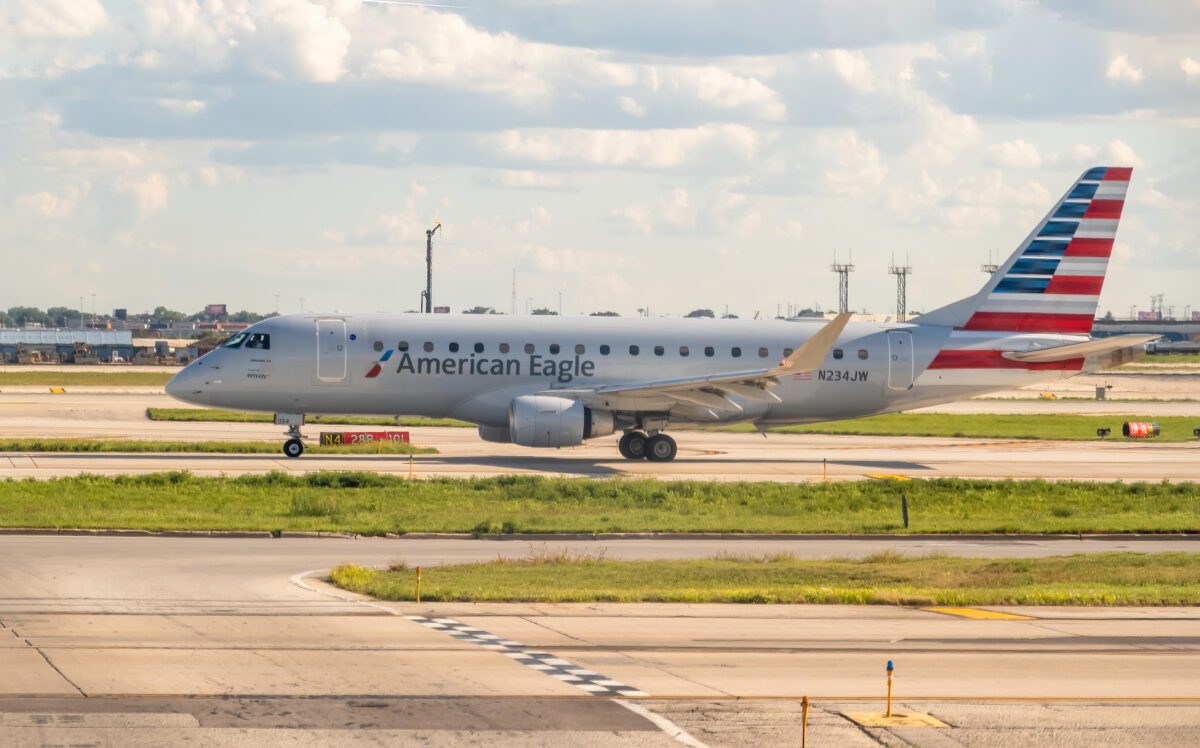
The daily, year-round route began on July 14, 2026, and is operated by American’s wholly owned regional subsidiary, Envoy Air, using a 76-seat Embraer E175. American is now the only airline offering nonstop service between the United States and Maracaibo.
The route is significant for more than its relatively modest capacity. Maracaibo is the capital of Venezuela’s Zulia state and the commercial center of the Lake Maracaibo region, which has historically been central to the country’s petroleum industry. The flight also restores a direct connection for families, businesses, and communities that have relied on indirect itineraries since American withdrew from Venezuela in 2019.
Read our stories in your inbox
Two aviation newsletters. Zero fluff.
American originally announced the Maracaibo route on June 12, nearly two weeks before the June 24 earthquakes that damaged Venezuela’s primary international gateway near Caracas. The new service was therefore not created as an emergency replacement for suspended Caracas flights, although the airport closure has increased the importance of the Maracaibo operation.
American’s Miami–Maracaibo Schedule
The new service operates daily under flight numbers AA4325 and AA4326.
| Flight | Route | Departure | Arrival | Scheduled Duration | Aircraft |
|---|---|---|---|---|---|
| AA4325 | Miami International Airport (MIA)–La Chinita International Airport (MAR) | 10:10 a.m. | 1:30 p.m. | 3 hours, 20 minutes | Embraer E175 |
| AA4326 | La Chinita International Airport (MAR)–Miami International Airport (MIA) | 2:10 p.m. | 5:15 p.m. | 3 hours, 5 minutes | Embraer E175 |
All times are local. Miami and Maracaibo observe the same UTC-4 time offset during July, so no time-zone adjustment is reflected in the timetable.
The approximately 1,030-nautical-mile route crosses the Caribbean and is comfortably within the capabilities of the Embraer E175. The aircraft is scheduled to remain at La Chinita International Airport (MAR) for 40 minutes before returning to Miami International Airport (MIA).
That is a relatively efficient turnaround for an international service. During those 40 minutes, passengers must deplane, checked baggage must be exchanged, the cabin must be prepared, and the aircraft must be inspected and readied for its return flight.
The complete American Airlines Maracaibo schedule was initially filed with AA4325 departing Miami at 10:10 a.m. and AA4326 leaving Maracaibo at 2:10 p.m.
The Inaugural Flight Departed Full
The first flight left Miami International Airport (MIA) from gate D55 at 10:07 a.m., three minutes ahead of schedule.
All 76 seats on the Embraer E175 were occupied, according to an American Airlines spokesperson. The full inaugural flight demonstrated the pent-up demand created by the lack of nonstop service between South Florida and western Venezuela.
The first departure included a gate ceremony, and the operating captain displayed a Venezuelan flag from the cockpit before the aircraft left Miami.
An inaugural load factor should not be treated as a reliable forecast for the route’s long-term performance. First flights frequently attract airline representatives, government officials, media, families, and aviation enthusiasts in addition to ordinary passengers.
It nevertheless provided a strong opening for the only nonstop route between the United States and La Chinita International Airport (MAR).
Maracaibo Is American’s 99th Destination in the Region
American identifies Maracaibo as its 99th destination across Mexico, the Caribbean, and Latin America.
The airline expects Cap-Haïtien International Airport (CAP) in Haiti to become its 100th regional destination when service begins from Miami International Airport (MIA) on November 1, 2026.
American says its winter network in Mexico, the Caribbean, and Latin America will be nearly 50% larger than that of its nearest U.S. competitor. Several destinations, including Maracaibo, are not served nonstop by any other U.S. airline.
The route is listed by Miami International Airport as daily, year-round service rather than a temporary or seasonal addition.
That designation suggests American views Maracaibo as a permanent component of its Latin American network rather than capacity added only while Simón Bolívar International Airport (CCS) remains unavailable.
The real test will come after Caracas reopens and the immediate surge of demand associated with restored U.S.–Venezuela travel begins to normalize.
The Route Was Planned Before the Caracas Earthquake
American’s Maracaibo launch has become closely associated with the June 24 earthquakes that severely damaged Simón Bolívar International Airport (CCS), but the sequence of events needs to be clearly understood.
American announced Miami International Airport (MIA)–La Chinita International Airport (MAR) service on June 12. The route was placed into the schedule with a July 14 launch date.
The earthquakes struck northern Venezuela on June 24, approximately two weeks after the Maracaibo announcement. The disaster damaged Simón Bolívar International Airport (CCS) and forced the suspension of normal commercial operations.
American consequently suspended its twice-daily Miami International Airport (MIA)–Caracas service. The airline said it would return when Simón Bolívar International Airport (CCS) reopened for commercial flights.
Maracaibo launched on its original date despite the Caracas disruption. It should therefore be viewed as an independently planned network addition that became more strategically valuable after another Venezuelan airport closed.
American’s Caracas operations update confirms that regular CCS service was suspended after the earthquakes and that the airline intended to resume flights when the airport became operational again.
Maracaibo Is Not an Earthquake Relief Flight
Flights AA4325 and AA4326 are ordinary scheduled passenger services.
The first Maracaibo flight did not operate as a humanitarian airlift and was not primarily carrying earthquake supplies. Its passengers purchased tickets through American Airlines in the same way as those traveling on the carrier’s other scheduled international routes.
American separately operated a dedicated relief flight between Miami International Airport (MIA) and Simón Bolívar International Airport (CCS) on July 2.
The Boeing 737 relief operation transported more than 9,000 pounds of supplies, including food, drinking water, diapers, baby formula, wipes, and hygiene products.
That aircraft was permitted to use Simón Bolívar International Airport (CCS) despite the suspension of normal commercial passenger flights.
The distinction matters because the Maracaibo operation is intended to continue after earthquake-response activities end and after Caracas eventually reopens.
Why American Is Using a Regional Jet
The Embraer E175 is generally associated with short domestic feeder routes, but its use between Miami International Airport (MIA) and La Chinita International Airport (MAR) is commercially logical.
The aircraft gives American the ability to offer daily service without committing the capacity of a larger Airbus A319, Boeing 737-800, or Boeing 737 MAX 8.
Envoy’s E175 accommodates 76 passengers:
| Cabin | Seats | Published Seat Pitch |
| First Class | 12 | 37 inches |
| Main Cabin Extra | 20 | 34 inches |
| Main Cabin | 44 | 30 inches |
| Total | 76 |
American’s official E175 cabin information shows a 1-2 seating arrangement in First Class and 2-2 seating throughout Main Cabin. That means no passenger is assigned a middle seat.
The aircraft also offers personal-device entertainment and Wi-Fi. American says its Venezuela flights include complimentary high-speed connectivity sponsored by AT&T.
Using a 76-seat airplane limits the financial risk of reopening a market that has not had nonstop U.S. service since 2019.
American can offer seven weekly departures while placing only 532 seats in each direction over a full week. A daily Boeing 737-800 carrying 172 passengers would introduce more than 1,200 weekly seats in each direction.
The E175 therefore allows American to prioritize schedule frequency without overwhelming the route with capacity.
The E175 Has Ample Range for Maracaibo
The Embraer E175 is a twin-engine regional jet designed for short- and medium-haul operations.
According to Embraer’s official aircraft specifications, the longer-range E175 variants can fly approximately 2,150 to 2,200 nautical miles with a full passenger load under the manufacturer’s stated conditions.
Miami International Airport (MIA)–La Chinita International Airport (MAR) is less than half that distance.
The aircraft therefore has substantial theoretical range beyond the requirements of the route. Actual payload capability still depends on weather, winds, diversion planning, fuel reserves, runway conditions, baggage, and the operating weight of the individual aircraft.
The E175 can cruise as high as 41,000 feet and at speeds up to Mach 0.82, although normal operating speeds may be lower.
On a route scheduled for just over three hours, the airplane provides a product closer to a small mainline jet than to older regional aircraft. Its cabin is wide enough for 2-2 Economy seating, while its overhead bins can accommodate more standard carry-on luggage than many previous-generation regional jets.
Envoy Air Operates the Flight
Although the tickets and flight numbers carry the American Airlines brand, the aircraft and crews are supplied by Envoy Air.
Envoy is wholly owned by American Airlines Group and operates under the American Eagle brand. American Eagle is the customer-facing brand used for regional services operated by Envoy and several other carriers.
According to Envoy Air’s corporate information, the airline operates two-class Embraer E170s and E175s and maintains substantial operations at American hubs including Miami International Airport (MIA), Dallas Fort Worth International Airport (DFW), and Chicago O’Hare International Airport (ORD).
Passengers book AA4325 and AA4326 through American, earn AAdvantage miles under the applicable fare rules, and can connect to American’s wider network at Miami International Airport (MIA).
Envoy is responsible for operating the flight, including supplying the pilots, flight attendants, and aircraft.
Using a wholly owned subsidiary gives American greater control over scheduling and operations than it would have when contracting with an unrelated regional airline.
American’s Venezuela Return Began With Caracas
American’s Maracaibo service is the second phase of a broader return to Venezuela.
The airline resumed flights between Miami International Airport (MIA) and Simón Bolívar International Airport (CCS) on April 30, 2026. That first flight ended a seven-year absence of nonstop commercial passenger service between the United States and Venezuela.
A second daily Caracas flight began on May 21.
Like Maracaibo, the Caracas route was operated by Envoy Air using a two-class Embraer E175. The first flight also carried a special livery commemorating the 250th anniversary of the United States.
American’s return to Caracas reestablished a market that had been closed since the U.S. government prohibited direct commercial flights in 2019.
The 2026 expansion was designed to give American as many as three daily Venezuelan departures from Miami:
- Two daily flights to Simón Bolívar International Airport (CCS)
- One daily flight to La Chinita International Airport (MAR)
The earthquake temporarily disrupted that plan, leaving Maracaibo as American’s only regularly operating Venezuelan destination at the time of its launch.
The U.S. Approved Both Venezuelan Routes
American could not restore Venezuela service simply by adding flights to its reservation system.
The U.S. Department of Transportation first had to remove the restrictions that prevented U.S. airlines from operating directly to the country.
The department rescinded the 2019 prohibition in January 2026. It subsequently approved American’s request to serve Caracas and Maracaibo through Envoy Air.
The approval is valid for two years and allows the regional carrier to operate the scheduled services from Miami International Airport (MIA).
The U.S. Transportation Security Administration also reviewed aviation-security procedures in Venezuela as part of the preparations for restoring service.
American had operated in the country since 1987 and was the largest U.S. airline serving Venezuela before suspending flights in 2019.
The Department of Transportation approval gave American an important first-mover advantage as diplomatic and commercial links between the countries were rebuilt.
Why Maracaibo Is a Distinct Market
Maracaibo should not be viewed simply as an alternative airport for Caracas.
La Chinita International Airport (MAR) serves Maracaibo, San Francisco, and the wider Zulia region in northwestern Venezuela. The airport is located southwest of central Maracaibo and provides access to communities far from Simón Bolívar International Airport (CCS).
Traveling overland between Caracas and Maracaibo can require a journey of several hundred miles. A passenger whose final destination is western Venezuela would not ordinarily consider the two airports interchangeable.
Maracaibo is also closely associated with Venezuela’s energy industry. The city is located near Lake Maracaibo and the surrounding petroleum-producing basin, giving the route potential business demand in addition to family traffic.
The passenger base may include:
- Venezuelans living in South Florida and elsewhere in the United States
- Travelers visiting friends and relatives in Zulia
- Energy-industry employees and contractors
- Business travelers
- Students
- Government and humanitarian personnel
- Passengers connecting through Miami from other U.S. cities
The strongest foundation is likely to be visiting-friends-and-relatives traffic. That segment often generates year-round demand but can also be highly price-sensitive and concentrated around holidays and school vacations.
Miami’s Connecting Network Is Central to the Route
American does not need to fill the E175 only with passengers who live in Miami or Maracaibo.
Miami International Airport (MIA) is American’s principal gateway for Mexico, the Caribbean, and Latin America. The airline expects to operate more than 410 daily departures from MIA on peak days.
That schedule gives the Maracaibo flight access to passengers originating throughout the United States.
The 10:10 a.m. departure can receive travelers arriving in Miami on early-morning flights from cities across Florida, the Northeast, Midwest, and Southeast.
The 5:15 p.m. arrival from La Chinita International Airport (MAR) may connect with evening flights from Miami International Airport (MIA), although passengers must first complete U.S. immigration and customs procedures.
The route’s economics will therefore depend on a combination of local South Florida traffic and connecting passengers.
A daily schedule is especially useful for connections because American can sell Maracaibo itineraries every day rather than attempting to align domestic arrivals with only two or three weekly international departures.
Frequency May Be More Important Than Aircraft Size
American could theoretically serve Maracaibo with a larger aircraft at a lower frequency.
A Boeing 737 or Airbus A319 would provide a lower operating cost per seat when filled. It would also require American to sell far more seats on each departure.
The E175 reverses that equation. Its unit costs are generally higher, but the airline needs only 76 passengers to fill the aircraft.
Daily frequency provides several benefits:
Business travelers have more flexibility. Families do not need to arrange trips around limited operating days. Connections through Miami are available throughout the week, and passengers affected by a disruption may be moved to the following day’s flight rather than waiting several days.
That tradeoff explains why regional jets are often used to establish thinner international routes.
The aircraft makes it possible to preserve schedule quality while controlling capacity risk.
A 40-Minute International Turn Creates Little Recovery Time
The schedule’s weakest operational feature may be the 40-minute ground time at La Chinita International Airport (MAR).
A short turnaround keeps the aircraft productive and allows AA4326 to reach Miami in time for evening connections. It also leaves limited room for delay recovery.
A late arrival from Miami could affect the return departure if any of the following takes longer than expected:
- Passenger deplaning
- Baggage unloading
- Fueling
- Cabin servicing
- Security procedures
- Immigration processing
- Aircraft inspections
- Loading passengers and baggage
An E175 requires less time to turn than a large Boeing 737 or widebody because it carries fewer passengers and bags. International operations still involve more coordination than an ordinary domestic flight.
American and Envoy will need dependable local ground handling and maintenance support to protect the schedule.
A technical problem in Miami can often be addressed using Envoy’s substantial local operation. A mechanical issue in Maracaibo could be more difficult if replacement parts, technicians, or another aircraft must be sent from the United States.
The Caracas Closure Could Temporarily Increase Demand
The closure of Simón Bolívar International Airport (CCS) may result in some passengers using Maracaibo who would otherwise have traveled through Caracas.
Travelers whose destinations are in other parts of Venezuela could connect domestically or continue by ground transportation after arriving at La Chinita International Airport (MAR).
That additional traffic may strengthen the route during its first weeks.
American has not announced plans to add another Maracaibo frequency or replace the E175 with a larger aircraft while Caracas remains unavailable.
Maintaining the original daily schedule is a measured approach. Demand diverted from Caracas could decline quickly when Simón Bolívar International Airport (CCS) reopens.
American can evaluate bookings before committing more capacity to a temporary traffic pattern.
Commercial Service Does Not Remove Travel Risks
The availability of a nonstop flight does not mean that U.S. officials consider travel to Venezuela free of significant risk.
The current U.S. State Department advisory recommends that Americans reconsider travel because of crime, kidnapping, terrorism, limited health infrastructure, and the effects of the natural disaster. Some areas carry a higher “Do Not Travel” designation.
Travelers should review current entry requirements, documentation rules, insurance coverage, medical options, ground transportation, and consular-support limitations before departure.
The warning does not prevent passengers from using the Maracaibo service. It provides information relevant to personal travel decisions and emergency planning.
American Has an Important First-Mover Advantage
American currently has no nonstop U.S. competitor on the Maracaibo route.
That gives the airline an opportunity to rebuild relationships with local travel agencies, families, businesses, airport authorities, and corporate accounts before another U.S. airline enters the market.
The carrier also benefits from years of brand recognition in Venezuela. American began serving the country in 1987 and maintained a substantial presence before the 2019 suspension.
The advantage does not eliminate competition.
Passengers can still reach Maracaibo through connecting hubs elsewhere in Latin America. Depending on schedules and pricing, travelers may consider one-stop services through airports such as Tocumen International Airport (PTY) in Panama City or El Dorado International Airport (BOG) in Bogotá.
American’s strongest competitive advantages are the nonstop flight, daily frequency, Miami’s Venezuelan community, and its domestic connecting network.
The Route’s Performance Cannot Be Judged by Load Factor Alone
A full first flight is encouraging, but American will evaluate more than the percentage of occupied seats.
Important measures will include:
- Average fares
- First Class revenue
- Main Cabin Extra purchases
- Connecting-passenger contribution
- Checked-baggage revenue
- Cargo and mail
- Seasonal demand
- Distribution expenses
- Ground-handling costs
- Operational reliability
- Rebooking expenses during disruptions
A 76-seat flight can be profitable without being full if fares and premium revenue are strong. A completely full aircraft can underperform if most tickets are sold at deeply discounted prices.
American will also consider the route’s contribution to its Miami hub. A passenger connecting from Maracaibo to another U.S. city may support two American flight segments rather than one.
That network contribution can make a route more valuable than its local Miami–Maracaibo traffic alone would suggest.
Bottom Line
American Airlines has restored daily nonstop service between Miami International Airport (MIA) and La Chinita International Airport (MAR), reconnecting Maracaibo with the United States for the first time since 2019.
Flights AA4325 and AA4326 are operated by Envoy Air using a 76-seat Embraer E175 with 12 First Class seats, 20 Main Cabin Extra seats, and 44 Main Cabin seats.
The route is scheduled for three hours and 20 minutes from Miami to Maracaibo and three hours and five minutes on the return.
American announced the service on June 12, before the earthquakes that damaged Simón Bolívar International Airport (CCS) on June 24. Maracaibo was not introduced as emergency replacement capacity, although the subsequent suspension of Caracas flights made the new route more important.
The Embraer E175 is central to American’s strategy. Its range is more than sufficient for the Caribbean crossing, while its limited capacity allows the airline to provide a valuable daily schedule without introducing the seat volume of a Boeing 737 or Airbus A319.
The first flight departed full, but the route’s long-term prospects will depend on year-round family traffic, business demand, connecting passengers, premium-cabin revenue, and operational reliability after Caracas reopens.
For American, Maracaibo expands the airline’s unmatched Latin American network from Miami International Airport (MIA). For western Venezuela, it restores a direct connection that had been absent for seven years.
Keep reading FlyMag
Get the Daily Brief in the morning or the Route Watch weekly recap on Fridays. Or both.