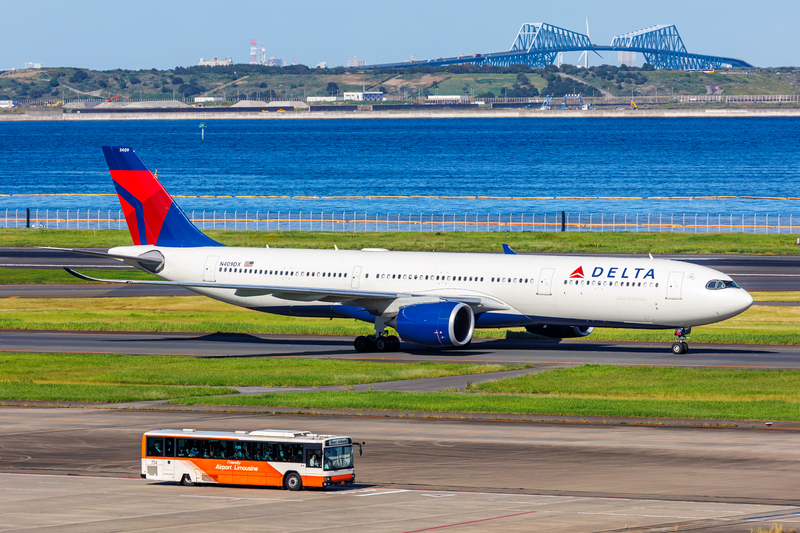
A Delta Air Lines flight from Hartsfield-Jackson Atlanta International Airport (ATL) to Murtala Muhammed International Airport (LOS) in Lagos spent nearly eight hours in the air before returning to Atlanta, turning what should have been a routine long-haul crossing into a costly and deeply frustrating flight to nowhere.
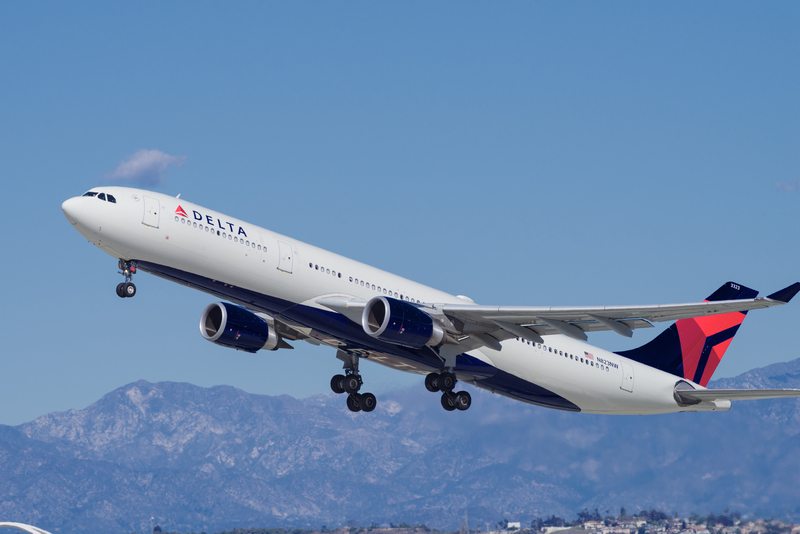
The aircraft, an Airbus A330-200, departed Atlanta normally on May 9 and proceeded eastbound over the Atlantic before eventually reversing course and heading back to the United States. Delta has described the event only as being caused by an “operational issue.” That phrase is doing a lot of work.
For aviation readers, the most important part of the story is not just that the flight returned. It is that Delta chose to send a fully committed West Africa service back to base rather than diverting en route or pressing on. Airlines only make that kind of decision when the operational logic becomes stronger than the destination itself.
Read our stories in your inbox
Two aviation newsletters. Zero fluff.
The Aircraft Had Already Gone Deep Into The Mission
This was not a quick turnback after departure.
Flight tracking showed the A330-200 had already spent several hours crossing the Atlantic before the decision was made to reverse course. That matters because once a long-haul flight gets that far into the sector, returning to origin is no longer the obvious answer. The crew and airline would have had to weigh fuel, maintenance capability, alternate-airport practicality, passenger handling, crew legality, and what the likely technical or operational problem would require on the ground.
In other words, by the time DL54 turned around, Delta had already committed to a very expensive decision.
“Operational Issue” Is A Very Broad Airline Phrase
Delta has not publicly given a more detailed explanation than “operational issue.”
That wording is intentionally broad, and airlines use it when they do not yet want to disclose a specific technical cause or when the issue is complex enough that a simple public label would be misleading. It can cover mechanical concerns, systems issues, dispatch limitations, performance-related problems, crew/legal considerations tied to a technical matter, or a mix of those things.
What it does not mean is that the flight simply changed its mind. Returning an A330-200 to Atlanta from the middle of the Atlantic on a Lagos mission is not the kind of thing any airline does lightly.
Why Returning To Atlanta May Have Been Better Than Diverting
To non-aviation passengers, a diversion to somewhere closer, perhaps in the Azores or elsewhere along the Atlantic routing, might seem more logical.
But long-haul diversions are not always the least disruptive option. A diversion airport may lack the right maintenance support, replacement parts, spare crew, passenger processing capability, or onward network options. If the underlying issue is one the airline believes can be better handled at its own hub, returning to Atlanta may actually minimize total disruption, even if it adds more flying time in the short term.
That is likely part of what happened here. Whatever the underlying problem was, Delta appears to have decided that ATL offered the best chance of controlling the aftermath.
The A330-200 Is Not New — But That Alone Explains Very Little
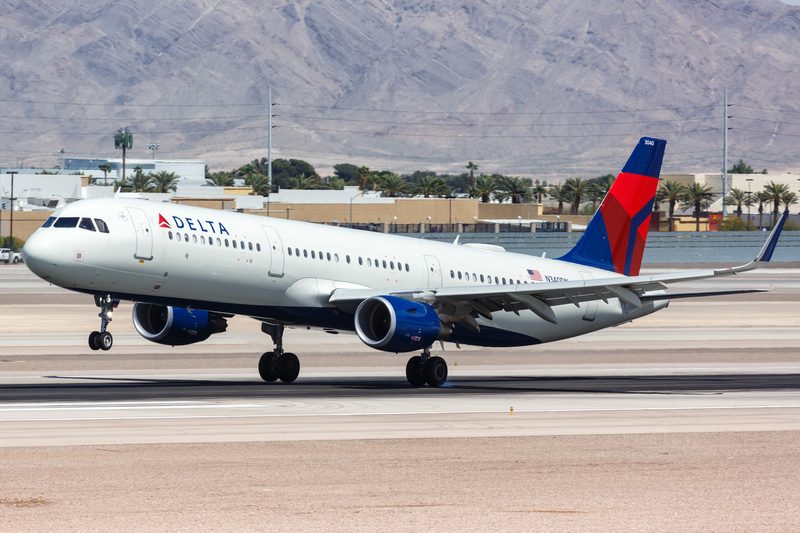
The aircraft was a Delta Airbus A330-200, a type that remains an important part of the airline’s long-haul fleet and one that has been flying for many years.
That matters only up to a point. Age alone does not explain a turnback like this, and there is no reason to frame the incident as evidence of a systemic problem with the A330-200 fleet. But it is fair to note that older long-haul aircraft can present airlines with more frequent technical decision points, especially on demanding intercontinental sectors where reliability margins matter enormously.
Still, the broader lesson here is not about one airframe’s age. It is about how airlines manage uncertainty once a long-haul flight is too far gone for an easy answer.
The Real Cost Wasn’t Just Fuel
The immediate visual story is obvious: eight hours of flight time, a U-turn over the Atlantic, and a return to the same airport.
But the deeper cost is larger than fuel burn alone. A turnback of this scale hits crew planning, aircraft utilization, passenger reaccommodation, maintenance scheduling, and the wider network. It also affects trust. Long-haul passengers can usually accept delays more readily than they accept not knowing why they just spent most of a day in the air to end up where they started.
That uncertainty is why flights like this gain so much attention. They make visible the enormous operational complexity that usually stays hidden.
Lagos Is A Serious Route, Which Makes The Turnback More Telling
Delta’s Atlanta–Lagos route is not a niche experiment. It is one of the airline’s key West Africa links and one that serves a mix of business, diaspora, and strategic long-haul demand.
That makes the return more significant. If an airline turns back a route like this, it is not because the destination is expendable. It is because the circumstances onboard or around the operation have made continuation less acceptable than returning a major international flight to base.
That is a high threshold.
Passengers Felt The Operational Reality Immediately
Reports indicate the return also affected subsequent Lagos operations and left many passengers dealing with extended uncertainty in Atlanta.
That is typical after a long-haul turnback. Even if the airplane lands safely and the issue is contained, the airline then has to find aircraft availability, legal crew time, passenger rebooking options, and hotel or ground support if the delay extends. On a route to West Africa, where frequencies are often lower than on major transatlantic trunk services, recovery can be harder and slower.
That is one reason these “flight to nowhere” events are so disruptive. They are expensive to resolve and difficult to absorb into a normal schedule.
Bottom Line
Delta flight DL54 from Atlanta (ATL) to Lagos (LOS) spent nearly eight hours airborne before returning to Atlanta because of what the airline has described only as an operational issue. The Airbus A330-200 landed safely, but the decision to reverse course deep into the Atlantic suggests the problem was serious enough that neither continuation nor an en route diversion looked better than bringing the aircraft home.
For passengers, it was an exhausting and bewildering delay. For Delta, it was a reminder that on long-haul flying, the hardest operational decisions are often not about whether an aircraft can keep flying, but about where it makes the most sense for the problem to end.