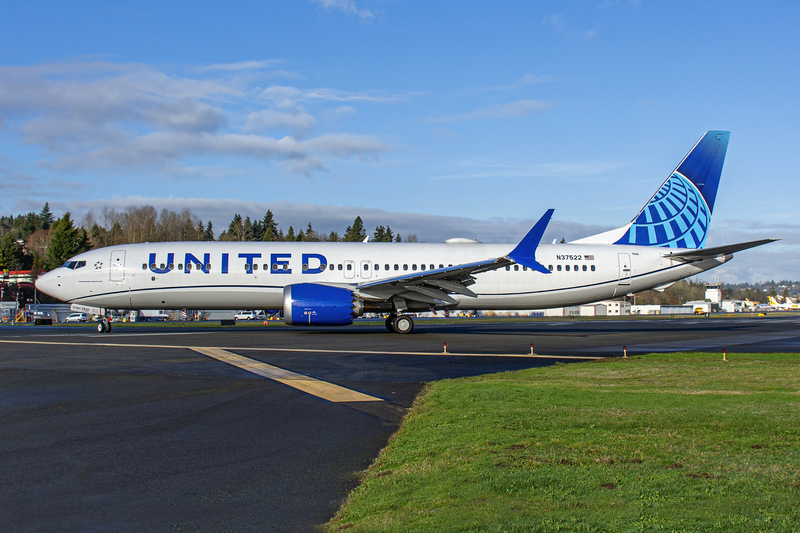
What began as a routine United Airlines shuttle-style sector from Chicago O’Hare International Airport (ORD) to New York LaGuardia Airport (LGA) ended as a full security response at Pittsburgh International Airport (PIT), after flight UA2092 diverted on Saturday following a mid-air onboard alert.

The aircraft, a Boeing 737 MAX 8, landed safely in Pittsburgh with 159 passengers and six crew members on board. Once on the ground, everyone was evacuated via emergency slides, and the aircraft was met by bomb technicians, police, and federal investigators. No injuries were reported, and later sweeps of the aircraft, passengers, and baggage found no explosive threat.
The most important point is that this was treated as a potential bomb event, not a confirmed one. United described the incident more carefully as a “potential security concern,” and that distinction matters. Reports citing air traffic control audio said the crew had heard a sequential beeping sound from a suspected item onboard and chose to handle it under the most serious possible assumption. In operational terms, that was the correct decision. Once a crew believes there may be an onboard explosive threat, the job is not to diagnose it in the air. The job is to get the aircraft on the ground quickly and hand the situation over to security specialists.
Read our stories in your inbox
Two aviation newsletters. Zero fluff.
That is also why the evacuation was so forceful. Slides are not deployed for minor disruptions. They are used when a crew believes speed matters more than convenience, and when the safest course is to clear the aircraft immediately. For passengers, that can make the event feel more dramatic than the final outcome. For airlines and airports, though, it is a sign that the emergency chain is functioning the way it should.
Pittsburgh International Airport (PIT) was a practical diversion point. It was close enough to the aircraft’s route to allow a prompt landing, but large enough to handle a security event without destabilizing wider operations. That is one reason airports like PIT remain so valuable in the U.S. system. They can absorb an irregular operation quickly, provide space for law-enforcement response, and keep the rest of the airport functioning while an aircraft is isolated and searched.
The aircraft type is also worth noting. United’s Boeing 737 MAX 8 is one of the airline’s core domestic narrowbodies, used on high-frequency sectors where reliability and fast turns matter. This was not an unusual aircraft on an unusual mission. It was a standard United domestic operation between two major business markets, which makes the incident more relevant than a one-off oddity. A routine single-aisle flight became a live security case in the space of a few minutes, and that is exactly why these diversions are taken so seriously.
From United’s standpoint, the encouraging part is that the response appears to have unfolded exactly as it should. The crew diverted. The aircraft landed safely. Local police, bomb technicians, K9 teams, and FBI support responded quickly. The aircraft, passengers, and baggage were cleared. The airport stayed open. Passengers were then reaccommodated onward to New York. That does not make the incident minor, but it does show a domestic security response working cleanly under pressure.
Bottom Line
United flight UA2092 from Chicago O’Hare (ORD) to New York LaGuardia (LGA) did not end in Pittsburgh because of a confirmed bomb. It ended there because the crew encountered a security concern serious enough to treat as one. That difference is crucial.
For aviation professionals, the story is not really about the alarm itself. It is about the response. A routine Boeing 737 MAX 8 domestic sector turned into a rapid diversion, evacuation, and full bomb-squad inspection without injuries and without wider disruption to PIT. In an incident like this, that is the standard that matters most.