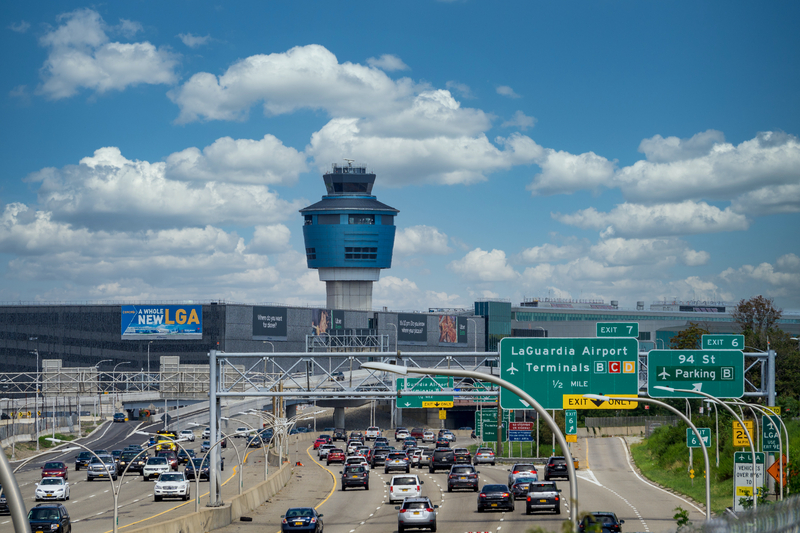
LaGuardia Airport’s bad stretch turned significantly worse when a sinkhole forced the closure of one of its two main runways, cutting airport capacity just as severe thunderstorms were already driving major disruption across the New York region.
The sinkhole was discovered near Runway 4/22 during a routine inspection around 11:00 a.m. on Wednesday, and the runway was shut immediately. That left LaGuardia operating with only Runway 13/31 available for arrivals and departures while emergency crews moved in to assess and repair the damage.
For aviation readers, the significance is obvious: at a tightly constrained airport like LaGuardia, losing a runway in the middle of a severe weather event is about as bad as the operating picture gets without a full closure.
Read our stories in your inbox
Two aviation newsletters. Zero fluff.
The Runway Problem Hit At The Worst Possible Time
The sinkhole did not appear in a calm operating window.
It happened during an already ugly stretch of thunderstorms that had pushed delays and cancellations across New York’s airspace system. LaGuardia was already under pressure from weather-driven traffic management. The runway closure then removed a major chunk of the airport’s remaining operational flexibility.
That matters because LaGuardia does not have much slack even on a good day. With one runway out of service, every storm cell, every spacing restriction, and every arrival delay becomes harder to absorb.
Hundreds Of Flights Were Affected
The impact was immediate and large.
By the time the sinkhole closure combined with the weather disruption, roughly 200 flights at LaGuardia had been canceled and around 190 flights had been delayed. Some reports from the broader two-day disruption window pushed the combined cancellation count even higher, which is why the event quickly drew national attention.
The important point is not the exact headline number from every source. It is that the disruption was major, and the runway closure turned an already strained day into an operational mess.
Delta Was Bound To Feel It Most
Because Delta is the largest carrier at LaGuardia, it was always likely to absorb the biggest operational hit.
That does not mean Delta caused the problem. It means the biggest airline at the airport inevitably bears the largest share of the pain when capacity collapses. American and JetBlue were also significantly affected, while the entire airport system was forced into a much tighter operating pattern than normal.
At a hub airport, that kind of disruption rarely stays local. It spreads through aircraft rotations, crew assignments, and onward connections very quickly.
This Is Also A New York System Story
The broader setting matters.
LaGuardia’s runway closure happened in the context of a wider New York-area air traffic crunch, with storms affecting JFK and Newark as well. When the New York metro system is under weather pressure, each airport becomes more dependent on the others continuing to function smoothly. A capacity hit at one airport then makes the whole system less resilient.
That is why a sinkhole at LaGuardia is not just a LaGuardia story. It is a Northeast corridor story.
The Real Issue Is Fragility
What this incident really exposed was fragility.
Airports can manage storms. Airports can manage runway repairs. Airports can even manage one bad operational day. But when weather, infrastructure failure, and a highly saturated airspace system all collide, the margin disappears fast. That is what happened here.
LaGuardia was not just unlucky. It was operating in an environment where a single infrastructure failure could instantly become a network-level problem.
Bottom Line
LaGuardia’s week went from bad to worse when a sinkhole shut down Runway 4/22 just as severe storms were already disrupting traffic. With only one main runway left available, the airport saw hundreds of delays and cancellations and became yet another pressure point in an already overstretched New York airspace system.
The bigger lesson is not just about one damaged runway. It is about how quickly a constrained airport can tip from difficult to dysfunctional when weather and infrastructure problems hit at the same time.
Keep reading FlyMag
Get the Daily Brief in the morning or the Route Watch weekly recap on Fridays. Or both.