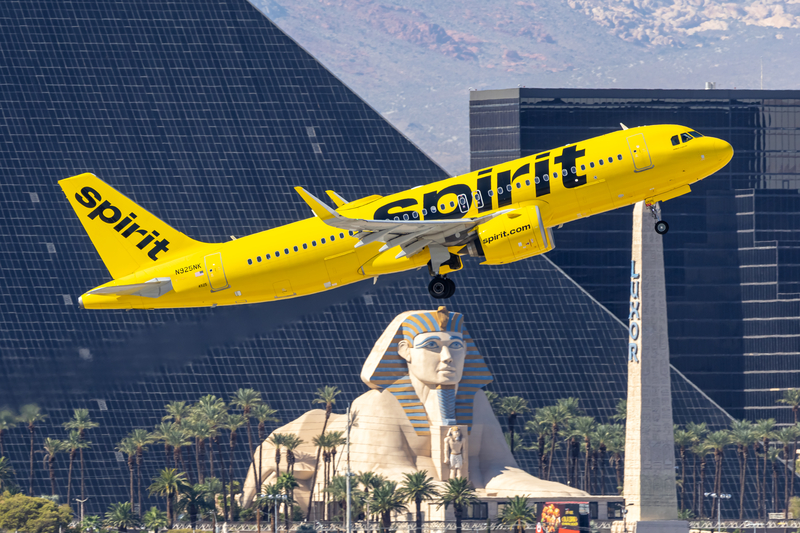
Spirit Airlines is reversing part of its winter workforce reduction, recalling 500 flight attendants from furlough just weeks after operational strain exposed the limits of its staffing cuts. The move comes as the ultra-low-cost carrier advances a court-approved deal to sell 20 Airbus narrowbodies—a transaction valued at roughly $530 million—as part of its ongoing restructuring under bankruptcy protection.
For Spirit, the twin decisions—add cabin crew while shrinking owned fleet—may look contradictory at first glance. In reality, they reflect a carrier trying to stabilize daily operations while reshaping its balance sheet for survival.
Why the Recall Now: Reliability Broke Before the Model Did
In December, Spirit furloughed about 1,800 flight attendants, with roughly 500 volunteering and the remainder placed on involuntary leave. The reductions were designed to align staffing with a smaller winter schedule and a leaner fleet.
Read our stories in your inbox
Two aviation newsletters. Zero fluff.
But operational reality intervened.
Over recent weeks, Spirit has been canceling up to 60 flights per day, with internal communications acknowledging that its reserve pool of flight attendants had been fully depleted amid elevated sick rates and tighter crew coverage. For a point-to-point ULCC operating high-utilization narrowbody rotations—primarily on the Airbus A320 and A321 families—a thin cabin-crew margin can quickly unravel the schedule.

Spirit’s recall notices give affected crew members 15 days to report back, with the airline encouraging earlier returns where possible. As is standard in U.S. labor practice, recalls are being processed in seniority order, meaning more senior flight attendants are offered positions first.
The Association of Flight Attendants-CWA characterized the recall as necessary to ease what it described as a “grueling operation” over the past two months.
From an operations control perspective, the decision is logical: if you cannot crew the aircraft you still have flying, schedule cuts alone will not restore stability. Rebuilding crew depth is often the fastest way to reduce same-day cancellations, even before broader strategic issues are resolved.
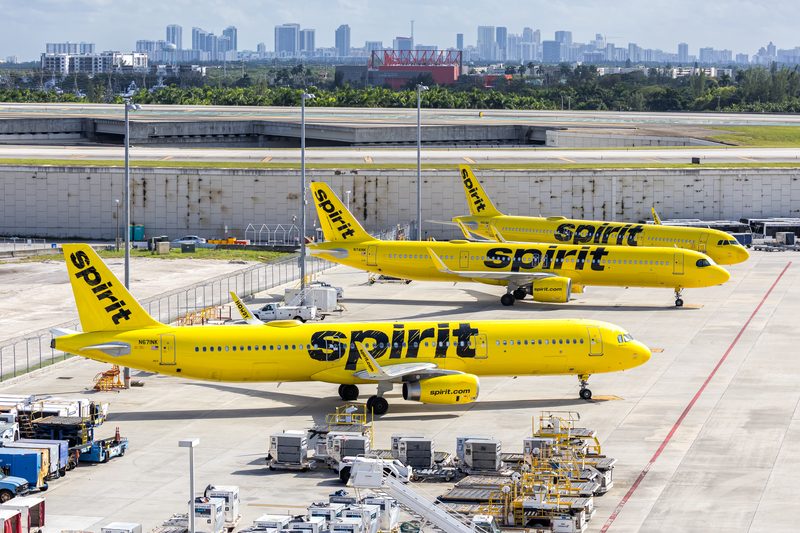
The Aircraft Sale: 13 A320s and 7 A321s Exit the Balance Sheet
Parallel to the staffing recall, Spirit has secured agreement to sell 20 Airbus aircraft, subject to bankruptcy court approval. The deal covers:
-
13 Airbus A320-200 (A320ceo)
-
7 Airbus A321-200 (A321ceo)
The buyer is identified in court filings as CSDS Asset Management, with the overall transaction reportedly valued at approximately $530 million. Deliveries are expected to begin in April 2026.
Ordinarily, removing 20 aircraft from a fleet of roughly 120+ jets would materially shrink a carrier’s schedule. Spirit, however, argues the impact will be minimal because most of the aircraft in question are already parked and not in revenue service. Public fleet data indicates around 15 aircraft currently listed as inactive—primarily older A320ceo and A321ceo units.
This is less a capacity reduction and more a balance-sheet maneuver. By selling owned aircraft—particularly older ceo variants—Spirit can:
-
Generate immediate liquidity
-
Reduce maintenance exposure on aging airframes
-
Narrow the fleet toward more efficient models
-
Simplify asset management under restructuring
Spirit has already rejected numerous aircraft leases since its first bankruptcy filing in 2024, and after these sales, the airline will reportedly own fewer than 30 aircraft outright, operating the remainder—around 66 leased jets—as its active fleet backbone.
The Fleet Context: ceo Exit, Neo Core
Spirit’s fleet is built almost entirely around the Airbus A320 family, with a mix of A320ceo, A321ceo, and newer A320neo/A321neo aircraft. The older ceo variants are typically less fuel-efficient than the neo generation and can carry higher maintenance costs, especially as they age.
Divesting ceo aircraft while retaining newer units aligns with a strategy seen at several ULCCs in recent years: reduce capital intensity, standardize toward more efficient frames, and operate a smaller but cleaner fleet with better unit economics.
However, selling aircraft alone does not solve Spirit’s fundamental issues. The airline remains in its second bankruptcy proceeding in two years, and broader strategic questions—including potential restructuring outcomes or asset breakups—remain unresolved.
A Delicate Balancing Act: Shrink to Survive, Staff to Stabilize
The recall of 500 flight attendants suggests that Spirit may have cut too deeply, too quickly, during its winter planning cycle. In a high-frequency narrowbody operation, crew availability is a hard constraint. Aircraft can be parked. Schedules can be trimmed. But when crews are insufficient, the system fails in real time.
Calling back cabin crew while selling aircraft is therefore not contradictory—it’s triage:
-
Sell aircraft that aren’t flying anyway.
-
Rebuild staffing to support the aircraft that are.
That combination may reduce daily disruption and improve customer confidence, even if it doesn’t yet address long-term strategic positioning.
Bottom Line
Spirit Airlines is recalling 500 furloughed flight attendants in response to operational instability that saw cancellations spike to as many as 60 flights per day. At the same time, it has agreed to sell 20 Airbus narrowbodies—13 A320-200s and seven A321-200s—in a roughly $530 million deal expected to close beginning April 2026. Most of the aircraft are already parked, limiting near-term schedule impact. The moves reflect a carrier attempting to stabilize daily operations while restructuring its balance sheet under bankruptcy protection. Whether this combination of crew restoration and fleet downsizing is enough to steady Spirit’s longer-term trajectory remains an open question.
Keep reading FlyMag
Get the Daily Brief in the morning or the Route Watch weekly recap on Fridays. Or both.