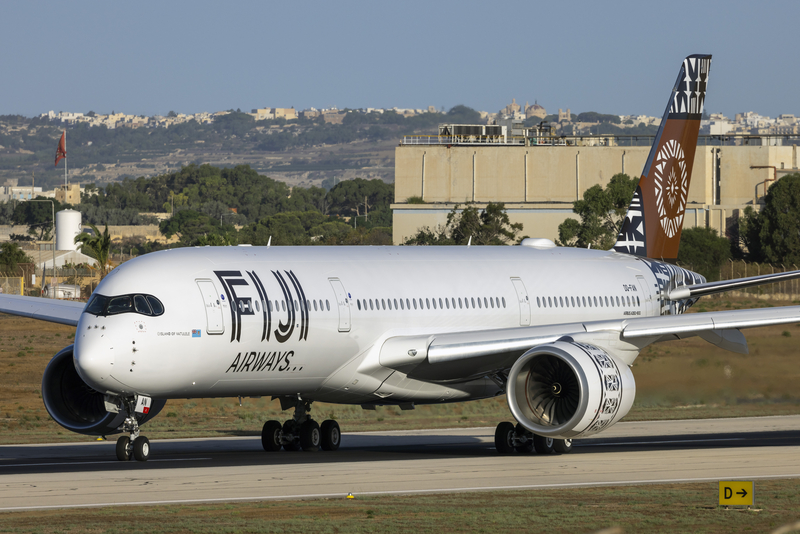
Fiji Airways is dropping its nonstop service between Nadi International Airport (NAN) and Dallas/Fort Worth International Airport (DFW), ending the airline’s newest and longest U.S. route in a move that says a great deal about how quickly long-haul economics can turn.

The route, launched in December 2024, was always strategically ambitious. It gave Fiji Airways access to one of American Airlines’ largest hubs, strengthened the airline’s oneworld relevance, and offered Fiji a broader reach into the U.S. interior beyond the West Coast. On paper, the logic was clear.
In practice, the economics appear to have become much harder to defend.
Read our stories in your inbox
Two aviation newsletters. Zero fluff.
The Suspension Starts In Early September
Fiji Airways will suspend the NAN-DFW route in early September 2026, with the last flight currently scheduled for September 5 and the suspension taking effect from September 7.
That timing matters because the airline is not waiting for the seasonal end of the route to quietly let it fade away. It is pulling the service before the originally planned end of the current operating window, which suggests this was not simply a normal seasonal adjustment. It was an active network decision.
The airline has described the move as a suspension rather than a permanent cancellation, but in airline planning terms, suspensions of this kind often prove difficult to reverse unless conditions improve materially.
Dallas Was Always A More Demanding Bet Than Los Angeles Or San Francisco
The biggest challenge with Dallas/Fort Worth Airport (DFW) is that it was a much longer and more expensive mission than Fiji Airways’ established U.S. gateways at Los Angeles International Airport (LAX) and San Francisco International Airport (SFO).
At roughly 6,625 miles, NAN-DFW was the longest route in the airline’s network. That meant higher fuel burn, more crew cost exposure, and more operational complexity than the West Coast routes. Those disadvantages can be justified if the market produces enough premium, connecting, or high-yield demand. But if it does not, the extra miles become a problem very quickly.
That appears to be what happened here.
Fuel Costs Were Clearly Part Of The Decision
Fiji Airways has directly cited high fuel costs and changing demand patterns as the reasons behind the cut.
That explanation fits the route. Longer flights are disproportionately exposed when fuel prices rise because the incremental cost is harder to recover through fares alone. A route like NAN-DFW may have looked strategically attractive in a more stable fuel environment, but once costs moved sharply higher, the economics likely became much less forgiving.
That is especially true for an airline like Fiji Airways, which does not have the same scale or margin cushion as larger global network carriers.
The Connectivity Argument Was Strong, But The Yield May Not Have Been
The original appeal of Dallas was not hard to understand.
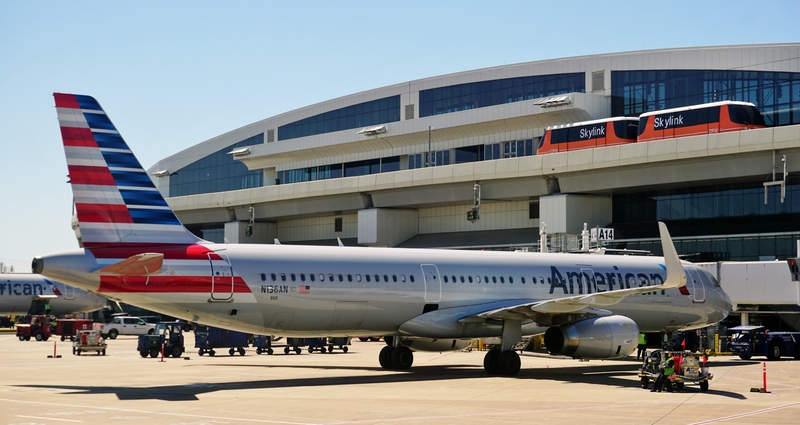
DFW gave Fiji Airways access to a major American Airlines hub and, by extension, one-stop connectivity to many U.S. cities that are less easily reached via Los Angeles (LAX) or San Francisco (SFO). That made the route appealing from a network-design perspective, especially after Fiji Airways’ deeper alignment with American and oneworld.
But network logic does not always translate into fare strength.
A route can have excellent connection possibilities and still struggle if most of the traffic is too price-sensitive to cover the cost of operating it. Fiji is a highly attractive destination, but it remains a niche market for much of inland America. That means Dallas likely depended on a lot of connecting passengers without necessarily generating the kind of premium revenue a flight of that length really needs.
The Aircraft Made Sense — The Market May Not Have
Fiji Airways had planned to operate the route four times weekly with the Airbus A350-900.
That aircraft was the right one for the job. The A350-900 offers strong long-haul economics, modern passenger comfort, and enough range to make a route like NAN-DFW viable in technical terms. This was not a case of the wrong airplane being forced onto the market.
If anything, the route’s cancellation suggests the opposite: even with a highly efficient long-haul widebody, the market still appears not to have delivered enough.
That is an important distinction. The A350 can make difficult routes possible, but it cannot make weak economics disappear.
Vancouver And Hong Kong Will Benefit Instead
The aircraft time freed up by the DFW suspension will not sit idle.
Fiji Airways has already indicated it will use some of the capacity to strengthen other markets, including upgrading select Vancouver International Airport (YVR) services from the Airbus A330 to the Airbus A350 and increasing flying to Hong Kong International Airport (HKG).
That is a revealing choice. It suggests the airline sees better near-term returns in markets with stronger or more reliable demand than Dallas. In other words, this is not simply retreat. It is reallocation.
For network planners, that is usually a healthier sign than an outright contraction with no redeployment.
Air Algérie? No — This Is Really A Story About Air Algérie’s North African Peer
One point worth tightening from some summaries is that the continued Montreal-Algiers context belongs to Air Algérie, not this Fiji story. In Fiji Airways’ case, the more relevant comparison is with its remaining U.S. operation.
The airline will continue to serve Los Angeles (LAX) and San Francisco (SFO), leaving it with 11 weekly departures to the United States after Dallas ends. That means Fiji Airways is not walking away from America. It is narrowing its U.S. strategy to the gateways that appear more commercially defensible.
That is a very different thing from abandoning the market.
Bottom Line
Fiji Airways’ decision to suspend nonstop flights between Nadi (NAN) and Dallas/Fort Worth (DFW) is a reminder that strategic logic and route economics are not always the same thing. The service made sense on paper, especially with American Airlines connectivity and oneworld ties behind it, but the combination of high fuel costs and evolving demand appears to have made the route too difficult to justify.
Los Angeles (LAX) and San Francisco (SFO) remain, and the aircraft time will be used elsewhere, particularly on Vancouver (YVR) and Hong Kong (HKG). So this is less a retreat from growth than a recognition that not every ambitious long-haul route can survive once the cost base turns against it.
Keep reading FlyMag
Get the Daily Brief in the morning or the Route Watch weekly recap on Fridays. Or both.