Royal Jordanian has launched nonstop service between Queen Alia International Airport (AMM) and Dallas/Fort Worth International Airport (DFW), adding a major new U.S. gateway and expanding the carrier’s North American network to five destinations.

The route began on May 10, 2026 and operates four times weekly using Boeing 787 Dreamliner aircraft. For Royal Jordanian, this is more than just another long-haul addition. It is a strategic move into one of the largest and most commercially important U.S. aviation markets, and one that gives the airline a much stronger position in the American South.
For aviation readers, the significance is clear. Dallas is not a marginal route launch. It is the kind of city that can materially change how a network carrier connects the Middle East to the United States.
Read our stories in your inbox
Two aviation newsletters. Zero fluff.
Dallas Becomes Royal Jordanian’s Fifth U.S. Destination
With Dallas now in the system, Royal Jordanian’s U.S. network includes:
- Washington
- Chicago
- New York
- Detroit
- Dallas/Fort Worth
That matters because it gives the airline a broader and more geographically balanced American footprint. Until now, Royal Jordanian’s U.S. map leaned heavily on the East Coast and Midwest. DFW adds a major southern gateway and one of the largest hub airports in the world.
This is not just another city on the route map. It is a scale market.
Dallas Is A Logical Fit For The Airline
The logic behind the route is strong.
DFW is one of the most important air travel centers in the United States, with huge local demand, a major business base, and a large surrounding catchment. It also has a meaningful Arab and Jordanian community, which gives the route a layer of built-in point-to-point demand beyond business and tourism traffic.
That mix is valuable. Long-haul routes tend to perform best when they are supported by more than one segment, and Dallas gives Royal Jordanian the chance to draw from community traffic, business demand, leisure travel, and onward connections on both sides.

The Boeing 787 Is The Right Aircraft For This Mission
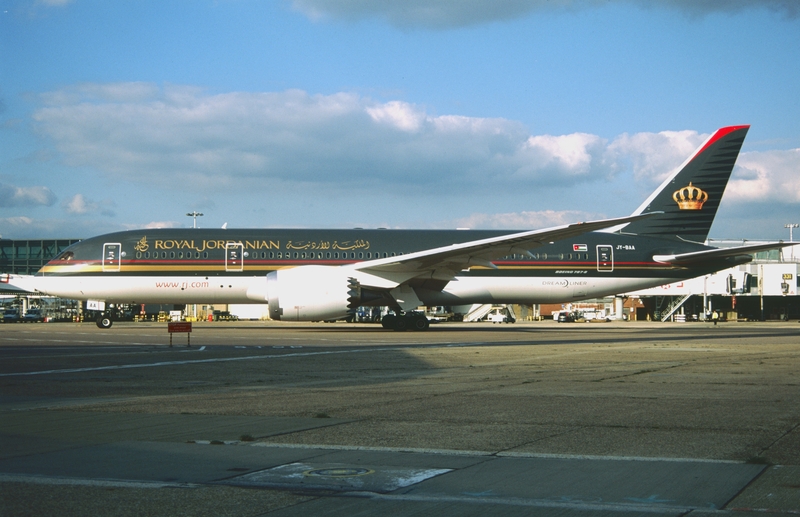
Royal Jordanian is using the Boeing 787 Dreamliner on the route, which is exactly the sort of aircraft you would expect for a market like this.
The 787 gives the airline the range and economics to serve a long sector such as AMM–DFW while maintaining a modern onboard product that can compete effectively for both premium and economy traffic. It is also the airline’s long-haul flagship, which makes its use on Dallas a clear signal that Royal Jordanian sees the route as a serious part of its U.S. strategy rather than a low-risk test.
The aircraft choice supports the ambition behind the launch.
Amman Is Being Positioned As More Than Just The Endpoint
The route is also important because of what sits behind Amman (AMM).
Royal Jordanian is not only selling Dallas to Jordan. It is also selling Dallas to a wider network across the Middle East, and potentially beyond. The airline has been explicit that it sees Amman as a regional transit hub, and this route strengthens that proposition by giving travelers from Texas and beyond a more direct path into Jordan and onward markets.
That is especially relevant in an era when airlines increasingly need every long-haul route to do more than just serve local traffic.
The World Cup Angle Adds A Timely Strategic Layer
Royal Jordanian has also linked the launch to demand expectations around the 2026 FIFA World Cup.
That matters because Dallas is one of the key U.S. cities connected to the broader World Cup travel picture, and airlines are already starting to think about how international traffic patterns may shift around the tournament. Royal Jordanian is effectively positioning itself early, not only for normal route demand but for a period when U.S.-bound and U.S.-connecting international traffic could strengthen further.
Even if the World Cup is not the main reason the route exists, it gives the launch additional strategic timing.
This Is Part Of A Larger Growth Plan
The Dallas route also fits into Royal Jordanian’s broader long-term strategy.
The airline has said it wants to grow its network to around 60 destinations and expand its fleet to roughly 40 aircraft in the coming years. That means Dallas should not be seen as an isolated long-haul move. It is part of a wider effort to rebuild and strengthen the carrier’s global relevance.
For a network airline of Royal Jordanian’s size, that matters. Long-haul growth only works well when it is part of a broader system, not just a collection of individual route experiments.
Bottom Line
Royal Jordanian’s new Amman–Dallas/Fort Worth route is a strategically important addition to the airline’s U.S. network. It gives the carrier a fifth American destination, opens a major southern gateway, and strengthens Amman’s role as a regional long-haul hub.
Operating four times weekly on the Boeing 787, the route is not just about adding another city. It is about giving Royal Jordanian a bigger and more credible North American footprint in one of the largest aviation markets in the world.
Keep reading FlyMag
Get the Daily Brief in the morning or the Route Watch weekly recap on Fridays. Or both.