American Airlines is moving boarding automation from experiment to infrastructure at Dallas Fort Worth International Airport (DFW), and the significance goes well beyond a few new gate scanners.
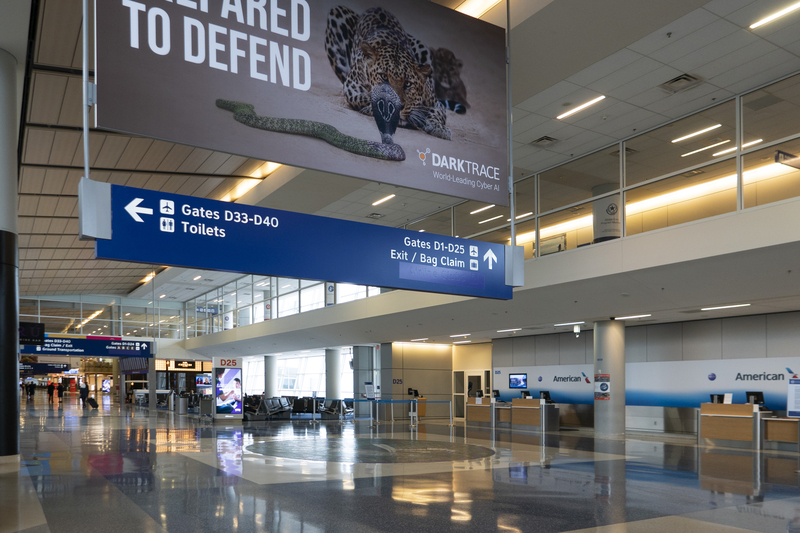
This summer, the airline will begin rolling out nearly 20 electronic boarding gates at its flagship hub, starting with the new pier extensions in Terminals C and A. American says the system will make it the first major U.S. network carrier to deploy this kind of boarding technology at scale at a major hub. That is the important distinction. This is not a one-gate trial or a novelty installation. It is a hub-level operating decision.
For DFW, that matters. American’s largest hub is where the airline’s schedule depth, connection complexity, and daily operating pressure all converge. When boarding slows down there, the impact rarely stays at one gate. It spreads into bank integrity, jetbridge congestion, connection performance, and eventually aircraft utilization across the network.
Read our stories in your inbox
Two aviation newsletters. Zero fluff.
This is really a DFW throughput story
The easiest way to read the eGate rollout is as a customer-experience upgrade. American is clearly presenting it that way, and there is some truth to that. A cleaner self-scan process should reduce the clumping that often builds at the podium just before boarding opens, and clearer gate prompts should make the last few minutes before departure feel less chaotic.
But the deeper value is operational.
American has already been reshaping how DFW functions, moving the hub from nine banks to 13 smaller banks and spreading traffic more evenly through the day. That shift is designed to create more reliable connections and reduce peak-period pressure. In that environment, boarding becomes more than a customer-service ritual. It becomes a control point.
That is where the new gates fit. They are meant to make boarding more predictable, less manual, and easier to pace. At a hub with more than 930 average peak daily departures, even small reductions in variability matter. The airline does not need every flight to board dramatically faster. It needs the process to be steadier and less dependent on how crowded, rushed, or loosely managed a gate happens to feel on a given departure.
Why this matters most on narrowbody turns
The technology may look simple, but its biggest payoff will likely come on the sort of aircraft that dominate large domestic hub banks.
American’s Boeing 737-800 and 737 MAX 8 fleets each seat 172 passengers, while its Airbus A321 carries 190. Those are not small cabins, and they are exactly the kind of single-aisle aircraft where an untidy boarding process can quickly turn into aisle backup, jetbridge crowding, and late door closure. On widebody departures, the process is often longer but more structured. On high-frequency narrowbody flying, disorder is easier to create and harder to unwind.

That is why DFW is such a logical proving ground. American’s hub there is built on repetition, short turns, and high volumes of single-aisle departures. A self-scan gate that meters flow more evenly may not look revolutionary in isolation, but in a dense narrowbody operation it can quietly protect the schedule in ways that matter.
Not biometric boarding, but controlled self-boarding
It is also important to be precise about what American is actually installing.
These are electronic boarding gates, not full biometric boarding portals. Passengers will still scan their own boarding pass, and the gate will validate that pass before opening. The system is meant to guide the customer, regulate the pace of entry, and reduce the familiar rush that often builds at the podium and then bottlenecks at the jetbridge door.

That distinction is important because the value here is not just speed. It is sequencing.
American says the gates will reduce manual tasks for team members, but that does not mean the gate agent disappears. In fact, the opposite is more likely. The gate agent becomes less of a repetitive scanner and more of an exception manager: handling preboards, standby travelers, upgrades, families, special-service requests, and irregular situations that automation cannot resolve cleanly on its own.
For an airline, that is usually the smarter use of labor. The technology does the repetitive validation. The staff handle the judgment calls.
This is the next step after American’s boarding crackdown
The eGate rollout also makes more sense when viewed alongside American’s earlier boarding changes.
In late 2024, the airline expanded software at more than 100 airports that sounds an audible alert when a traveler tries to board before their assigned group has been called. That was a small but telling signal. American had already decided that boarding discipline was worth enforcing more visibly.
The new gates are the physical extension of the same philosophy.
Instead of relying only on an agent with a scanner and a line of waiting passengers, American is building a process that is harder to jump, easier to pace, and more consistent from gate to gate. For an airline with a network as large and hub-driven as American’s, that kind of consistency is valuable. It reduces improvisation. It also reduces the unevenness that frequent flyers notice immediately when one gate boards cleanly and the next feels chaotic.
That is why the DFW move looks less like a gadget story and more like a process story. American is standardizing the final handoff from terminal to aircraft.
The real question is whether U.S. flyers accept it
From an industry perspective, the hardware is not the hardest part.
Automated or semi-automated boarding gates are familiar at many international airports, especially in Asia and parts of Europe. The more interesting question is how they perform at scale inside a U.S. hub environment built around domestic banked flying, last-minute upgrades, family boarding, elite travelers, gate-checked bags, and the very American habit of crowding the gate long before boarding begins.
That is why DFW matters as a case study. If the gates can keep the process moving there, they can probably work almost anywhere in the airline’s network. If they create friction, confusion, or too many exceptions, the rollout will become harder to defend beyond the first phase.
American clearly believes the pilot results were strong enough to justify going bigger. But the real measurement will not be whether customers think the gates look modern. It will be whether push reliability improves, jetbridge congestion eases, and staff can manage the departure environment with fewer manual interruptions.
Bottom Line
American is not just installing self-scan gates at Dallas Fort Worth International Airport (DFW). It is using its biggest hub to test a more controlled version of U.S. boarding.
That is a meaningful development. At DFW, boarding is not a minor airport ritual. It is one of the last variables in a network that depends on timing, repetition, and connection integrity. By automating part of that process, American is trying to make boarding less reactive and more systemized.
If it works, the significance will not be that DFW got new gates. It will be that one of the world’s biggest airline hubs found a scalable way to make boarding behave more like the rest of the operation: structured, measurable, and much less dependent on gate-by-gate improvisation.
Keep reading FlyMag
Get the Daily Brief in the morning or the Route Watch weekly recap on Fridays. Or both.