A KLM long-haul flight to Suriname was forced to divert after Johan Adolf Pengel International Airport (PBM) became unavailable because of an air traffic control staffing breakdown, exposing once again how fragile the country’s aviation system has become.

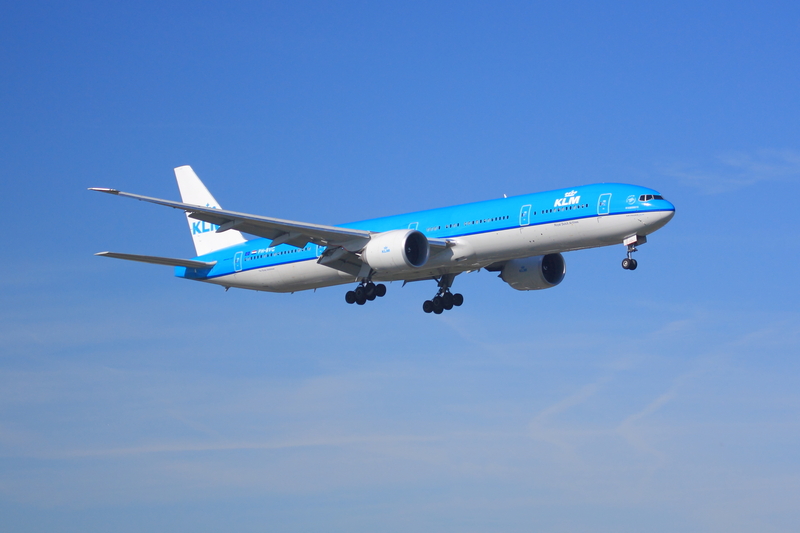
The affected flight was KLM KL713 from Amsterdam Schiphol Airport (AMS) to Paramaribo’s Johan Adolf Pengel International Airport (PBM), operated by Boeing 777-300ER PH-BVP. Instead of landing in Suriname, the aircraft diverted to Piarco International Airport (POS) in Trinidad and Tobago, where passengers were required to remain overnight before the aircraft could continue the following day.
For aviation readers, the most important point is not simply that one flight diverted. It is that a major international airport was effectively unavailable because the control tower could not be staffed reliably enough to support normal operations.
Read our stories in your inbox
Two aviation newsletters. Zero fluff.
This Was Not A Weather Diversion Or A Technical One
KL713 did not divert because of storms, aircraft issues, or airport congestion in the usual sense.
It diverted because Paramaribo’s air traffic control service was not in a position to support arrivals and departures for long stretches of the day. That is what makes the incident especially serious. When a long-haul Boeing 777-300ER cannot land because the destination airport’s control service has broken down, the problem is no longer operational inconvenience. It becomes a basic system-integrity issue.

For airlines, that is a very different kind of risk from normal day-to-day disruption.
The Tower Staffing Problem Appears To Have Lasted For Hours
Local reporting around the incident indicated that the control tower at Johan Adolf Pengel International Airport (PBM) was left without staff for extended periods on Saturday, April 25, with one gap lasting until mid-afternoon and later disruption continuing into the evening.
That matters because it suggests this was not a momentary staffing hiccup resolved in minutes. It was a prolonged breakdown in service continuity.
At an airport handling international traffic, even a relatively modest schedule depends on dependable ATC coverage. If that disappears for several hours, arriving aircraft face a simple problem: they cannot count on being accepted safely and legally into the airfield system.
That is exactly the sort of uncertainty long-haul operators try to avoid.
The Diversion To Trinidad Was The Logical Option
Once it became clear that Paramaribo could not receive the aircraft, the diversion to Piarco International Airport (POS) made operational sense.
POS is a credible regional alternate with the infrastructure to accept a KLM 777-300ER, and it provides a practical holding point in the northern South American-Caribbean operating area. The fact that the passengers then had to remain overnight reflects the wider consequence of this kind of diversion: once crew duty limits, handling, customs, and onward airport availability all come into play, even a relatively short diversion can become a full operational disruption.
For KLM, this was not just a reroute. It was a network interruption that displaced a widebody aircraft and an entire long-haul passenger load.
Suriname’s ATC Problem Is No Longer An Isolated Story
What makes the event more troubling is that it fits a wider pattern rather than looking like a singular freak occurrence.
Suriname has been grappling with air traffic control staffing issues for some time, including labor tension, retention problems, and difficulty maintaining enough trained personnel to sustain robust operations. In practical terms, that means the system has less resilience than it should. When people are absent, overworked, or in conflict with management, service gaps can quickly become operationally critical.
That is a dangerous place for a country’s aviation infrastructure to be, especially when international connectivity depends so heavily on one primary airport.
The NOTAM Downgrade Shows This Was Treated As A Safety-Service Reduction
Authorities reportedly issued a NOTAM downgrading the airspace service level because of the staffing shortfall.
That detail is important because it confirms the problem was not merely administrative. It was recognized operationally and formally. A downgrade in service classification reflects a reduction in the level of air traffic support available, and for airlines that can be just as consequential as a weather closure or airport equipment outage.
For professional operators, NOTAM language like that is not background noise. It directly shapes route decisions, fuel planning, and diversion strategy.
Paramaribo’s Importance Makes The Risk Bigger
Suriname does not have the kind of dense alternative airport network that some larger countries can fall back on when one facility stumbles.
That gives Johan Adolf Pengel International Airport (PBM) unusual importance. It is not just the main international airport. It is effectively the country’s essential aviation gateway. If service reliability there becomes uncertain, the effect on connectivity, tourism, business travel, and cargo movement can be disproportionately large.
That is one reason the KLM diversion matters beyond the individual flight. It highlights how vulnerable the national system is when the airport at the center of it cannot guarantee basic ATC continuity.
Airlines Will Start Pricing In Reliability Risk
If these disruptions continue, the consequence will not only be more diversions.
Airlines may begin to treat Suriname as a higher-risk operational market. That can mean more cautious fuel planning, greater reliance on alternates, reduced schedule confidence, and in extreme cases, reconsideration of network commitment. Even if carriers do not withdraw, they may still price in more disruption risk and lower operational trust.
For a country that depends heavily on air links, that is a serious issue. Reliability is not just a convenience factor. It is part of the airport’s commercial credibility.
This Is Also An Economic Problem, Not Just An Aviation One
The staffing crisis has obvious aviation consequences, but the ripple effects go further.
When flights cannot land, the damage spreads into tourism, onward travel, cargo flows, and the wider business environment. Overflight confidence can also be affected if the country’s air navigation system is seen as unstable. For Suriname, that means the cost of unresolved ATC problems is not confined to the airport perimeter.
It becomes a national connectivity problem.
Bottom Line
KLM flight KL713’s diversion from Paramaribo (PBM) to Port of Spain (POS) was not just an unusual operational setback. It was a visible sign that Suriname’s air traffic control staffing problem has reached the point where it can shut down the country’s main international airport to arriving long-haul traffic.
The Boeing 777-300ER and its passengers eventually made it safely to Suriname, but the bigger issue remains unresolved. An airport system that cannot guarantee consistent tower staffing will struggle to maintain airline confidence, and in a market as dependent on aviation as Suriname, that is a serious strategic weakness.
Keep reading FlyMag
Get the Daily Brief in the morning or the Route Watch weekly recap on Fridays. Or both.