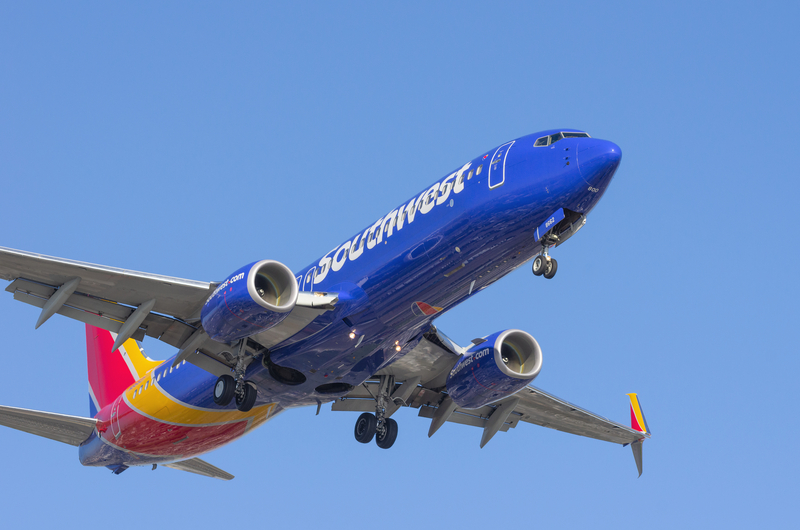
Southwest Airlines (WN) has spent more than a decade dipping a toe into international flying, yet its operation remains overwhelmingly domestic by design. What’s changing in 2026 isn’t the percentage share so much as the shape of the flying—longer stage lengths, more off-peak utilization, and routes that look increasingly like “real network plays,” not just bolt-on leisure add-ons.

The latest example: a new nonstop between Harry Reid International Airport (LAS) and Juan Santamaría International Airport (SJO) in Costa Rica. When it launches on October 1, 2026, it will become Southwest’s longest scheduled international route by great-circle distance, edging past the carrier’s existing long-haul leader to SJO.
Read our stories in your inbox
Two aviation newsletters. Zero fluff.
A first-ever nonstop between LAS and Costa Rica
The LAS–SJO market has historically required a connection—usually over Los Angeles (LAX), Phoenix (PHX), Dallas/Fort Worth (DFW), Houston (IAH/HOU), or another major connecting point depending on the airline. Southwest’s move changes that overnight (literally): it’s scheduled as a daily nonstop and positioned as the first nonstop service ever between Las Vegas (LAS) and Costa Rica (SJO).
From a network-planning lens, this is classic Southwest: take a sizable “already traveling” O&D market, remove the connection penalty, then let the carrier’s domestic feed amplify it.
Nashville Near Miss Puts Focus On ATC Decision-Making, Not Just Southwest’s TCAS Save
The distance: why this is now Southwest’s longest international sector
By great-circle distance, LAS–SJO comes in at roughly 2,300 nautical miles (about 4,260 km), placing it firmly in “long thin” territory for a classic U.S. narrowbody operation.
That’s enough distance to change how the route behaves operationally:
-
Crew duty and reserve coverage become more sensitive to small delays.
-
Turns matter more—especially when a late departure can ripple into the next day’s aircraft routing.
-
Payload planning becomes a real discussion, not a footnote (more on that below).
It also bumps Denver (DEN)–SJO—which Southwest has operated on limited frequency—down the list. Denver’s route proved that Southwest could make Costa Rica work from an interior U.S. gateway; Las Vegas now tests whether the carrier can scale it daily with a bank-friendly schedule and heavier domestic feed.
The schedule: Southwest’s first international red-eye
This route is also notable for the clock, not just the miles.
The southbound flight is filed as a late-night departure out of LAS, arriving SJO early the next morning—Southwest’s first international red-eye. From an aircraft-utilization perspective, it’s a smart place to put longer flying: Las Vegas is a 24-hour airport, and a red-eye departure allows Southwest to convert what would otherwise be lower-productivity nighttime ground time into revenue hours.

The published timings also set up a useful morning arrival into SJO, which is attractive for leisure travelers who want a full first day on the ground—and for tour operators and hotel transfer providers who prefer daylight arrivals.
Aircraft choice: why the Boeing 737-700 is a logical (and demanding) fit
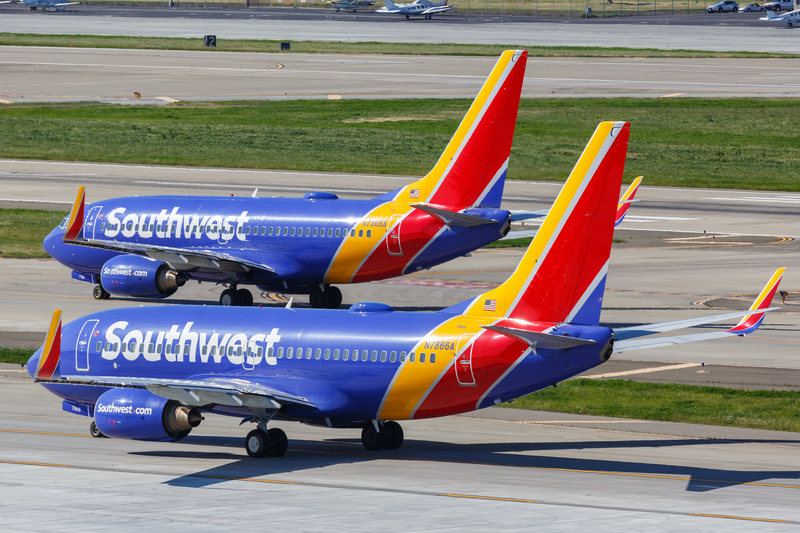
At launch, the route is slated for the Boeing 737-700 (737-7H4)—still a workhorse in Southwest’s fleet and, in many ways, the carrier’s most flexible scheduling tool. The -700’s economics are familiar, its dispatch reliability is well understood, and it’s an easy aircraft for Southwest to rotate through a domestic-heavy system without creating specialized sub-fleets.
For aviation readers, two details stand out:
1) This is long-haul flying for a “classic Southwest” airframe.
A 2,300 nm sector pushes the -700 into the upper end of what most passengers associate with Southwest’s traditional mission, even though it remains well within the aircraft’s capability envelope for range.
2) The cabin configuration is changing in 2026.
Southwest has been modifying its 737-700 interiors ahead of its broader cabin and seating modernization, and the current retrofit direction reduces the -700’s seat count from its historical high-density layout to a 137-seat configuration as the carrier carves out extra-legroom seating zones. On a route like LAS–SJO, that’s a meaningful trade: fewer seats, but improved product segmentation and potentially stronger revenue per departure.
Performance and airport environment: LAS and SJO aren’t “easy mode”
This route also isn’t simply “point the nose south and go.”
Both endpoints sit at meaningful elevation:
-
LAS is just over 2,180 feet above sea level.
-
SJO is roughly 3,020 feet above sea level, and its location in the Central Valley means warm daytime conditions are common.
High elevation plus heat can reduce engine and wing performance, which is why runway length matters. SJO’s primary runway is just under 9,900 feet, providing helpful margin for a narrowbody operating longer segments—especially if dispatch needs to protect for alternates, weather, or operational constraints.
In plain terms: the route is absolutely doable, but it will be flown with the kind of performance planning you’d expect from a longer stage length into a higher airport—particularly on peak travel days.
Why this route makes sense for Southwest’s network right now
Even if you ignore the “longest-ever” headline, LAS–SJO is strategically tidy.
Las Vegas (LAS) is a domestic feed machine. Southwest has deep scale in the West and strong connectivity into LAS from markets like Los Angeles (LAX), San Francisco (SFO), Seattle (SEA), Phoenix (PHX), San Diego (SAN), and Portland (PDX)—exactly the kind of feeder network that can support an international spoke without relying purely on local O&D.
San José (SJO) is a high-utility leisure gateway. It’s not just “Costa Rica.” It’s access to the Central Valley, Arenal, Monteverde, and the Pacific coast via a broad ground-transport ecosystem. Southwest already serves SJO from multiple U.S. cities, so this is less a bet on Costa Rica demand and more a bet on capturing it more efficiently through LAS.
The market is already traveling. Booking and O&D datasets show a meaningful flow of passengers between LAS and SJO even without nonstop service. Nonstops typically stimulate demand—especially in leisure markets where travelers are highly sensitive to connection time, misconnect risk, and overnight itineraries.
Bottom Line
Southwest’s new Las Vegas (LAS)–San José, Costa Rica (SJO) nonstop, launching October 1, 2026, is more than a new dot on the map. It’s a signal route: daily, overnight, and—by distance—Southwest’s longest scheduled international sector to date.
For airline professionals, the interesting part is the combination of levers Southwest is pulling at once: converting nighttime downtime into productive flying, testing a longer stage length with the 737-700, and using LAS as a high-feed launching pad into a proven leisure gateway at SJO. If the operation runs reliably—and the demand stimulation behaves the way similar leisure nonstops often do—this won’t just be Southwest’s longest international route. It’ll be a template.
Keep reading FlyMag
Get the Daily Brief in the morning or the Route Watch weekly recap on Fridays. Or both.