A reported lavatory systems failure onboard Philippine Airlines (PAL) Flight PR113 has put an uncomfortable spotlight on how airlines balance operational continuity with crew safety when onboard conditions deteriorate far from diversion airports.

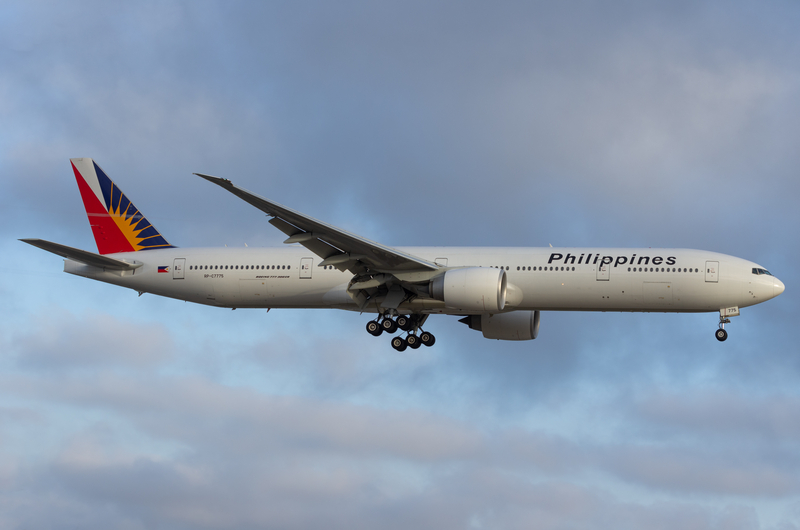
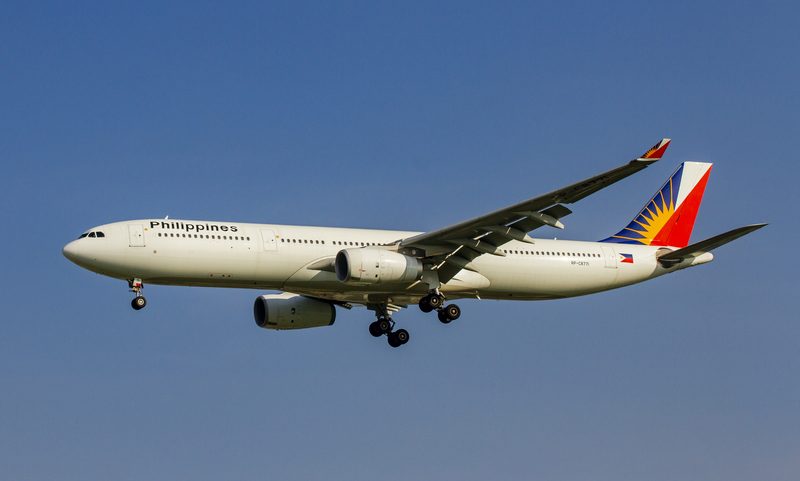
The trans-Pacific service from Los Angeles (LAX) to Manila (MNL)—typically a 15-hour sector—was operated by a Boeing 777-300ER, one of the workhorses of long-haul flying and a type PAL has long relied on for high-density international missions. Reports allege that during the crossing, the aircraft experienced a near-total or complete loss of toilet flushing capability, triggering improvised measures to keep at least some lavatories usable until arrival.
PAL has acknowledged an in-flight lavatory malfunction and said a diversion was considered before the flight continued to MNL.
Read our stories in your inbox
Two aviation newsletters. Zero fluff.
What’s being alleged onboard PR113
According to multiple accounts circulating within aviation and labor circles, the 777’s flushing system failed mid-flight, leaving lavatories clogged and increasingly unusable. Crew members have alleged they were instructed to manually remove waste from blocked toilets and dispose of it into nearby basins to prevent overflow and keep limited facilities available.
That allegation matters because it crosses into occupational health territory. Handling human waste is treated as a biohazard risk in most workplace safety frameworks, and airlines typically do not expect cabin crew to perform this kind of task without specialized training and protective equipment.
The most important point for readers: this is not being discussed as a “service disruption” issue. It’s being discussed as a safety culture and crew protection issue.
Why the Boeing 777-300ER context matters
On the Boeing 777-300ER, lavatories are vacuum-assisted systems designed for high reliability over long stages, with multiple lavs distributed across cabin zones to prevent single-point failures from crippling the cabin. When a long-haul widebody sees widespread lavatory inoperability, it often points to a system-level issue rather than a single clogged unit.
Operationally, a full or near-full lavatory failure can be driven by factors like:
-
Loss or degradation of vacuum capability (affecting multiple lavs at once)
-
System control faults that prevent flushing logic from functioning normally
-
Blockages or waste line issues that propagate across connected sections
-
Reset attempts that don’t restore stable operation
None of these possibilities confirm what happened here—only the eventual technical review can do that—but they explain why “all lavs” reports raise eyebrows in engineering and cabin safety circles.
The diversion question: why it’s complicated over the Pacific
A key tension in this story is the decision to continue rather than divert. Over the mid-Pacific, diversion options can be limited and operationally expensive—sometimes requiring hours of additional flying, landing at a station with limited maintenance capability for that aircraft type, and absorbing cascading impacts: passenger accommodations, crew legality, replacement aircraft, and onward connectivity.
In this case, Guam (GUM) has been widely cited as the most plausible practical diversion point once the flight was deep into the oceanic portion of the route.
But the presence of diversion options doesn’t automatically make diverting the default choice. Airlines weigh:
-
Passenger health and dignity impacts versus the time-to-diversion
-
The likelihood of restoring partial functionality with onboard procedures
-
Station capability to recover a widebody and handle hundreds of passengers
-
Crew duty limits and the probability of a multi-day disruption
That’s the operational reality—yet it does not negate the core issue raised by the allegations: even under pressure, operational recovery should not require crew to assume biohazard exposure.
Where airline procedure and crew safety collide
Most cabin crews are trained and equipped to manage bodily fluid incidents as a matter of routine—vomit, blood, and other contamination events—using standard onboard kits and containment procedures. But manual waste removal from lavatory bowls is a different category of exposure, with added contamination pathways and sanitation risks.
That’s why this incident has triggered scrutiny: aviation safety professionals generally expect that when lavatories become unusable at scale, the response is to isolate affected units, manage the passenger flow to remaining facilities (if any), and, if necessary, divert—not to turn cabin crew into de facto lavatory maintenance.
Even if the actions were taken out of necessity and away from passengers, the precedent concerns unions and safety observers are flagging are straightforward:
-
What protective equipment was available, if any?
-
Who authorized the mitigation steps, and under what guidance?
-
Did any written procedure explicitly cover this scenario?
-
What will be changed to prevent recurrence?
What happens next: the questions PAL will be expected to answer
PAL’s acknowledgment of the malfunction and mention of operational assessment suggests an internal review process is likely already underway. The industry will be looking for clarity on two tracks:
Technical track
-
What failed: a localized clog cascade, a system controller issue, or a broader vacuum/flush failure?
-
Whether maintenance actions were performed on arrival at MNL and what they found
-
Whether any deferred maintenance history exists on the lavatory system for the assigned 777-300ER
Safety and labor track
-
Whether crew were instructed to handle waste directly, and by whom
-
What PPE and biohazard protocols were available onboard
-
What guidance exists for “all-lavatories compromised” scenarios on long-haul routes
-
Whether crew reporting channels and post-flight escalation were used and acted upon
Bottom Line
A long-haul Philippine Airlines (PAL) Boeing 777-300ER operating PR113 from Los Angeles (LAX) to Manila (MNL) suffered an acknowledged in-flight lavatory malfunction that has now escalated into a broader debate about crew protection and operational decision-making. Overwater diversions are never simple—but if the reported manual waste handling occurred as alleged, the real issue becomes less about a broken system and more about whether airline procedures and oversight adequately protected the people tasked with managing the cabin when the system failed.
Keep reading FlyMag
Get the Daily Brief in the morning or the Route Watch weekly recap on Fridays. Or both.