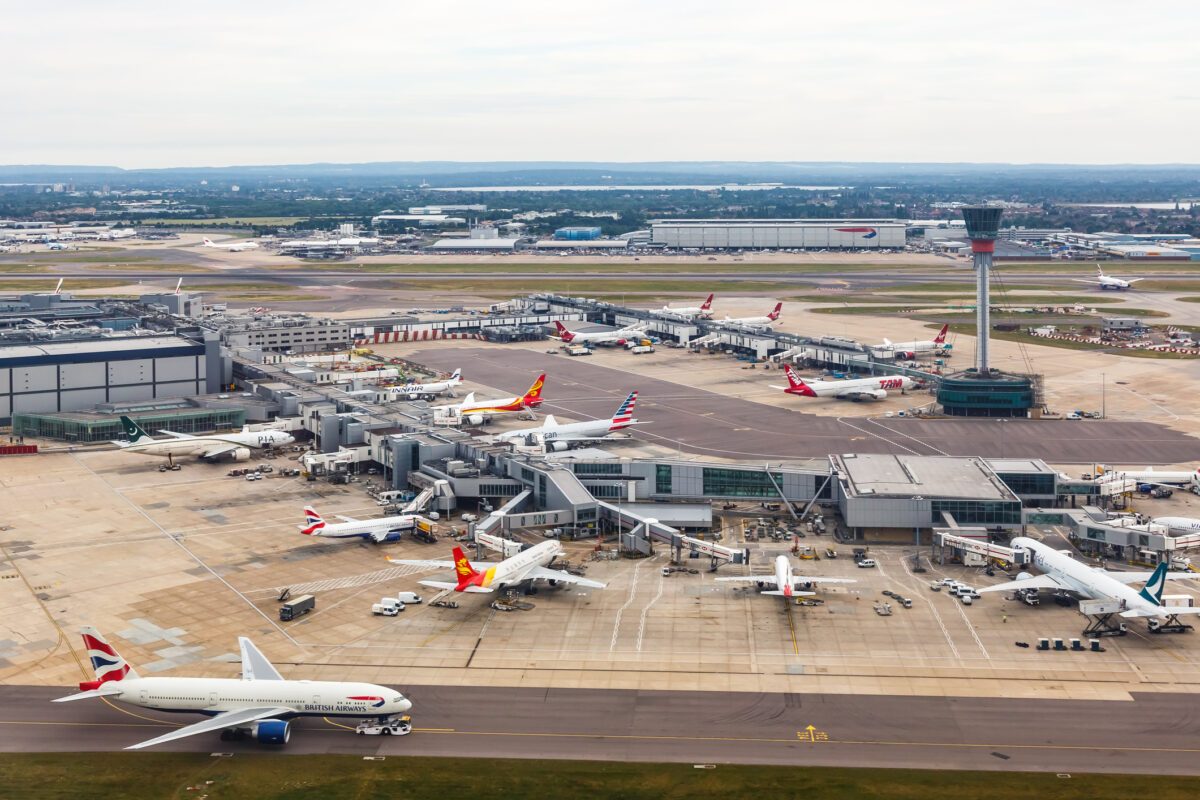
London Heathrow (LHR) has left room for its proposed third runway to open as late as 2039, although the airport has not formally replaced the government’s 2035 target with a new fixed opening date.
The later date follows from Heathrow’s current delivery language. Its latest pre-application schedule says the government has set a timetable to secure planning permission by 2029 and bring the runway into operation “in a decade.” Taken from the point of approval, that gives Heathrow until 2039.
The distinction matters. The 2035 objective remains embedded in government policy and Heathrow’s underlying construction plan, but the airport’s public timetable now allows a longer delivery period if planning, financing or construction takes more time. An opening before 2039 would depend on consent being secured promptly and work advancing without major delays.
Read our stories in your inbox
Two aviation newsletters. Zero fluff.
Planning Application Scheduled for November 2027
Heathrow expects to hold a further project consultation in fall 2026. Its indicative program then calls for the Planning Inspectorate to review draft application documents in late 2026 or early 2027, followed by submission of the Development Consent Order application in November 2027.
The airport is working toward a decision during the current Parliament, with 2029 retained as the target for development consent. Heathrow cautions in its own schedule that future milestones remain indicative and may change as the policy framework, project design and environmental work develop.
The runway cannot be approved solely through the airport’s application. The government must first complete its Heathrow Expansion National Policy Statement, which will become the framework used to judge the proposal. The draft policy statement published in June 2026 addresses economic growth, climate, air quality and noise, but does not itself grant permission to build.
Heathrow expects the final policy statement by the end of 2026. The Development Consent Order would then face examination by the Planning Inspectorate and a final decision from the transport secretary. Airspace redesign is proceeding separately and will have to be coordinated with the runway’s planning and construction program.
Runway Designed for Independent Operations
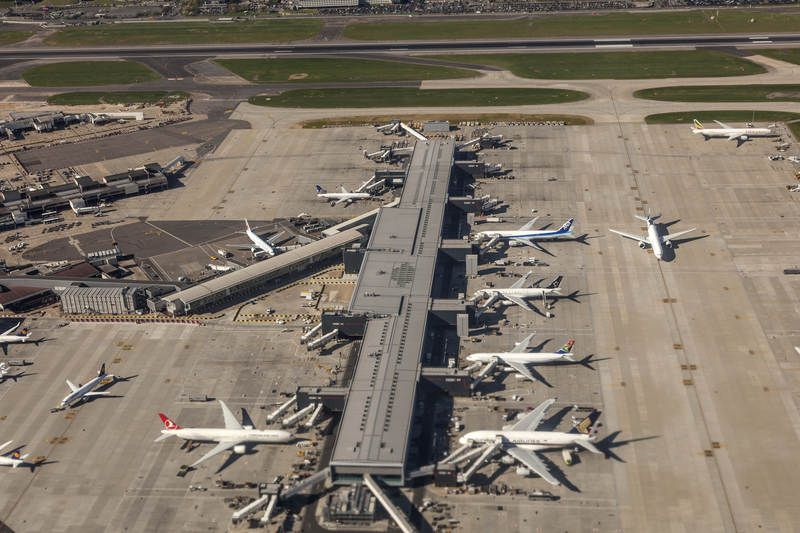
Heathrow’s proposal centers on a 3,500-meter runway approximately one kilometer northwest of the existing northern runway. The two would be separated by 1,035 meters, enough to support independent parallel operations and simultaneous arrivals and departures.
The proposed width and length would accommodate Code F aircraft, including the Airbus A380, while Heathrow has also designed the runway around future long-haul types such as the Boeing 777X. That capability is important to the hub’s operating model: a shorter runway could impose payload restrictions on long-range departures during unfavorable weather or at higher operating weights.
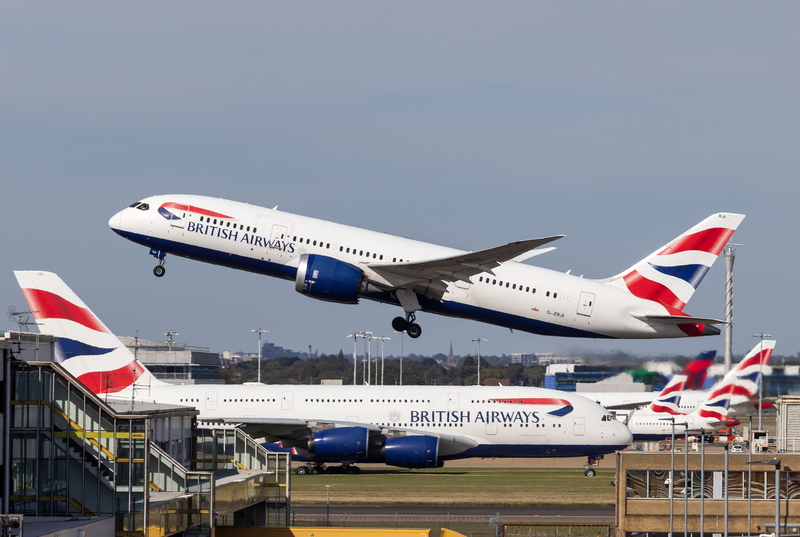
The additional runway would lift Heathrow’s planned maximum capacity to as many as 756,000 annual aircraft movements, an increase of up to 276,000 over the two-runway system. Passenger capacity would eventually rise toward 150 million a year, although terminal and stand capacity would be delivered in phases rather than arriving in full when the runway opens.
The project also includes new taxiways, an expanded Terminal 5 campus, additional satellite buildings and a major redevelopment of the central terminal area. Heathrow plans to expand Terminal 2 and ultimately close Terminal 3 as later phases of the program are completed.
One of the most complex enabling projects is the M25 realignment. The motorway would be lowered and moved through a tunnel structure beneath the western part of the new runway. The plan also requires river diversions, utility relocations, land acquisition, new road connections and environmental mitigation across a wide area north and west of the existing airfield.
Independent Review Found 2035 Ambitious
A technical assessment commissioned by the UK Civil Aviation Authority found that opening in December 2035 was feasible but ambitious. The review by transport consultancy Steer estimated that a more conservative schedule could push runway opening to December 2037.
Steer allowed 39 months for the planning process, compared with 32 months in Heathrow’s assumptions. It also factored in additional time for compulsory land acquisition, construction mobilization and design work. Its alternative program ran for 144 months, or 12 years, from the start of the assessed delivery period.
The review identified the consent process as the dominant driver of the schedule. Delays there would flow into procurement, construction and operational readiness. It also said commissioning a project of this scale could require six to 12 months of testing to integrate the runway, taxiways, air traffic control systems and existing airport operations safely.
Supply-chain pressure presents another risk. Heathrow’s work would overlap with other major UK infrastructure programs, creating competition for specialized labor, construction equipment and materials. The airport must also maintain one of the world’s busiest international hubs throughout the building program.
Financing Framework Remains Critical
Heathrow valued its wider expansion and modernization program at approximately £49 billion when it submitted the proposal to the government in 2025. That included £21 billion for the runway and associated airfield infrastructure, £12 billion for new terminal and stand capacity, and £15 billion for modernization of the existing airport.
The airport says the project will be privately financed, but the regulatory treatment of spending and future airport charges will determine whether investors commit capital. In July 2026, the CAA authorized Heathrow to recover up to £320 million, in 2024 prices, of eligible early expansion costs through airport charges, subject to safeguards and independent scrutiny.
That decision covers the planning and design work needed to prepare the consent application. It does not settle the long-term model for financing construction, allocating risk or recovering the eventual multibillion-pound investment from airlines and passengers.
The result is a delivery program with several overlapping clocks. Heathrow is preparing a November 2027 application and seeking consent by 2029. The government continues to promote 2035 as the operational goal. Independent technical work points to 2037 as a plausible later outcome, while Heathrow’s broader promise of opening within a decade of approval extends the outside window to 2039.
Bottom Line
The change in language turns 2035 from a firm-looking delivery date into the fastest credible outcome. Heathrow can still reach that target, but only if the policy statement, consultation, Development Consent Order examination, financing framework and early construction packages advance with little lost time. For a project that includes a new runway, a motorway tunnel, terminal construction and extensive utility work, that is a demanding sequence.
Airlines gain from keeping the project alive but will watch the financing structure as closely as the opening date. Additional slots could deepen hub connectivity and support new long-haul markets, yet higher charges during development could affect the economics of operating at LHR years before the extra capacity becomes available.
The next meaningful indicators will be Heathrow’s fall consultation, completion of the national policy statement and the level of design maturity visible before the November 2027 application. Those milestones will show whether 2035 remains an executable construction target or whether the industry’s planning assumptions should move toward the later 2037-to-2039 window.
Keep reading FlyMag
Get the Daily Brief in the morning or the Route Watch weekly recap on Fridays. Or both.