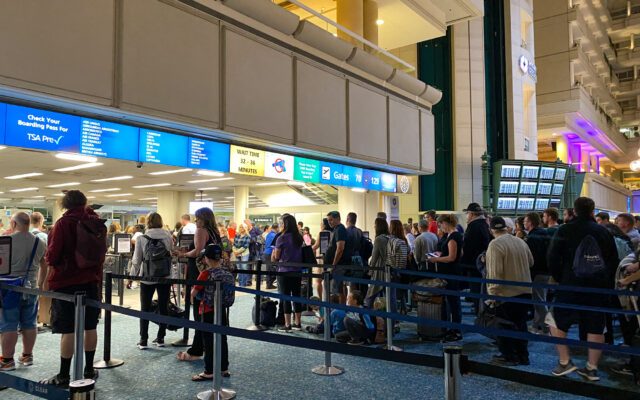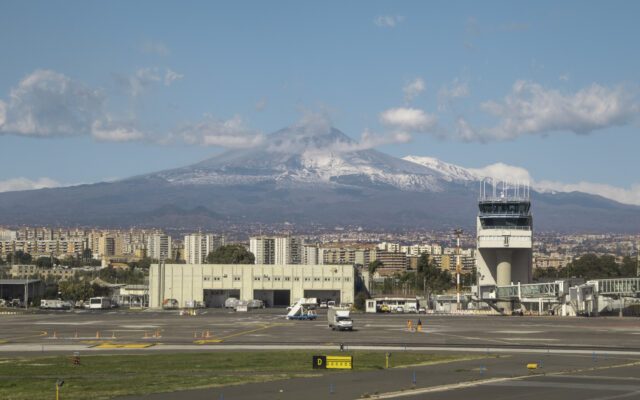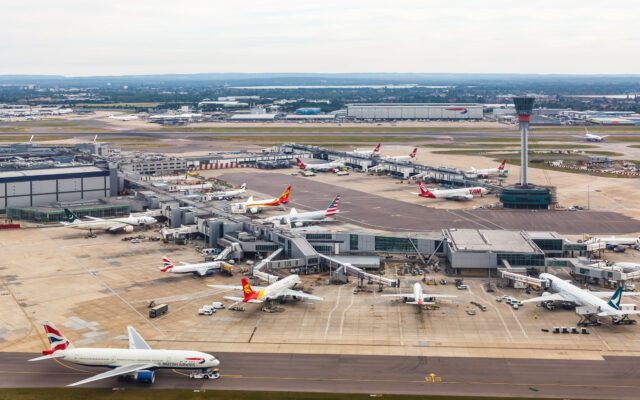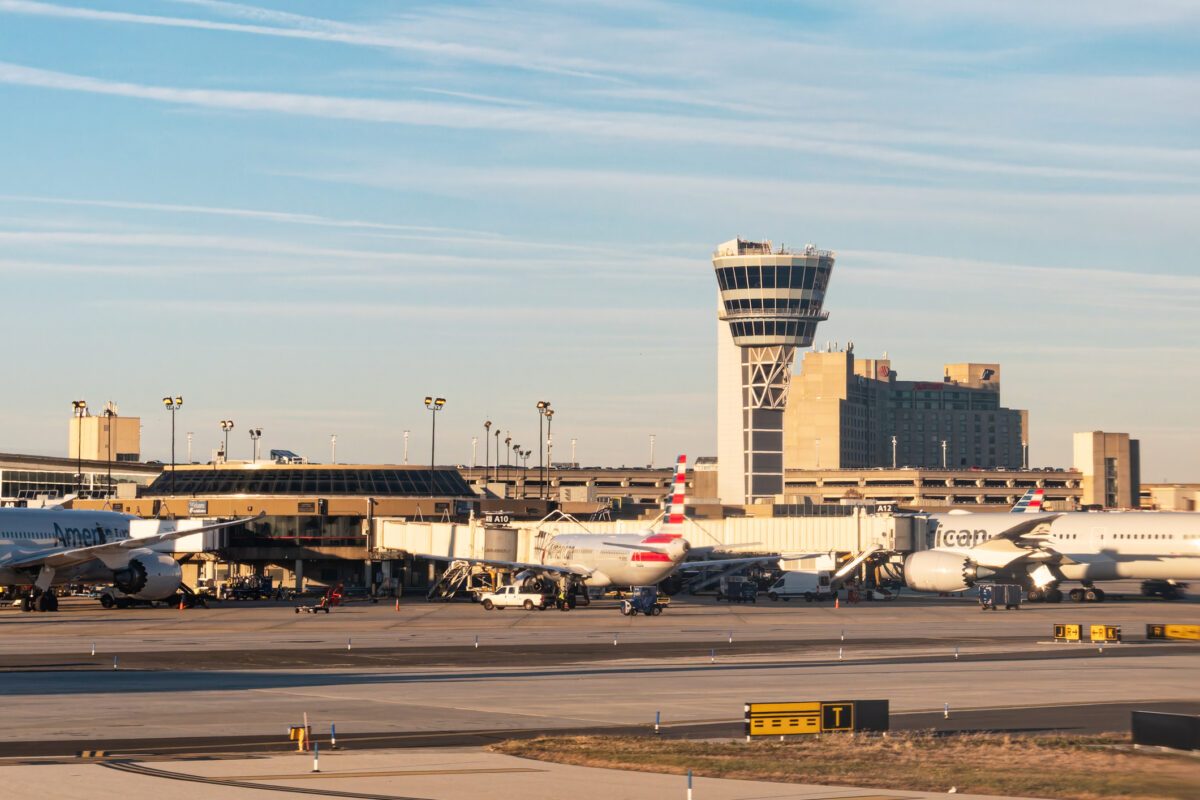
An air traffic control equipment outage at the Philadelphia Terminal Radar Approach Control facility brought arrivals across the Northeast to a halt Monday, disrupting operations at Philadelphia (PHL), Newark (EWR), New York JFK (JFK), LaGuardia (LGA) and several secondary airports.



The disruption began during the morning of September 21 and expanded through the New York terminal area around midday. Federal Aviation Administration traffic-management records show repeated ground stops, airspace restrictions and exceptionally long modeled delays as technicians worked on automation and communications equipment within Philadelphia TRACON.
By Monday evening, the FAA had moved PHL and EWR from full ground stops to tightly controlled ground delay programs. The transition allowed arrivals to restart, but at rates well below normal demand, leaving airlines with displaced aircraft, crews and passengers to recover into Tuesday.
Read our stories in your inbox
Two aviation newsletters. Zero fluff.
Newark Ground Stop Began in the Morning
The first major restriction covered Newark. An FAA ground-stop advisory shows the initial EWR program beginning at 9:12 a.m. Eastern, with the agency identifying an equipment outage as the cause.
The scope initially covered departures from FAA centers in the Northeast and eastern Canada. It later expanded across the continental United States and major Canadian gateways as the expected duration grew.
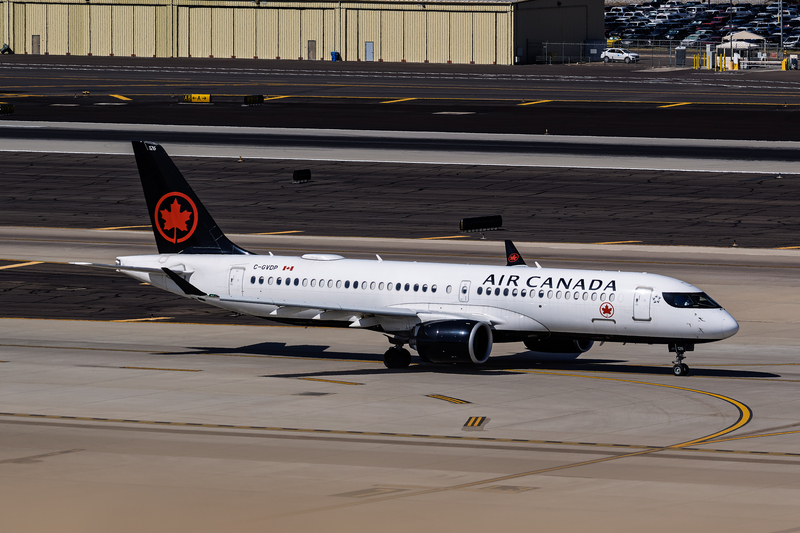
By early afternoon, the FAA’s model for the EWR stop showed an average delay of 188 minutes and a maximum of 418 minutes. Those figures represented traffic-management assignments rather than final passenger delay statistics, but they demonstrated the size of the queue building outside the constrained airspace.
The impact at EWR was particularly severe because Philadelphia TRACON controls the terminal airspace serving Newark and Teterboro (TEB). The FAA transferred responsibility for that airspace from New York TRACON to Philadelphia in 2024, placing EWR’s approach operation under the affected facility.
The agency subsequently installed a new fiber-optic communications network between New York and Philadelphia, with two separate paths intended to improve resilience. That project followed the damaging Newark radar and radio outages of 2025.
Restrictions Spread Across New York Airspace
The outage broadened shortly before 1 p.m. Eastern. The FAA stopped JFK arrivals at 12:38 p.m., according to the agency’s JFK advisory. Its initial program covered departures from much of the eastern United States, the upper Midwest and eastern Canada.

A separate LaGuardia ground stop began five minutes later. The FAA described the LGA restriction as an “airspace sterilization for equipment maintenance,” indicating that controllers needed traffic cleared from the affected area while technical work was underway.
Removing traffic from an airspace sector gives controllers and technicians room to test systems without continuing to accept a normal arrival stream. For airlines, however, the measure immediately strands aircraft at their departure points and forces airborne flights to hold, divert or enter airports through whatever reduced routes remain available.
The outage also affected Teterboro and smaller airports surrounding New York and Philadelphia. In its afternoon national operations plan, the FAA listed stops for Morristown, Essex County, Linden, Wilmington, Trenton and Northeast Philadelphia alongside the four large commercial airports.
Boston (BOS) also came under pressure as diverted traffic increased demand within Boston Center. The FAA revised its Boston delay program while managing aircraft that could no longer continue to their planned New York or Philadelphia destinations.
Philadelphia Restarted at a Fraction of Normal Capacity
At 2 p.m. Eastern, the FAA reported that automation and equipment problems were continuing within Philadelphia TRACON’s Area C. PHL arrivals had restarted, but only at limited capacity.
The agency replaced the airport’s ground stop with a ground delay program shortly before 3 p.m. The initial arrival rate was set at 16 aircraft per hour before stepping up to 32 and eventually 48 later in the program.
The FAA model produced an average assigned delay of 212 minutes and a maximum of 610 minutes. It also barred unscheduled “pop-up” demand, ensuring that only flights already accounted for in the traffic-management program entered the arrival queue.
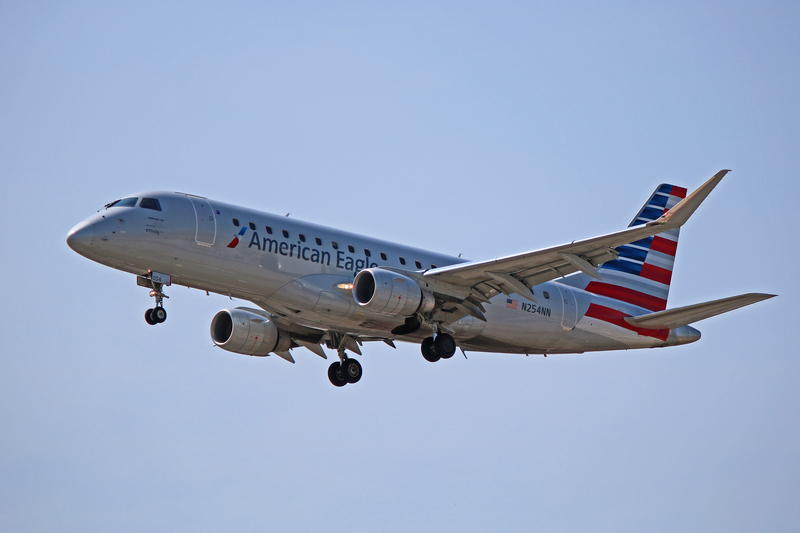
The restriction struck the center of American Airlines’ Philadelphia connecting operation. American’s 2026 schedule at PHL serves more than 120 destinations and uses seven coordinated arrival-and-departure banks. The airline also operates long-haul Boeing 787-8 flights from Philadelphia, alongside a large narrowbody and regional schedule. A prolonged interruption during a bank can therefore affect both domestic connections and aircraft rotations feeding the evening transatlantic operation.
United Airlines faced the equivalent problem at Newark, where its network depends on tightly sequenced waves of mainline and regional flights. United posted an air traffic control travel waiver covering EWR and PHL, while Delta issued a Northeast outage waiver for travel through Boston, Newark and Philadelphia on September 21 and 22.
Newark Recovery Began Late in the Day
The FAA continued testing the Newark sector during the afternoon. At 4:23 p.m. Eastern, an EWR advisory said Philadelphia Area C was accepting an inbound aircraft to test its automation before deciding whether the ground stop could be lifted.
EWR moved to a ground delay program at approximately 5:38 p.m. The recovery began with arrival rates of 20 to 36 aircraft per hour. By then, the modeled average delay had reached 306 minutes, with the most heavily delayed flight assigned more than 21 hours.
Even after the equipment returned to service, those restrictions prevented an immediate surge of traffic into Newark. Metering arrivals is essential after a prolonged stop because gates, taxiways and ramp areas can quickly become saturated as delayed flights converge on the airport.
The outage occurred on the same day the Department of Transportation and FAA unveiled SMART, a new national traffic-management platform intended to combine weather, flight, route and staffing data. The tool is designed to improve strategic management of demand, but Monday’s disruption centered on the underlying communications and automation infrastructure required to keep individual sectors operating.
Bottom Line
The operational lesson extends beyond the airports placed under formal ground stops. Philadelphia TRACON now occupies a critical position in two separate airline networks: American’s Philadelphia hub and United’s Newark hub. An outage within the facility can constrain both simultaneously, while restrictions imposed to protect adjoining New York airspace can quickly reach JFK, LaGuardia and Teterboro.
The FAA’s 2025 work added communications paths and local radar-processing capability for Newark, but Monday’s event shows that resilience must cover the full chain of radios, data circuits, automation and facility interfaces. Redundancy is valuable only when backup paths remain independent and can assume traffic without forcing controllers to clear large sections of airspace.
Airlines will spend Tuesday repositioning aircraft and crews, particularly at Newark and Philadelphia, where disrupted connecting banks can carry irregular operations into the following day. The larger question is whether the FAA’s review identifies a localized component failure or a broader vulnerability within the architecture linking Philadelphia TRACON to the airports and control facilities around it.
Keep reading FlyMag
Get the Daily Brief in the morning or the Route Watch weekly recap on Fridays. Or both.