United Airlines has launched two new nonstop long-haul routes from Newark Liberty International Airport (EWR) in back-to-back days, adding service to Split Airport (SPU) in Croatia and Bari Karol Wojtyła Airport (BRI) in southern Italy.

The first flight to Split launched on April 30. Bari followed on May 1. On paper, these are just two more seasonal summer routes. In practice, they say a great deal about how United now thinks about Europe.
This is not a strategy built around adding only the biggest capitals or most obvious financial centers. It is a strategy built around sending premium-heavy widebodies from Newark directly to high-value leisure regions that U.S. travelers increasingly want to reach without connecting through Europe’s major hubs.
Read our stories in your inbox
Two aviation newsletters. Zero fluff.
Split And Bari Are Not Random Additions
The two airports may look niche on a conventional transatlantic map, but that is exactly why they matter.
Split Airport (SPU) gives United a second Croatian gateway alongside Dubrovnik Airport (DBV), expanding its reach along the Dalmatian coast and opening better access to central Dalmatia and the islands beyond. Bari Airport (BRI), meanwhile, puts United into Puglia, one of the fastest-growing premium leisure regions in Italy for North American travelers.
Neither airport is a classic business destination on the scale of London, Paris, or Frankfurt. That is not the point. These routes are about where U.S. travelers actually want to go in summer, not where they traditionally had to connect through.
United Launched The Routes On Consecutive Days
The timing of the launches is revealing.
Newark (EWR) to Split (SPU) began on April 30 and operates three times weekly. Newark (EWR) to Bari (BRI) launched on May 1 and operates four times weekly.
That split is commercially smart. Together, the two routes form a seven-day weekly pattern, allowing United to cover both markets efficiently without having to commit daily widebody service to each destination. In other words, this is not just route planning. It is aircraft utilization planning.

For an airline like United, that matters. Seasonal niche markets do not usually need daily service to work. They need the right schedule, the right aircraft, and the right demand profile.
The Boeing 767-300ER Is The Key To Making These Markets Work
The most important part of the strategy may be the aircraft.
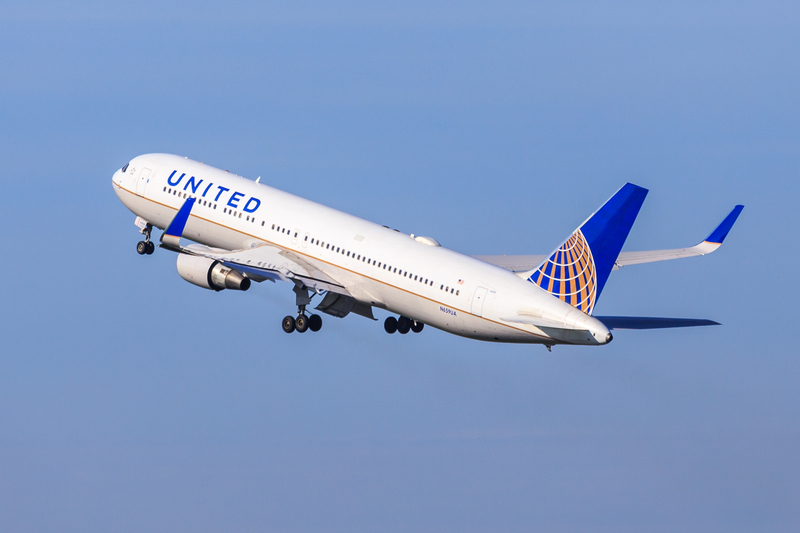
United is using a 167-seat Boeing 767-300ER on both routes, and that is not incidental. This is one of the airline’s most useful transatlantic tools for thin but high-value markets. The layout is especially premium-heavy, with 46 Polaris business class seats, 22 Premium Plus seats, and 99 economy seats.
That matters enormously on routes like Split and Bari.
A higher-density widebody would increase seat risk too much. A narrowbody would not offer the same product depth or cargo flexibility. The 167-seat 767-300ER hits the sweet spot: small enough to serve a niche market, but premium enough to drive higher revenue on destinations where customers are often booking villas, cruises, weddings, premium holidays, and longer Mediterranean itineraries.
Newark Remains The Core Of United’s Europe Experimentation
These launches also reinforce Newark Liberty International Airport (EWR) as the center of United’s more adventurous European route development.
EWR works for this strategy because it combines a huge local market with substantial premium demand and enough Star Alliance and domestic feed to support thinner transatlantic sectors. That lets United do something other U.S. carriers often avoid: serve secondary European destinations nonstop from the United States without relying on massive volumes.
This is becoming a clear pattern for United. The airline is increasingly using Newark to open routes that are distinctive, seasonal, and premium-skewing rather than simply adding more frequency to the obvious trunk markets.
Split Is Especially Significant For Croatia
Split Airport (SPU) is not just another Croatia route.
United’s launch gives Split what the airline has described as its first nonstop long-haul service to North America, and that is a meaningful step for Croatia’s aviation profile. Dubrovnik has already proven that U.S.-Croatia seasonal flying can work, but Split opens access to a different and in many ways broader section of the Dalmatian coast.
For travelers, that removes the need to route through Zagreb Airport (ZAG), European hubs, or ground-transfer-heavy itineraries. For United, it means it can capture a growing premium summer market before rivals move in more aggressively.
Bari Strengthens United’s Position In Southern Italy
Bari Airport (BRI) gives United another way to deepen its Italy franchise, which has become one of the airline’s most important transatlantic themes.
The airline already serves larger and more established Italian markets, but Bari adds something different: a direct gateway to Puglia, a region that has become increasingly fashionable with American travelers looking for southern Italy without the saturation of Rome, Florence, or the Amalfi Coast.
That makes the route strategically useful. It is not just another Italy frequency. It is product differentiation through geography.
These Routes Are About Saving Time, Not Flying Faster
The “fly faster” concept behind these launches is not about aircraft speed. It is about cutting out the inefficient part of the journey.
Travelers going to central Dalmatia or Puglia have traditionally had to connect through major European hubs and then continue on smaller aircraft or by surface transfer. United is replacing that complexity with a nonstop from the New York area straight into the region itself.
That is what makes these routes more valuable than they first appear. They are not just flights to airports. They are direct entries into vacation regions that were previously awkward to reach.
This Is A Premium Leisure Strategy, Not A Traditional Hub Strategy
The strongest reading of these launches is that United is leaning harder into premium leisure.
The 767 configuration makes that obvious. These flights are not built primarily around filling large economy cabins with rock-bottom fares. They are built around the idea that some travelers will pay a premium to skip connections and reach an in-demand summer destination nonstop, with a strong onboard product and a manageable aircraft size.
That is a very different transatlantic strategy from the classic legacy model of huge business-heavy markets and large-frequency hub flying.
Bottom Line
United’s new nonstop flights from Newark (EWR) to Split (SPU) and Bari (BRI) are more than just two summer route launches. They are a clear example of how the airline wants to compete in Europe: with right-sized, premium-heavy Boeing 767-300ERs, from a powerful Newark hub, into niche but increasingly important Mediterranean destinations.
Split gives the airline a second Croatian gateway and a first-ever North America link for the airport. Bari gives it a distinctive new southern Italy market in a region with growing U.S. demand. Together, the routes show that United is not just adding Europe capacity. It is reshaping what a U.S. transatlantic network can look like.
Keep reading FlyMag
Get the Daily Brief in the morning or the Route Watch weekly recap on Fridays. Or both.