Russia is temporarily halting all regular commercial flights to Cuba after running a short, passenger-only operation to bring Russian tourists home, according to the country’s civil aviation regulator, Rosaviatsia. The move underscores just how quickly Cuba’s jet-fuel shortage has shifted from “operational headache” to “network-breaking constraint” for long-haul carriers that cannot reliably uplift Jet A-1 on the island.

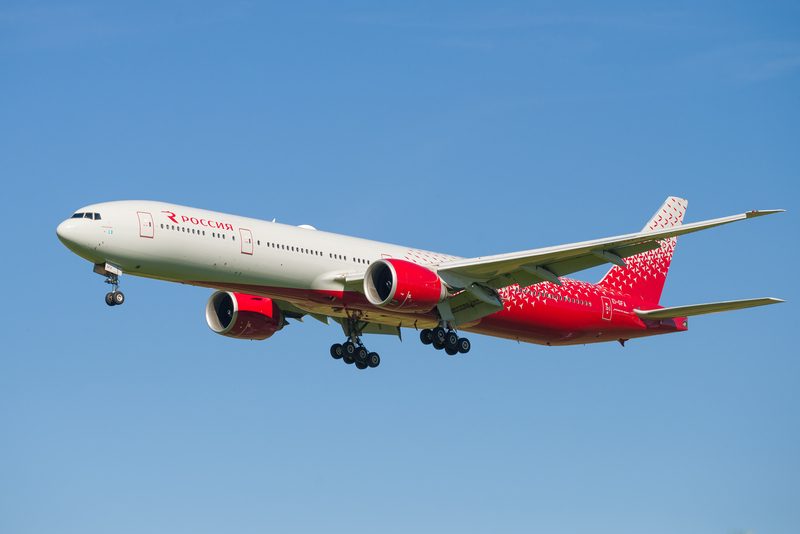
Two Russian operators—Rossiya Airlines (Aeroflot Group) and Severny Veter / Nordwind Airlines—will run dedicated repatriation flights beginning Thursday, then suspend normal service until fuel supplies stabilize. The immediate pressure point is not demand. It’s dispatch integrity: without guaranteed fuel availability at Cuban airports, the return leg becomes uncertain, and uncertainty is the one thing airlines cannot scale safely.
The routes affected: Russia’s key Cuba gateways go quiet
For Russia, Cuba is not a fringe leisure market—it’s been one of the island’s most important long-haul source regions since the pandemic, and Russian flights have remained among Cuba’s few truly long-distance links into Europe/Eurasia.
Read our stories in your inbox
Two aviation newsletters. Zero fluff.
The repatriation plan spans Cuba’s primary inbound leisure and capital gateways:
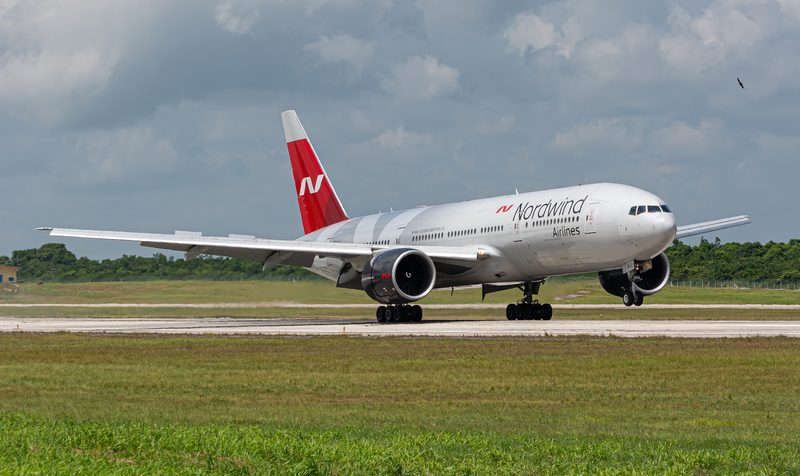
Rossiya has indicated its recovery flying will focus on HAV and VRA, while Nordwind’s special flights are tied to HOG and CCC—a split that mirrors where Russian tour flows typically concentrate (capital access vs. resort-focused charters).

Once these repatriation sectors are completed, Russia’s remaining scheduled passenger capacity into Cuba effectively goes to zero until the fuel situation is deemed workable again.
Aircraft choice: why Russian carriers are leaning on the Boeing 777
The aircraft type matters here because fuel strategy and stage length are inseparable.
Both Rossiya and Nordwind have been operating Cuba flying with Boeing 777 widebodies—commonly the 777-300ER on at least some services. The 777-300ER is a high-capacity long-haul workhorse with the payload-range performance to handle Cuba sectors while carrying meaningful passenger volumes, which is exactly why it shows up in tour-operator-heavy flying.
But the same aircraft also makes Cuba’s fuel outage far more disruptive than it would be for short-haul operators:
-
A long-haul widebody needs a large uplift for the return sector.
-
“Bring extra fuel from origin” (tankering) becomes harder because fuel is weight, and weight forces payload tradeoffs.
-
If the airline can’t uplift reliably at HAV/VRA/HOG/CCC, it must either plan a technical stop (adding cost, time, and crew-duty complexity) or suspend service.
For repatriation flights, the math is different. The priority shifts from optimizing profit to minimizing stranded passengers—often using empty aircraft positioning and conservative fuel planning.
Why this is happening: Cuba’s fuel constraint is now a dispatch problem, not just a cost problem
Cuba’s jet-fuel shortage has been described by Russian officials as “critical,” and Cuban aviation authorities have warned airlines that fuel uplift availability cannot be assumed across the island’s airports. That transforms normal operations into contingency operations:
-
Carriers must tanker enough fuel to depart again without local uplift, or
-
route via a nearby refueling point—often in the Dominican Republic or other regional alternates—or
-
stop flying.
Those workarounds can keep a schedule alive for a time, but they are brittle. Add weather, ATC delays, or a maintenance issue, and the buffer disappears quickly. For long-haul leisure flying—where frequencies are often weekly and recovery options are limited—airlines typically prefer a clean suspension to an unreliable operation that could strand even more passengers.
The bigger market impact: losing Russia hits Cuba where it hurts
From Cuba’s perspective, Russia is not just another origin market. It has been a key volume driver in recent years, particularly for resorts with strong charter-style demand. When Russian carriers pause, the impact is immediate:
-
fewer long-haul seats arriving into VRA, CCC, and HOG
-
weaker tour operator confidence and potential hotel capacity pullbacks
-
reduced inbound cash flow in a tourism-dependent economy
And because the current crisis is fuel-driven—not demand-driven—the restart timeline hinges less on airline appetite and more on the restoration of reliable Jet A-1 supply and airport uplift certainty.
Bottom Line
Russia is temporarily suspending regular commercial flights to Cuba after Rossiya (Aeroflot Group) and Nordwind complete passenger-only repatriation sectors starting Thursday, a direct response to Cuba’s “critical” jet-fuel shortage. With key gateways including Havana (HAV), Varadero (VRA), Holguín (HOG), and Cayo Coco (CCC) affected, the pause removes some of Cuba’s most important long-haul tourism lift—much of it operated on Boeing 777 widebodies such as the 777-300ER. Until Cuban airports can reliably provide fuel uplift again, the operational risk of continuing normal service outweighs the commercial upside.
Keep reading FlyMag
Get the Daily Brief in the morning or the Route Watch weekly recap on Fridays. Or both.