United Airlines has launched three notable summer routes into Maine, including two long transcontinental services that give Portland International Jetport (PWM) its first nonstop flights to California.

The new seasonal routes connect Portland, Maine (PWM) with Los Angeles International Airport (LAX) and San Francisco International Airport (SFO), while Bangor International Airport (BGR) gains a new nonstop link to Denver International Airport (DEN). All three services began on June 27, 2026, and operate on Saturdays during the peak summer travel period.
For Maine, this is not a routine schedule add. It is a major air-service development. Portland (PWM) now has nonstop access to both of United’s California hubs, while Bangor (BGR) gains the farthest-west scheduled passenger service in its history.
Read our stories in your inbox
Two aviation newsletters. Zero fluff.
Portland (PWM) Gets Its First Nonstop California Flights
The biggest story is at Portland International Jetport (PWM), where United has added Saturday nonstop service to both Los Angeles (LAX) and San Francisco (SFO).
Until now, passengers traveling between Maine and California generally needed to connect through hubs such as Chicago O’Hare (ORD), Newark (EWR), Washington Dulles (IAD), Denver (DEN), Philadelphia (PHL), Charlotte (CLT), Atlanta (ATL), or New York (JFK/LGA). For travelers heading to the West Coast, that added time, connection risk, and often a less convenient travel day.
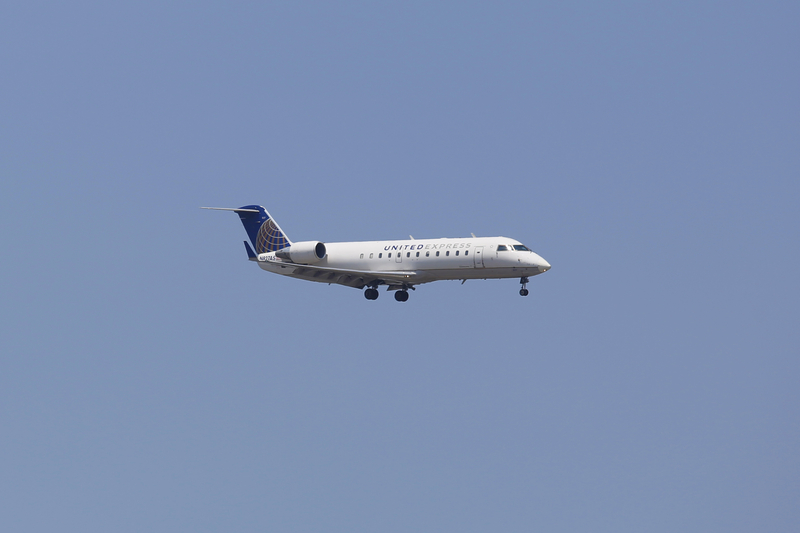
United’s new Portland (PWM)–Los Angeles (LAX) and Portland (PWM)–San Francisco (SFO) flights change that, even if only once weekly and seasonally. They give Maine direct access to two of the most important West Coast markets in the United network, while giving California travelers a far easier path to Portland, coastal Maine, and northern New England.
The flights are scheduled to operate through September 19, matching Maine’s strongest inbound tourism season. That timing is no accident. The route is built around summer leisure demand, visiting-friends-and-relatives traffic, and high-value travelers from California heading to Maine’s coast, lakes, islands, and national parks.
Two Long 737 MAX 8 Sectors From A Smaller New England Airport
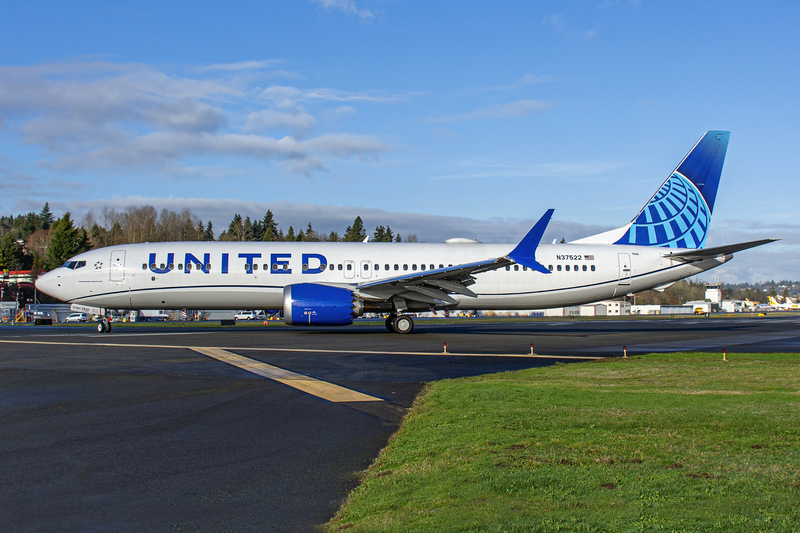
United is using the Boeing 737 MAX 8 on both Portland (PWM)–Los Angeles (LAX) and Portland (PWM)–San Francisco (SFO).
That aircraft choice is important. The 737 MAX 8 gives United the range to fly long domestic sectors while keeping capacity below what a larger narrowbody or widebody would require. United’s MAX 8 fleet is generally configured with 166 seats, including 16 United First seats and a large Economy Plus section within the economy cabin.
For Portland (PWM), that is a strong gauge. It gives the market a mainline aircraft with enough premium inventory to capture higher-yield leisure and business demand, but not so much capacity that the route becomes difficult to fill on a once-weekly summer schedule.
The San Francisco (SFO)–Portland (PWM) route is especially long for a domestic narrowbody service within the lower 48 states. The sector is roughly 2,731 miles, with the westbound Portland (PWM)–San Francisco (SFO) return scheduled at more than six hours. The Los Angeles (LAX)–Portland (PWM) route is slightly shorter at roughly 2,633 miles, but the Portland (PWM)–Los Angeles (LAX) westbound leg is also scheduled at more than six hours.
Those block times place both routes in true transcontinental territory. They are not just “long for Maine.” They are long by domestic mainland U.S. standards and demonstrate how new-generation narrowbodies have expanded what airlines can do from mid-sized airports.
Why The 737 MAX 8 Works For Portland–California
The Boeing 737 MAX 8 is well suited to routes like Portland (PWM)–Los Angeles (LAX) and Portland (PWM)–San Francisco (SFO).
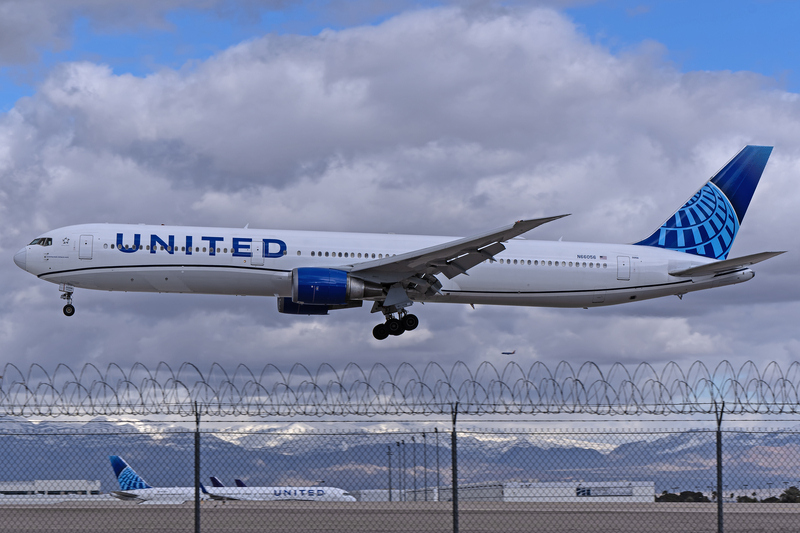
The aircraft has a published range of up to 3,500 nautical miles, giving it ample capability for these transcontinental missions. It is powered by CFM International LEAP-1B engines and uses Boeing’s Advanced Technology winglets, giving airlines better fuel burn than older 737 Next Generation aircraft on longer sectors.
For United, the MAX 8 allows long, thin routes that would be harder to justify with older-generation aircraft. A route such as Portland (PWM)–San Francisco (SFO) does not need daily widebody capacity. It needs the right narrowbody, on the right day of the week, at the right point in the seasonal demand curve.
That is exactly where the MAX 8 is useful. It can connect a smaller leisure-heavy airport such as Portland (PWM) with a major West Coast hub without requiring the airline to carry too much capacity outside peak periods.
The aircraft also supports United’s broader hub strategy. San Francisco (SFO) and Los Angeles (LAX) are not only major local markets; they provide onward connectivity across the West Coast, Hawaii, Asia-Pacific, and United’s broader domestic network.
San Francisco (SFO) Adds More Than Local Bay Area Demand
The Portland (PWM)–San Francisco (SFO) route is particularly strategic because SFO remains United’s primary West Coast international gateway.
For passengers starting in Maine, nonstop access to San Francisco (SFO) opens easier one-stop itineraries to California, the Pacific Northwest, Hawaii, and parts of Asia-Pacific. For passengers starting in Northern California, the flight creates a direct summer link to one of New England’s strongest leisure regions.
The timing also matters. Flights departing San Francisco (SFO) early in the morning can reach Portland (PWM) in time for travelers to begin a same-day Maine vacation. The return from Portland (PWM) gives West Coast passengers a long but manageable Saturday trip back to California.
From a network perspective, the route also reinforces United’s strength at Portland (PWM). With the addition of Los Angeles (LAX) and San Francisco (SFO), Portland now has nonstop service to all seven United domestic hubs: Chicago O’Hare (ORD), Denver (DEN), Houston Intercontinental (IAH), Los Angeles (LAX), Newark (EWR), San Francisco (SFO), and Washington Dulles (IAD).
That is an unusually broad United hub map for an airport of Portland’s size.
Los Angeles (LAX) Gives Maine A Southern California Link
The Los Angeles (LAX) route adds a different kind of value.
Los Angeles is one of the largest origin-and-destination markets in the United States, with enormous demand across entertainment, technology, tourism, education, and family travel. A nonstop Portland (PWM)–Los Angeles (LAX) flight gives Maine direct access to Southern California for the first time on a scheduled nonstop basis.
For Los Angeles-area travelers, Maine is a strong summer product. Portland, Kennebunkport, Freeport, Bar Harbor, Acadia National Park, and the broader Maine coast all attract travelers seeking cooler weather, food tourism, outdoor recreation, and high-end seasonal lodging.
For Maine-based travelers, the LAX flight is equally useful. It removes the need to connect when traveling to Southern California and gives passengers a more direct path to United’s Los Angeles network.
The route is weekly, not daily, which limits its usefulness for some business travel. But for leisure itineraries, Saturday flying can work well. Many vacation rentals, resorts, cruises, and summer travel patterns are built around weekend arrivals and departures.
Bangor (BGR) Adds Historic Denver Service
While Portland receives the two headline California routes, Bangor International Airport (BGR) also gets a meaningful new United service.
United is launching Saturday nonstop flights between Bangor (BGR) and Denver (DEN), operating from June 27 through September 5. The route uses the Boeing 737-800, one of United’s long-serving domestic mainline aircraft.
For Bangor (BGR), the route is historically significant. The airport says Denver (DEN) is the farthest-west nonstop passenger destination ever served from Bangor. That gives eastern and northern Maine a direct link to one of the largest airline hubs in the country.
Denver (DEN) is a major United connecting point, offering strong access across the western United States, Mountain West, California, Pacific Northwest, Southwest, and selected international markets. For Bangor passengers, that means the route is not only about Denver. It is about reducing connection complexity for trips across the western half of the country.
The route also supports inbound travel. Denver-originating and western U.S. passengers gain easier access to Bangor, Acadia National Park, Bar Harbor, Down East Maine, and the state’s outdoor tourism markets.
The Boeing 737-800 Still Has A Role
The Bangor (BGR)–Denver (DEN) service is scheduled with the Boeing 737-800, not the newer 737 MAX 8.
United’s 737-800 fleet remains an important part of its domestic network. The aircraft is part of the Boeing 737 Next Generation family and is generally configured by United with around 166 seats, including United First, Economy Plus, and standard economy seating, depending on the specific interior.
The 737-800 does not have the same fuel efficiency or range profile as the 737 MAX 8, but it remains a capable mainline narrowbody for a route such as Bangor (BGR)–Denver (DEN). The sector is long for Bangor, but well within the 737-800’s practical domestic mission profile under normal operating conditions.
Using a 737-800 also gives United more capacity than a regional jet. That matters in a seasonal market where Saturday demand can be concentrated and where inbound leisure traffic may include families, checked bags, outdoor gear, and longer-stay travelers.
Maine Becomes Easier To Reach From The West
These three routes are best understood as part of a larger shift in summer leisure flying.
Airlines have become more willing to operate long, seasonal, low-frequency routes from smaller leisure markets when the economics work. Newer narrowbodies, stronger premium leisure demand, better schedule data, and more flexible network planning have made these routes more attractive.
Maine is a natural beneficiary. The state has strong summer demand, high brand recognition, and limited nonstop access from the western United States. Travelers from California and Colorado may want to visit Maine, but connecting itineraries can make the trip feel longer and less convenient than other summer destinations.
United’s new routes reduce that barrier. Portland (PWM) becomes directly reachable from both Northern and Southern California, while Bangor (BGR) becomes reachable from Denver (DEN) and United’s western connecting network.
For Maine tourism, this is valuable. Nonstop flights can influence destination choice. When travelers are comparing summer trips, a nonstop from San Francisco (SFO), Los Angeles (LAX), or Denver (DEN) can make Maine more competitive against destinations in the Rockies, Pacific Northwest, Canada, or coastal California.
A Smart Seasonal Test For United
United is not overcommitting here. All three routes are weekly and seasonal.
That is a disciplined way to test demand. If the flights perform well, United can bring them back next summer, extend the season, add additional weeks, or eventually add frequency during peak periods. If demand is softer, the airline can exit with limited risk.
The Saturday schedule also matches the likely demand profile. These routes are not designed as weekday corporate shuttles. They are designed for peak leisure flows, connecting traffic, and longer-stay travelers moving between Maine and the western United States.
For United, the routes also help defend and deepen hub relevance. Portland (PWM) now touches the full United domestic hub network. Bangor (BGR) gains a larger western connection through Denver (DEN). Both moves make United more relevant in Maine without requiring daily year-round capacity.
That is the real network value. United is not just adding seats; it is improving the way Maine connects to the rest of the country.
Bottom Line
United’s new Maine routes are a major summer air-service milestone for both Portland (PWM) and Bangor (BGR).
Portland International Jetport (PWM) now has its first nonstop flights to California, with Saturday Boeing 737 MAX 8 service to Los Angeles (LAX) and San Francisco (SFO) through September 19. Both routes are long transcontinental sectors, with westbound block times of more than six hours.
Bangor International Airport (BGR) gains its farthest-west scheduled passenger route with Saturday Boeing 737-800 service to Denver (DEN) through September 5. That gives eastern Maine a direct link to one of United’s most important hubs and a much easier path to the western United States.
For passengers, the benefit is obvious: fewer connections and faster access to Maine from the West Coast and Mountain West. For United, the strategy is just as clear. The airline is using mainline 737 aircraft, hub strength, and peak summer demand to open long seasonal routes that would have been difficult to justify as year-round daily service.
These routes may be small in frequency, but they are big in significance. They put Maine on the West Coast nonstop map.
Keep reading FlyMag
Get the Daily Brief in the morning or the Route Watch weekly recap on Fridays. Or both.