United Airlines has resumed nonstop service between Glasgow Airport (GLA) and Newark Liberty International Airport (EWR), restoring a direct transatlantic connection that had been absent since 2019 and giving Scotland’s largest city its only U.S. airline service once again.

The route returned in early May and will operate daily through October 24, 2026 using the Boeing 737 MAX 8. For United, this is more than a summer restart. It is a targeted re-entry into a market that combines local Scotland–U.S. demand with broader onward connectivity through one of the airline’s most important transatlantic hubs.
For aviation readers, the most interesting part is not just that Glasgow is back. It is how it is back: with a narrowbody.
Read our stories in your inbox
Two aviation newsletters. Zero fluff.
Newark Makes The Route Strategically Useful Again
The service links Glasgow Airport (GLA) directly to Newark Liberty International Airport (EWR), which remains United’s primary gateway for the New York metropolitan area and one of its most important international connection hubs.
That matters because the route is not just about Glasgow–New York local traffic. Through Newark, United can offer onward access to more than 200 destinations across North and Latin America. That makes the route more commercially flexible and gives it a much broader catchment than a simple city-pair market alone would provide.
For passengers in Scotland, that means a single-stop path to a very large portion of the United States has become materially easier again.
The 737 MAX 8 Changes The Economics Of Glasgow Flying
One of the most notable features of the relaunch is the aircraft choice.
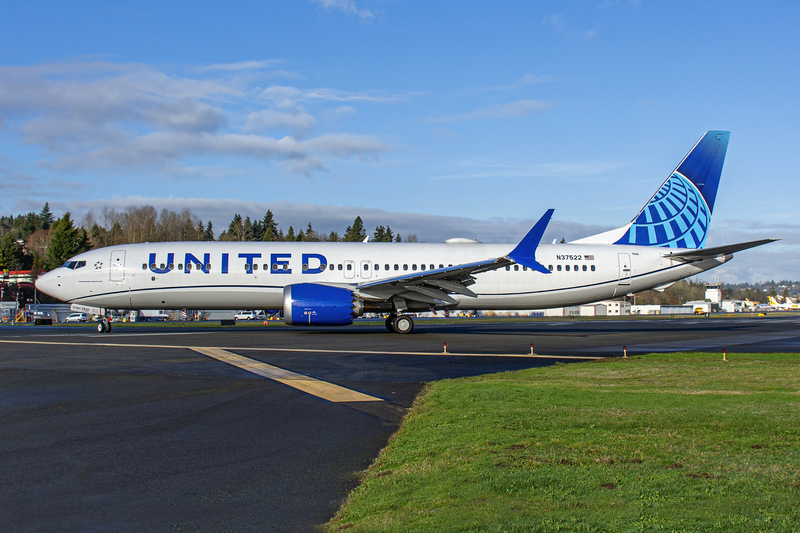
United is operating the route with the Boeing 737 MAX 8, not a widebody. That is significant because Glasgow–Newark is now being served with a much more efficient, right-sized narrowbody rather than a larger long-haul aircraft that would carry more seat risk.
This is exactly the kind of market where the MAX 8 can make a difference. It is long enough to be meaningfully transatlantic, but not so large or premium-heavy that it demands a widebody to work. The narrowbody gives United lower trip costs and more flexibility while still preserving nonstop access.
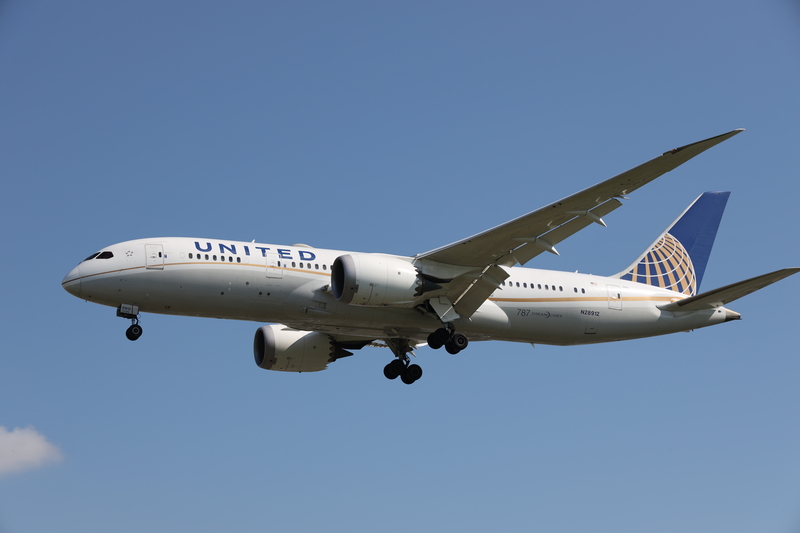
That makes the restart easier to justify in a way that might not have been possible with older economics.
Glasgow Is Back — But Still Seasonal
The route’s return is important, but it is also clearly disciplined.
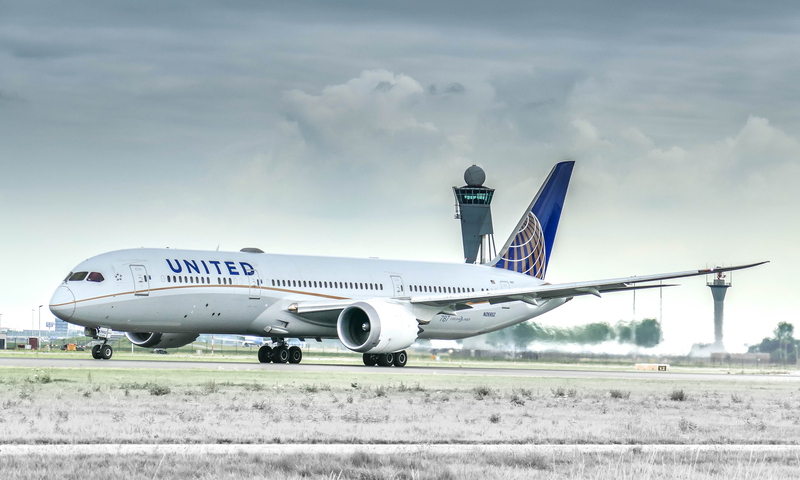
United is running the service as a daily seasonal route, not as a year-round operation. That tells you the airline sees strong summer demand and enough premium and leisure traffic to support the route in peak months, but is still being cautious about the shoulder and winter periods.
That makes sense. Glasgow’s transatlantic appeal is strongest in the summer, when inbound U.S. tourism, business travel, and Scotland’s broader seasonal demand profile all align more favorably.
This Strengthens Scotland’s U.S. Access Beyond Edinburgh
The Glasgow relaunch also matters because it broadens Scotland’s U.S. connectivity outside Edinburgh Airport (EDI).
United already operates from Edinburgh to Newark, Washington Dulles, and Chicago O’Hare, and with Glasgow back on the map, the airline will offer up to four daily U.S. nonstops from Scotland during the 2026 summer season.
That is significant for Scotland’s wider aviation profile. It gives the country stronger transatlantic depth and spreads the U.S. connectivity more broadly rather than concentrating it in one airport alone.
Glasgow’s Economic Case Is Stronger Than A Simple Tourism Route
It would be easy to describe this simply as a tourism route, but the market is broader than that.
Yes, Scotland is a major inbound leisure destination. But Glasgow also supports business, university, cultural, and export-related demand, and airport officials have highlighted exactly that. The route is useful not only for passengers, but for links involving trade and freight, especially high-value exports such as whisky and seafood.
That matters because routes that combine tourism with business and cargo relevance are often more durable than purely seasonal leisure services.
The Return Shows United Still Likes “Long-Thin” Transatlantic Markets
This route also fits neatly into a wider United pattern.
The airline has become increasingly comfortable using narrowbody aircraft on “long-thin” transatlantic routes, where a widebody would be too much airplane but where nonstop access still has real value. Glasgow is a strong example of that logic.
Rather than forcing all European flying through the biggest capitals or largest volume markets, United is continuing to prove that there is money to be made in secondary but high-quality transatlantic routes if the right aircraft is used.
Bottom Line
United’s return to Glasgow Airport (GLA) with nonstop service to Newark (EWR) is more than a route restart. It restores a direct U.S. connection lost since 2019, strengthens Scotland’s transatlantic network, and shows how effectively the Boeing 737 MAX 8 can reopen thinner long-haul markets.
For Glasgow, it is a meaningful international connectivity win. For United, it is another example of a transatlantic strategy built around efficient aircraft, premium gateway connectivity, and the confidence to serve quality markets that do not necessarily need widebodies to work.