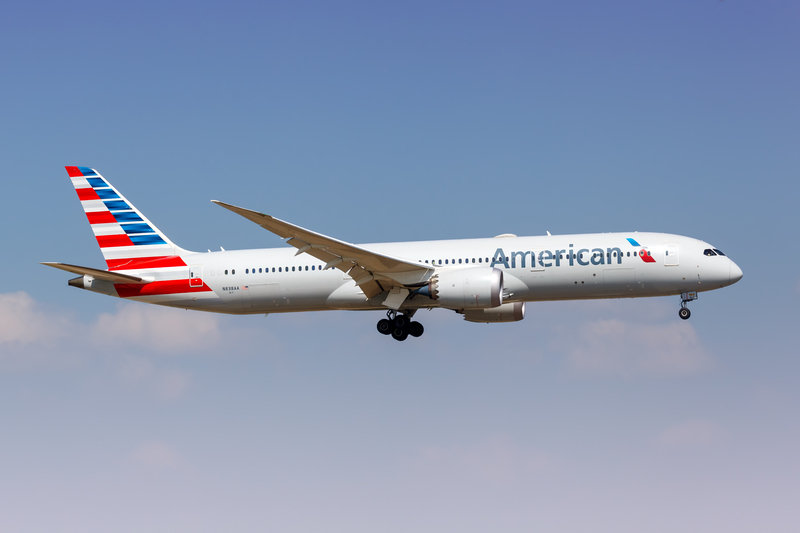
American Airlines is preparing to change one of the most familiar rhythms of the passenger experience: the point at which the cabin is secured for arrival.
Beginning June 3, the Fort Worth-based carrier will move key cabin-preparation procedures earlier in the descent, with flight attendants expected to begin preparing the cabin for landing at or before 18,000 feet. The change is intended to reduce turbulence-related injuries, particularly among flight attendants, who are often most exposed when they are standing, moving through the aisle, securing galleys, collecting service items, or completing compliance checks before landing.
For passengers, the change may be subtle but noticeable. Tray tables, laptops, coats, service items, seatbacks, and carry-on compliance may all be addressed earlier than before. For flight attendants, however, the change is more meaningful. It gives cabin crews a wider safety margin before the aircraft enters the lower-altitude portion of descent, where turbulence encounters can be more difficult to avoid and where crews have historically been busy preparing the aircraft for landing.
Read our stories in your inbox
Two aviation newsletters. Zero fluff.
The change does not mean American aircraft will start descending earlier. It means the cabin will be prepared earlier during the descent profile.
That distinction matters.
What American Is Changing
Under the revised procedure, the flight deck will communicate earlier with the lead flight attendant, usually the FA1 or Purser, before the aircraft enters the final portion of descent. That conversation is expected to include ride conditions, any anticipated turbulence, and the timing of cabin-preparation duties.
At or before 18,000 feet, the flight deck will initiate a “before descent” or prepare-for-landing announcement. Flight attendants will then begin securing the cabin, closing out service where applicable, checking passenger compliance, and ensuring carts, galley equipment, carry-on items, seatbacks, tray tables, lavatories, and other cabin items are secured.
Once those duties are complete, flight attendants are expected to take their jumpseats as soon as possible. By the time the aircraft reaches 10,000 feet, cabin crew should already be seated unless a safety-critical duty remains incomplete and conditions allow it to be completed safely.
That is a meaningful shift from the more traditional model, where many U.S. airline cabins were secured closer to 10,000 feet. On a typical descent, the difference between 18,000 feet and 10,000 feet may only represent several minutes. But in cabin safety terms, those minutes are valuable. They are the window during which flight attendants are often most exposed: moving carts, collecting glassware, checking seatbelts, walking aisles, securing lavatories, or returning items in premium cabins.

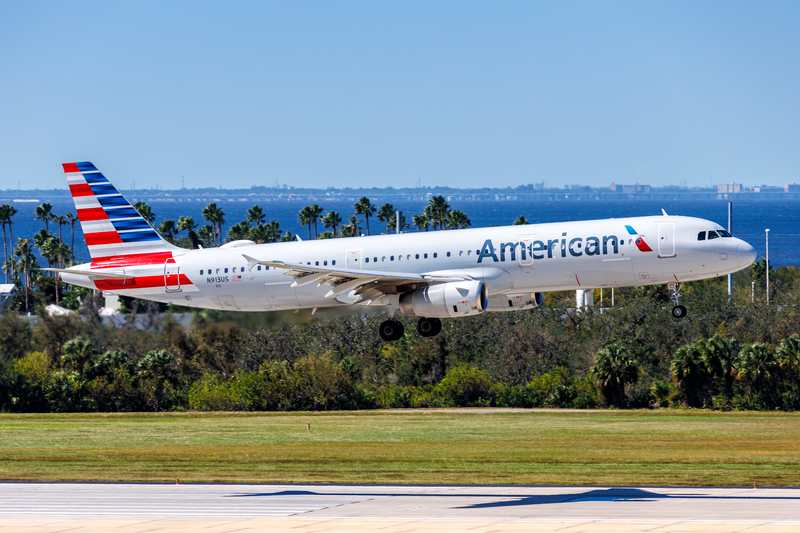
For a passenger on an American Airlines Airbus A321 flying from Miami International Airport (MIA) to Charlotte Douglas International Airport (CLT), the most obvious effect may be having to close a laptop earlier. For a flight attendant in the aft galley of that same A321, or on a Boeing 737-800 approaching Dallas/Fort Worth International Airport (DFW), the change is about reducing the amount of time spent unrestrained during a high-risk phase of flight.
Why 18,000 Feet Matters
The 18,000-foot mark is not arbitrary. In U.S. operations, 18,000 feet is a familiar operational boundary because it corresponds with the transition between altitude and flight levels. It is also close to the altitude range where safety researchers have focused attention on descent-related turbulence risk.
The National Transportation Safety Board has previously studied turbulence-related accidents involving Part 121 airline operations and found that a significant portion of descent-phase turbulence accidents occurred below 20,000 feet. The NTSB has also concluded that having flight attendants seated with their seat belts fastened during more of the descent would reduce turbulence-related flight attendant injuries and turbulence-related accidents overall.
That is the core safety logic behind American’s change.
Turbulence is not confined to low altitude. Clear-air turbulence can occur at cruise altitude, convective turbulence can be encountered around thunderstorms, and mountain wave activity can affect aircraft well above typical arrival altitudes. But the descent phase presents a particular cabin-safety challenge because it combines increased workload, lower altitude, changing atmospheric conditions, and time pressure.
By the time an aircraft is descending through the teens, crews may be preparing for a complex arrival, navigating weather, configuring for approach, and communicating with air traffic control. In the cabin, flight attendants are often completing final service and compliance duties. If turbulence occurs at that point, the people most at risk are frequently those who are not seated and restrained.
The Flight Attendant Risk Is The Real Story
For passengers, turbulence is usually discussed in terms of comfort: bumps, drops, spilled drinks, anxiety, or a sudden seatbelt sign. For airline safety departments, turbulence is also an occupational injury issue.
Flight attendants face a different risk profile than passengers because their job requires them to be mobile. They are walking the aisle, working in galleys, handling carts, checking passenger compliance, and responding to calls. Even when the seatbelt sign is illuminated, cabin crew may still be completing duties unless they are told to be seated or determine that conditions are unsafe.
That exposure is especially relevant in the aft cabin.
NTSB research has shown that many turbulence-related injuries to flight attendants occur in the rear of the aircraft, particularly around aft galley areas. That is not surprising to anyone familiar with cabin operations. The aft galley is a work area, often with carts, inserts, service equipment, jumpseats, doors, lavatory traffic, and fewer places to brace securely if the aircraft encounters sudden vertical acceleration.
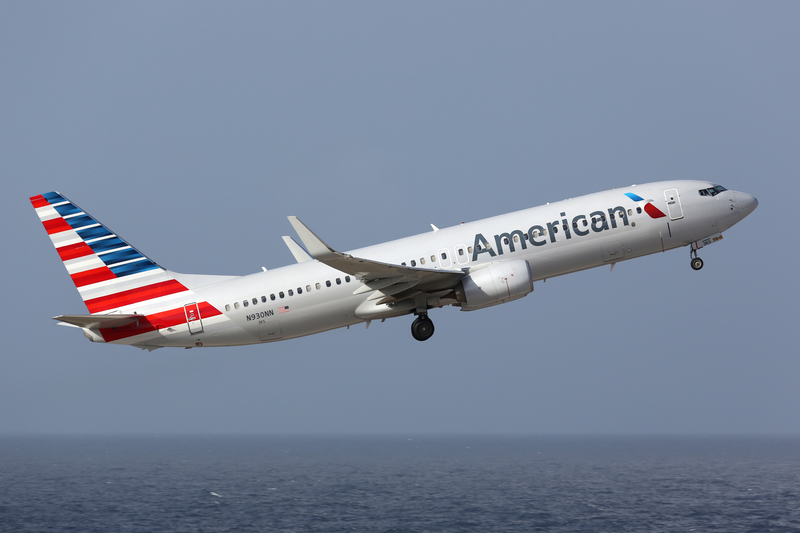
The effect can be noticeable across aircraft types. On a Boeing 777-300ER or Boeing 787-9, the aft cabin is far from the aircraft’s center of gravity and may feel turbulence differently than the forward cabin. On an Airbus A321 or Boeing 737-800, the cabin is shorter, but flight attendants still spend substantial time in galleys and aisles during descent. Regional aircraft such as Embraer E175s and Bombardier CRJ900s have smaller cabins, but the same basic risk remains: a standing crew member is vulnerable during a sudden turbulence encounter.
American’s change is therefore less about passenger inconvenience and more about reducing crew exposure at the point in the flight when the aircraft is moving from cruise toward approach and landing.
Passengers May Notice Earlier Cabin Checks
American says the change should not dramatically alter the passenger experience, but frequent travelers will likely notice the timing.
The prepare-for-landing announcement may come earlier. Laptops may need to be stowed sooner. Tray tables may be collected earlier. Seatbacks may need to be upright earlier. In premium cabins, flight attendants may return coats and jackets sooner than some passengers expect. Glassware, cups, and service items may disappear earlier, particularly on shorter flights or on routes where descent begins soon after service is completed.
The effect will vary by route length and aircraft type.
On a longer Boeing 787-9 flight arriving at Philadelphia International Airport (PHL) or a Boeing 777-200ER descending into Charlotte (CLT), the service flow is usually complete well before 18,000 feet. On a shorter domestic sector, however, the compression is more obvious. A Boeing 737 MAX 8 flight from Chicago O’Hare International Airport (ORD) to New York LaGuardia Airport (LGA), or an Airbus A319 operating a shorter hop into Washington Reagan National Airport (DCA), already has limited service time. Moving the cabin secure point earlier reduces that margin further.
That does not necessarily mean service will be cut. It does mean flight attendants will have less flexibility if there are delays in the aisle, rough air, heavy passenger demand, or late-stage service items still in use.
For passengers who work until the last possible minute, the change may feel like lost productivity. For the airline, it is a risk-management decision.
A Subtle But Important Flight Deck–Cabin Change
The most important operational piece may be improved communication between the pilots and cabin crew.
American’s revised process places more emphasis on the flight deck contacting the lead flight attendant before descent. That matters because turbulence risk is not always uniform throughout the aircraft. Pilots may have weather radar, dispatch information, pilot reports, air traffic control advisories, and ride reports from other aircraft. Flight attendants, meanwhile, have real-time cabin awareness: whether carts are out, whether passengers are standing, whether lavatories are occupied, whether service is still underway, and whether conditions feel worse in the aft cabin than on the flight deck.
Better coordination between those two worlds is essential.
A cockpit may experience light chop while the aft galley feels more unstable. A flight deck may believe the ride is manageable while a cart is still in the aisle and passengers are moving through the cabin. Conversely, a cabin crew may need just a few additional minutes to secure service items before taking seats. The revised procedure is designed to create that conversation earlier, before the aircraft is already deep into the lower-altitude portion of descent.
For professional airline observers, this is where the policy is most interesting. The change is not simply “sit down earlier.” It is a procedural adjustment designed to improve timing, communication, and decision-making before the workload increases close to landing.
JetBlue And Other Carriers Are Moving In The Same Direction
American is not alone in rethinking descent procedures.
JetBlue is also moving toward earlier cabin preparation, consolidating descent-related procedures so crews can complete safety checks and be seated sooner. Southwest Airlines previously adopted a similar approach, moving cabin secure procedures earlier in descent. Delta Air Lines has also made changes intended to have flight attendants seated earlier.
That trend is important. For years, airlines were reluctant to move the cabin secure point higher because it could reduce service time and create a competitive disadvantage, especially on short-haul flights. If one airline kept service going longer while another secured the cabin earlier, customers might perceive the earlier-secure airline as offering less onboard service.
The industry appears to be moving past that concern. As turbulence-related injuries receive more attention, airlines are increasingly treating earlier cabin secure procedures as a safety standard rather than a service downgrade.
In that sense, American’s move may be part of a broader shift in U.S. airline operating practice. The cabin is being treated less as a service environment until 10,000 feet and more as a safety-critical workspace that needs to be stabilized earlier.
Recent Incidents Keep The Issue In Focus
American has had recent reminders of the risk.
In June 2025, American Airlines Flight 1286, an Airbus A321 operating from Miami (MIA) to Raleigh-Durham International Airport (RDU), landed safely after encountering turbulence. The FAA said the crew reported possible injuries to cabin crew and passengers, and the aircraft was met after arrival. The incident underscored the vulnerability of passengers and crew when turbulence occurs without enough time to secure the cabin fully.
American has also seen other turbulence-related events in recent years, including an Airbus A321 operating from Tampa International Airport (TPA) to Charlotte (CLT) that encountered severe turbulence in 2024. These events are not unique to American, and they are not limited to one aircraft family. Turbulence injuries have affected narrowbodies, widebodies, domestic flights, international flights, legacy carriers, low-cost airlines, and regional operations.
That broad pattern is why the procedural response matters. Turbulence cannot be eliminated. But exposure can be reduced.
The Aircraft Type Does Not Change The Basic Risk
American’s fleet diversity makes the new procedure especially relevant.
The airline operates Airbus A319, A320, A321, A321neo, and A321 Transcontinental aircraft, along with Boeing 737-800 and 737 MAX 8 narrowbodies. On long-haul routes, American uses Boeing 777-200ER, 777-300ER, 787-8, and 787-9 aircraft. Its regional partners operate aircraft including Embraer E145s, E170s, E175s, and Bombardier CRJ700 and CRJ900 regional jets.
The cabin layouts vary widely. A three-cabin Airbus A321 Transcontinental aircraft flying between New York (JFK) and Los Angeles (LAX) is very different from a 76-seat Embraer E175 operating into Dallas/Fort Worth (DFW). A Boeing 787-9 crossing the Atlantic into Philadelphia (PHL) has a very different service profile from a Boeing 737-800 flying a domestic sector into Phoenix (PHX).
But the core safety issue is consistent: flight attendants are at increased risk when they are standing and unbelted during turbulence.
The earlier the cabin is secured, the sooner crew members can occupy jumpseats and fasten their harnesses. That is the most effective way to prevent serious injury during an unexpected turbulence encounter.
A Safety Tradeoff With Service Implications
American’s challenge will be balancing safety with service consistency.
On long flights, the change should be manageable. On shorter flights, especially those with premium-cabin service, beverage service, or heavy passenger demand, crews may have less time to complete everything before reaching 18,000 feet. That could lead to more conservative service decisions in marginal conditions.
Passengers may occasionally see service end earlier than expected, even on a smooth day, because the procedure is based on altitude rather than passenger preference. That is the nature of standardized safety procedures. They are designed to create predictable behavior across thousands of daily flights, not to optimize every flight for maximum service time.
From an operational standpoint, consistency is the goal. A policy that depends too heavily on judgment can be difficult to execute across a large network. American operates from major hubs including Dallas/Fort Worth (DFW), Charlotte (CLT), Chicago O’Hare (ORD), Miami (MIA), Philadelphia (PHL), Phoenix (PHX), Washington Reagan (DCA), New York (JFK), and Los Angeles (LAX). A standardized altitude-based trigger gives flight crews and cabin crews a common reference point across that network.
That consistency becomes especially valuable when weather, arrival delays, short stage lengths, complex cabin service, and passenger compliance all collide in the final part of a flight.
Bottom Line
American Airlines’ move to secure cabins earlier is a relatively small procedural change with a significant safety rationale.
The airline is not changing when its aircraft descend. It is changing when flight attendants begin preparing the cabin and when they are expected to be seated during descent. By moving that process up to 18,000 feet and aiming to have crews seated well before 10,000 feet, American is reducing the time flight attendants spend exposed during one of the more vulnerable phases of flight.
Passengers may lose a few minutes of laptop time, tray-table use, or onboard service flexibility. For cabin crews, those minutes can matter.
The broader industry is moving in the same direction, with carriers such as JetBlue, Southwest, and Delta also adjusting descent procedures to reduce turbulence exposure. For American, whose operation spans everything from Embraer E175 regional jets to Airbus A321s, Boeing 737s, Boeing 777s, and Boeing 787s, a consistent earlier-secure policy is a practical way to address a risk that cannot be fully forecast or eliminated.
Turbulence will remain part of flying. The goal is to make sure fewer people are standing when it arrives.