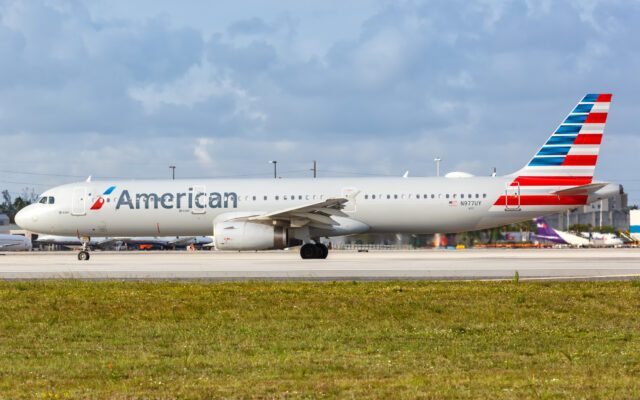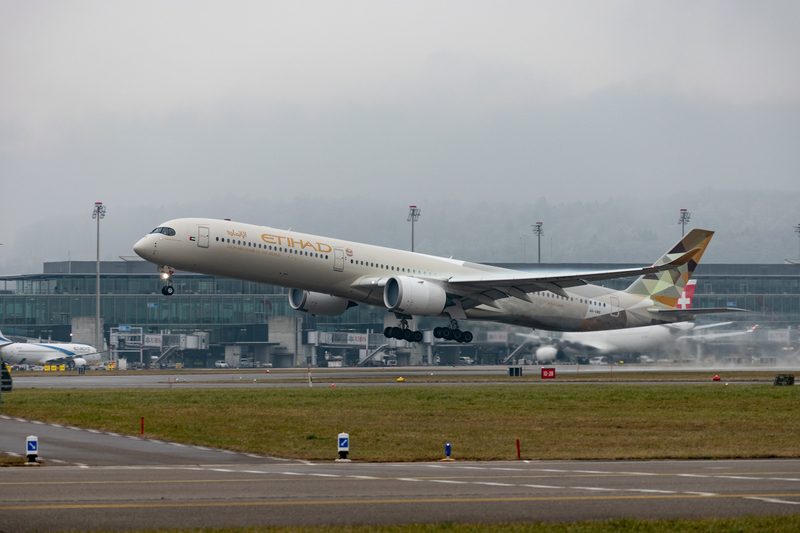
Etihad Airways is indeed growing its U.S. network, but the supplied framing needs an important correction. The expansion did not begin as a blanket March 20, 2026 rollout across multiple new American cities. March 20 was the start date for Charlotte Douglas International Airport (CLT), while Atlanta Hartsfield-Jackson International Airport (ATL) had already joined the network in 2025 and Chicago O’Hare International Airport (ORD) is the market still waiting for its big frequency jump later this year.

That matters because Etihad’s U.S. growth is not one single event. It is a staged expansion. Charlotte is the newest addition, Chicago is the next market to deepen, and Atlanta is already established and growing into its role as a key southeastern gateway.
Charlotte Is the Newest Piece of the Puzzle
The clearest new U.S. move is Charlotte. Etihad launched nonstop service between Abu Dhabi Zayed International Airport (AUH) and CLT on March 20, making North Carolina the newest point in the airline’s American network.
Read our stories in your inbox
Two aviation newsletters. Zero fluff.
Charlotte is a strategic choice. It is one of the largest banking and corporate centers in the United States, a major American Airlines hub, and a city with stronger long-haul demand than its nonstop map has historically reflected. For Etihad, that creates a useful mix of premium, corporate, and connecting traffic.
The route is being operated by the Airbus A350-1000, which is exactly the sort of aircraft Etihad wants on long, thinner premium markets. The type offers the range to handle AUH-CLT comfortably, lower fuel burn than older widebodies, and a more modern onboard product than many legacy aircraft in comparable long-haul service. In practical terms, it allows Etihad to enter a new U.S. market with a flagship-level product but without the excess capacity of a larger aircraft type.
Atlanta Is Not New in 2026
One of the biggest inaccuracies in the original draft is the treatment of Atlanta as a new 2026 route. It is not.
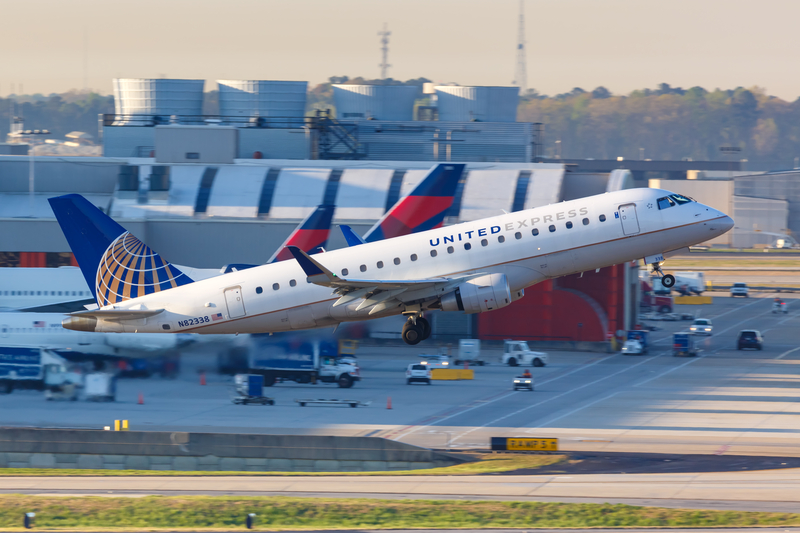
Etihad launched Abu Dhabi–Atlanta service in July 2025 and then accelerated the route to daily flying from November 2025 after early demand exceeded expectations. By April 2026, ATL is already an operating part of the network, not a future destination waiting to launch.
That correction matters because it changes the shape of the story. Etihad is not suddenly “adding Atlanta and Charlotte” in the same moment. Instead, it is building out a broader U.S. network in stages, with ATL already proving itself and CLT now joining it.
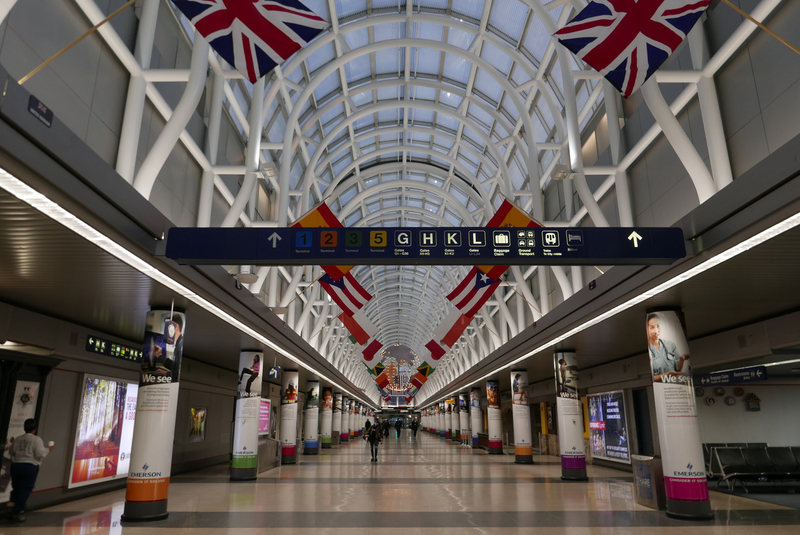
The Atlanta service is also operated by the Airbus A350-1000, which tells you how Etihad views the market. ATL is not being treated as a speculative secondary route. It is being flown with one of the airline’s newest long-haul aircraft into the busiest airport in the world, a signal that Etihad sees real long-term value there.
Chicago Is Where the Capacity Story Gets Bigger
If Charlotte is the headline new destination, Chicago is the bigger capacity story.
Etihad is preparing to increase Abu Dhabi–Chicago O’Hare (AUH-ORD) from one daily flight to two daily flights from mid-June 2026. That is a meaningful escalation. Once the second frequency starts, ORD will become one of Etihad’s largest U.S. markets by capacity and one of the clearest signs that the airline believes demand between the U.S. Midwest, the Gulf, and onward South Asia is deep enough to support more than a simple daily operation.
That route is especially important because ORD is not just a local market. It is a major connection point. The second daily service should improve connectivity in both directions, particularly for passengers heading beyond Abu Dhabi into India and the wider subcontinent, where Etihad remains strongest.
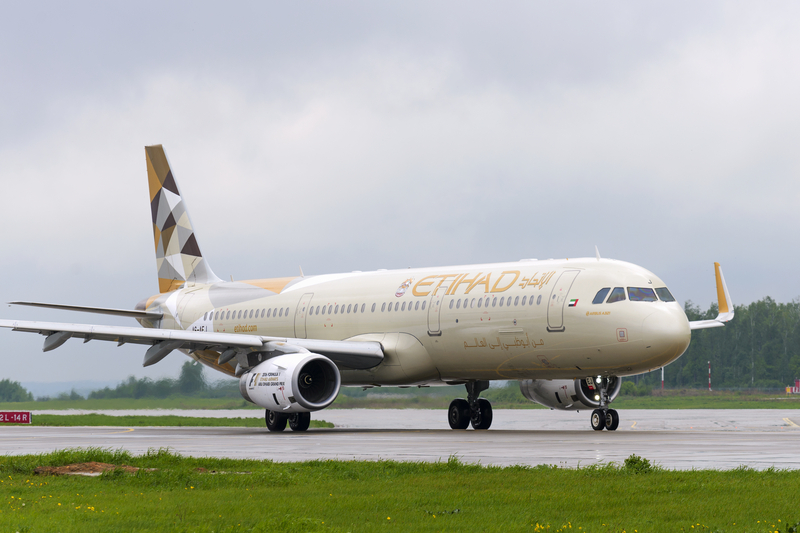
It also reinforces the logic behind Abu Dhabi’s U.S. proposition. Etihad is not trying to win only local UAE–America traffic. It is building an intercontinental bridge that links the United States with South Asia, the Gulf, and selected onward markets across Asia and the Indian Ocean.
The Real U.S. Network Is Now Taking Shape
With Charlotte now active, Etihad’s U.S. network consists of Atlanta (ATL), Boston Logan International Airport (BOS), Charlotte (CLT), Chicago O’Hare (ORD), New York John F. Kennedy International Airport (JFK), and Washington Dulles International Airport (IAD).
That is a stronger footprint than Etihad had only a few years ago, and it is notable for how deliberately it has been built. Rather than chasing every obvious U.S. gateway, the airline has focused on cities where it can combine local premium demand, strong diaspora traffic, and onward connectivity through AUH.
Charlotte strengthens the southeastern map. Atlanta gives the airline a foothold in the largest airport market in the U.S. South. Chicago deepens the Midwest. JFK and IAD continue to provide scale and connectivity on the East Coast. Taken together, the network now looks more coherent than opportunistic.
Why the A350-1000 Matters So Much
The aircraft choice deserves more attention because it is central to Etihad’s U.S. strategy.
The Airbus A350-1000 is a long-range, next-generation widebody that Etihad already uses on key U.S. routes including ATL, CLT, and Chicago. For an airline like Etihad, the aircraft hits a sweet spot: it offers premium-heavy long-haul capability, strong cargo performance, and better fuel efficiency than older large widebodies.
That matters in today’s environment. Gulf carriers are expanding again, but they are also trying to be more disciplined about where and how they grow. The A350-1000 lets Etihad add or deepen U.S. service with a premium product that supports higher yields, without having to rely on sheer volume alone.
In short, this is not just route growth. It is aircraft-led strategy.
Bottom Line
Etihad Airways is unquestionably expanding in the United States, but the supplied article needed a key correction: Atlanta is not a new 2026 addition, and the March 20 milestone belongs specifically to Charlotte.
The real story is better than the original framing. Charlotte Douglas International Airport (CLT) is now live as Etihad’s newest U.S. destination, Atlanta (ATL) is already operating and has matured into a daily A350-1000 route, and Chicago O’Hare (ORD) is set to become a much bigger market when second-daily service begins later in 2026.
For aviation readers, that is the real takeaway. Etihad’s U.S. growth is no longer a simple headline about “more flights to America.” It is becoming a more structured, aircraft-led network strategy built around Abu Dhabi (AUH) and a growing group of carefully chosen U.S. gateways.
Keep reading FlyMag
Get the Daily Brief in the morning or the Route Watch weekly recap on Fridays. Or both.