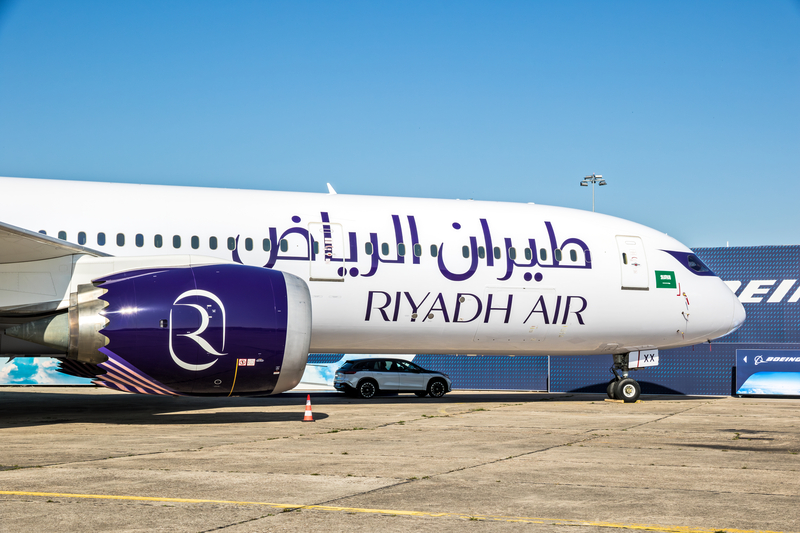
Riyadh Air is finally moving from controlled launch mode into public scheduled service, and it is doing so earlier than expected.
Saudi Arabia’s newest full-service carrier is now set to begin public Boeing 787-9 Dreamliner operations between King Khalid International Airport (RUH) in Riyadh and London Heathrow Airport (LHR) on June 10, 2026, bringing forward a launch that had previously been expected on July 1. The move follows the arrival of the airline’s first custom-fitted Boeing 787-9 aircraft and turns Riyadh Air’s long-promoted brand promise into a live airline operation.
The London (LHR) route is not entirely new. Riyadh Air has been flying between Riyadh (RUH) and Heathrow (LHR) since October 2025 using “Jamila,” a leased Boeing 787-9 previously associated with Oman Air. Those flights formed part of the airline’s “Pathway to Perfect” operational readiness program, designed to test systems, service delivery, airport handling, crew procedures, and slot operations before the broader public launch.
Read our stories in your inbox
Two aviation newsletters. Zero fluff.
What changes now is the aircraft, the customer base, and the level of scrutiny. Riyadh Air is moving from a carefully controlled proving phase into full public service using its own fitted 787-9 Dreamliners. For a carrier created to support Saudi Arabia’s ambition to turn Riyadh into a global aviation hub, this is the first major operational test.
London Moves From Test Route To Public Launch Route
Riyadh Air’s first public route will be Riyadh (RUH) to London Heathrow (LHR), operated as RX401 east-to-west from Saudi Arabia to the United Kingdom and RX402 on the return.
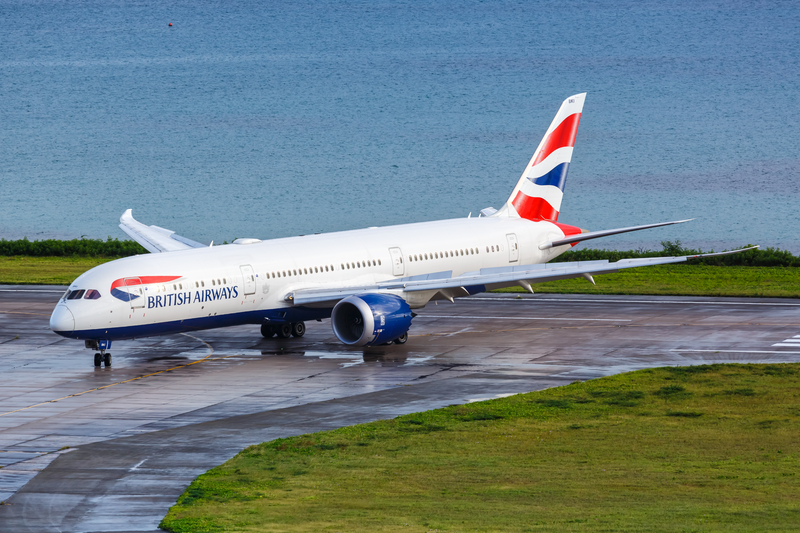
The planned schedule places RX401 as a late-night departure from Riyadh (RUH), leaving at 02:35 and arriving at London Heathrow (LHR) at 07:30 local time. The return, RX402, departs Heathrow (LHR) at 09:35 and arrives back in Riyadh (RUH) at 18:05. The timings are typical of Gulf-to-Europe flying, allowing an early arrival into London and a same-day return to Riyadh.
For Riyadh Air, London Heathrow (LHR) was always the logical first international market. Heathrow is slot-constrained, commercially powerful, and symbolically important. It gives Riyadh Air immediate visibility in one of the world’s most competitive long-haul airports, while linking Saudi Arabia’s capital with one of Europe’s most important financial, business, and diplomatic centers.
There is also a strategic reason to start with LHR. Heathrow gives a new airline instant credibility, but it also exposes operational weaknesses quickly. A daily long-haul operation into LHR requires punctual aircraft rotation, reliable ground handling, disciplined crew planning, robust catering, consistent premium service delivery, and careful disruption management. Riyadh Air’s early London flying with Jamila helped build experience, but the June 10 public launch is where the airline’s own product starts being judged by paying passengers.
A Six-Route Network Within Weeks
Riyadh Air is not launching with London alone. The airline has opened sales for five additional destinations, giving it a six-route public network by late July.
The first follow-up is Jeddah’s King Abdulaziz International Airport (JED), launching on June 14. That route is especially important because Riyadh (RUH)–Jeddah (JED) is one of the most important domestic air corridors in Saudi Arabia. It connects the capital with the Kingdom’s main western gateway, the Red Sea commercial center, and the principal airport serving Makkah traffic.
Dubai International Airport (DXB) follows on June 18. Riyadh (RUH)–Dubai (DXB) is one of the region’s most obvious business and leisure markets, but it is also fiercely competitive. Emirates, flydubai, Saudia, flynas, and other regional carriers have long made the Gulf’s short-haul trunk routes difficult territory for newcomers. Riyadh Air will need to compete not only on schedule and fare, but also on service consistency and brand positioning.
Cairo International Airport (CAI) comes next on June 25. Cairo (CAI) is a high-volume regional market with strong business, family, labor, tourism, and religious travel flows. For a new Saudi carrier, Egypt is not a secondary add. It is a core regional market with large traffic potential and natural connectivity over Riyadh (RUH).
In July, Riyadh Air turns back toward Europe. Madrid-Barajas Airport (MAD) is scheduled to begin on July 17, followed by Manchester Airport (MAN) on July 23. Both routes are strategically different from London (LHR). Heathrow is a premium global trunk market; Madrid (MAD) and Manchester (MAN) give Riyadh Air a chance to build thinner long-haul European services that may benefit from direct demand and future connectivity over RUH.
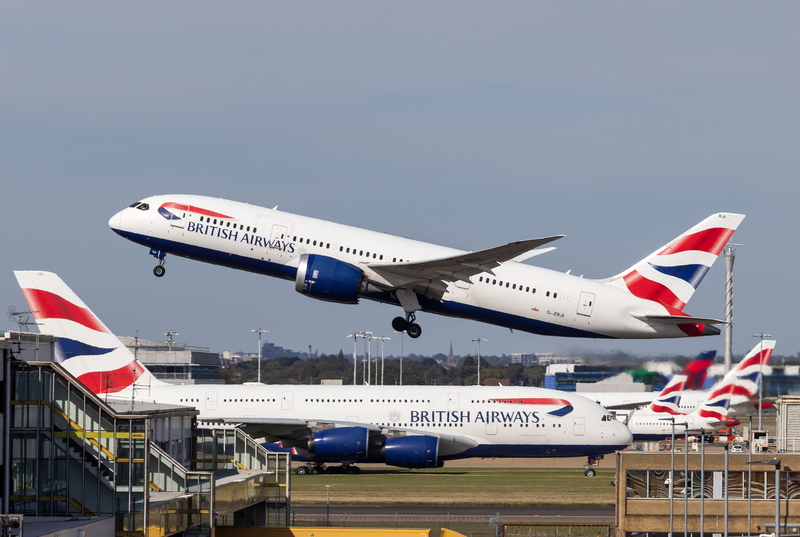
Manchester (MAN) is particularly notable because it gives Riyadh Air a second UK city almost immediately after London (LHR). That suggests the airline sees the UK not as a single Heathrow play, but as a larger market with room for regional demand beyond the capital.
The Boeing 787-9 Is The Right Aircraft For The Opening Phase
All six announced public routes are built around the Boeing 787-9 Dreamliner, the aircraft type that will define Riyadh Air’s first phase.
The 787-9 is a logical launch aircraft for a new long-haul network carrier. It has the range to serve Europe, Asia, Africa, and eventually North America from Riyadh (RUH), while offering better trip economics than larger widebodies. Boeing lists the 787-9 with a range of roughly 7,565 nautical miles, a 63-meter fuselage, a 60-meter wingspan, and a typical two-class passenger capacity of 296 seats. In Riyadh Air’s case, the aircraft is being fitted in a more premium-heavy 290-seat configuration.
Riyadh Air’s 787-9 layout is central to the airline’s brand. The aircraft features four cabins: Business Elite, Business, Premium Economy, and Economy. Business Elite consists of four enhanced front-row suites, while the wider Business cabin uses a 1-2-1 fully flat layout with direct aisle access. Premium Economy is arranged in a 2-3-2 layout, and Economy is in the standard 3-3-3 configuration used by most 787 operators.
That is important because Riyadh Air is not trying to enter the market as a low-cost Gulf carrier. Its entire positioning is built around premium service, digital retailing, Saudi hospitality, and a more polished onboard experience. The 787-9 is the physical platform for that promise.
The aircraft also gives Riyadh Air flexibility. London (LHR), Madrid (MAD), and Manchester (MAN) are long enough to showcase the widebody product. Jeddah (JED), Dubai (DXB), and Cairo (CAI) are shorter routes, but they give the airline high-frequency, high-visibility regional flying where crews and ground teams can build operational rhythm quickly.
Jeddah Will Be The First Domestic Test
The Riyadh (RUH)–Jeddah (JED) route may be short compared with London (LHR), but it could be just as revealing.
Jeddah (JED) is Riyadh Air’s first domestic route, and it places the new carrier directly into one of Saudi Arabia’s most important air markets. Saudia, flynas, and flyadeal already serve the corridor heavily. The route has enormous volume, but that volume comes with intense price sensitivity, high schedule expectations, and frequent business and family travel.
Using a Boeing 787-9 on RUH–JED is also notable. On a domestic sector of this length, a 787 is not about range. It is about product exposure, fleet availability, capacity, and launch visibility. Riyadh Air can put its flagship aircraft in front of Saudi passengers quickly, while also generating aircraft utilization between longer sectors.
For passengers, RUH–JED will offer an unusually premium aircraft for a domestic flight. The question is whether Riyadh Air can translate that aircraft advantage into a sustainable commercial position once the novelty fades. A 787 cabin may win early attention, but long-term success on Riyadh (RUH)–Jeddah (JED) will depend on reliability, pricing, loyalty benefits, airport experience, and schedule convenience.
Dubai And Cairo Bring Immediate Regional Scale
Dubai (DXB) and Cairo (CAI) are essential early markets because they give Riyadh Air immediate regional relevance.
Dubai International Airport (DXB) is one of the world’s busiest international airports and a major center for business, tourism, shopping, and onward connections. Riyadh (RUH)–Dubai (DXB) is a natural market for government, corporate, leisure, and expatriate traffic. It also allows Riyadh Air to position itself against some of the most experienced carriers in the region.
Cairo (CAI), meanwhile, gives Riyadh Air access to one of the largest population and traffic markets in the Arab world. Saudi Arabia and Egypt have deep economic, labor, tourism, and religious travel links. Cairo (CAI) also provides volume that can help support Riyadh Air’s emerging hub model.
The challenge is that neither route is easy. Dubai (DXB) is heavily contested, and Cairo (CAI) is served by airlines with established traffic flows and local brand loyalty. Riyadh Air’s opportunity is to offer a consistent premium widebody product and connect those markets onward through RUH as more destinations come online.
At launch, however, the network is still too small to function as a full connecting hub. These first regional routes are about presence, brand introduction, and traffic base-building.
Madrid And Manchester Show The Network Logic
Madrid (MAD) and Manchester (MAN) are more revealing than they may first appear.
London (LHR) was inevitable. Jeddah (JED), Dubai (DXB), and Cairo (CAI) were obvious regional priorities. Madrid (MAD) and Manchester (MAN), however, show the kind of network Riyadh Air may want to build: not only the biggest global capitals, but also major city pairs where nonstop service to Riyadh (RUH) can be developed before rivals fully occupy the space.
Madrid (MAD) gives Riyadh Air a link to Spain’s capital and one of Europe’s largest origin-and-destination markets. It also connects Riyadh with a major European business and tourism center that can support two-way leisure, premium, and future connecting traffic.
Manchester (MAN) gives the airline access to northern England and a large catchment area beyond London. For UK passengers outside the southeast, a nonstop MAN–RUH flight may be more attractive than connecting through London Heathrow (LHR), Doha (DOH), Dubai (DXB), Abu Dhabi (AUH), Istanbul (IST), or a continental European hub.
Both routes also matter because Riyadh Air’s long-term goal is not just to fly Saudis outbound. It wants to bring travelers into Riyadh and connect traffic over RUH between Europe, the Middle East, Asia, and Africa. Madrid (MAD) and Manchester (MAN) are early signs of that broader ambition.
Twenty-Two Destinations In Nine Months Is Ambitious
Riyadh Air’s first six public routes are only the beginning. CEO Tony Douglas has said the airline intends to connect Riyadh (RUH) with 22 destinations within nine months.
That target should be read carefully. It does not mean 22 additional destinations beyond the first six have all been confirmed or placed on sale. It means Riyadh Air is aiming to grow from a six-route opening network into a much larger early-stage network by the first quarter of 2027.
Several likely future markets have already appeared in slot filings and industry reporting, including Paris Charles de Gaulle (CDG), Amman Queen Alia (AMM), Islamabad (ISB), Lahore (LHE), Mumbai (BOM), Bangkok Suvarnabhumi (BKK), Jakarta (CGK), Kuala Lumpur (KUL), and Manila (MNL). Those should still be treated as planned or prospective routes until Riyadh Air formally places them on sale.
The pattern is clear. South Asia and Southeast Asia are central to the strategy. Markets such as Islamabad (ISB), Lahore (LHE), Mumbai (BOM), Manila (MNL), Jakarta (CGK), Kuala Lumpur (KUL), and Bangkok (BKK) offer a mix of labor traffic, expatriate demand, religious travel, tourism, and future hub connectivity. These may not all be premium-heavy markets, but they can provide the passenger volume needed to build a serious hub operation at Riyadh (RUH).
Paris (CDG) and Amman (AMM) would serve different roles. Paris (CDG) would add another major European capital, while Amman (AMM) would deepen Riyadh Air’s regional network and connect two important Middle Eastern capitals.
The Aircraft Delivery Pace Will Shape The Network
Riyadh Air’s ability to reach 22 destinations quickly depends heavily on aircraft deliveries.
The airline has received its first custom-built Boeing 787-9 Dreamliners, with the first two arriving in Riyadh and a third aircraft arriving in Jeddah. The carrier expects more aircraft during 2026, and the 787-9 will form the backbone of its early long-haul and regional operation.
That matters because route announcements are only one part of building an airline. Aircraft availability drives everything: spare coverage, operational reliability, schedule depth, maintenance planning, crew training, disruption recovery, and the ability to grow without stretching the operation too thin.
Launching a six-route network with a small initial fleet is possible, especially when some routes are relatively short. Scaling toward 22 destinations is much harder. Riyadh Air will need enough aircraft not only to open routes, but also to protect them operationally. A premium airline cannot build trust if every aircraft delay turns into a major network disruption.
This is where the first year will be critical. Riyadh Air has the brand, the funding, the aircraft orders, and the public attention. Now it must prove that it can run a reliable airline day after day.
A New Gulf Carrier In A Crowded Region
Riyadh Air enters a region already dominated by some of the world’s most sophisticated network airlines.
Emirates has built Dubai (DXB) into one of the most powerful global hubs in aviation. Qatar Airways has turned Doha Hamad International Airport (DOH) into a premium connecting platform with global reach. Etihad Airways has rebuilt around a more disciplined Abu Dhabi (AUH) strategy. Saudia remains the established Saudi flag carrier, with major operations at Jeddah (JED), Riyadh (RUH), and other domestic points.
Riyadh Air is not trying to replicate those airlines overnight, but the comparison is unavoidable. Its long-term target of more than 100 destinations by 2030 places it squarely in the global hub conversation. The difference is that Riyadh Air is starting with a newer brand, a smaller initial fleet, and a home market that is undergoing major tourism, infrastructure, and economic transformation.
The timing is both advantageous and risky. Saudi Arabia is investing heavily in aviation, tourism, events, logistics, and major infrastructure. That creates demand. But global aircraft supply constraints, airspace volatility, high operating costs, and intense Gulf competition create pressure.
Riyadh Air’s first few months will not determine the entire project, but they will shape industry perception. Airlines, airports, corporate travel buyers, tour operators, loyalty members, and passengers will all be watching to see whether the carrier’s premium promise matches the operational reality.
Bottom Line
Riyadh Air’s early public launch to London Heathrow (LHR) marks the point where Saudi Arabia’s newest airline moves from carefully managed preparation into real scheduled passenger service.
The first route from Riyadh (RUH) to London (LHR) gives the airline immediate global visibility, while the rapid addition of Jeddah (JED), Dubai (DXB), Cairo (CAI), Madrid (MAD), and Manchester (MAN) creates a six-route opening network across domestic, regional, and European markets.
The Boeing 787-9 Dreamliner is central to the plan. It gives Riyadh Air the range, efficiency, and premium cabin platform needed to build a global carrier from RUH, while still allowing the airline to test shorter high-volume markets such as Jeddah (JED), Dubai (DXB), and Cairo (CAI).
The bigger question is whether Riyadh Air can scale quickly without losing control of the operation. A target of 22 destinations within nine months is ambitious for any new airline, even one backed by Saudi Arabia’s Public Investment Fund and supported by Vision 2030.
For now, the airline has moved beyond the reveal stage. The aircraft are arriving, tickets are on sale, and the first public 787 flights are beginning. Riyadh Air’s brand has been carefully built for years. Starting June 10, the market begins judging the airline not by its promises, but by its performance.
Keep reading FlyMag
Get the Daily Brief in the morning or the Route Watch weekly recap on Fridays. Or both.