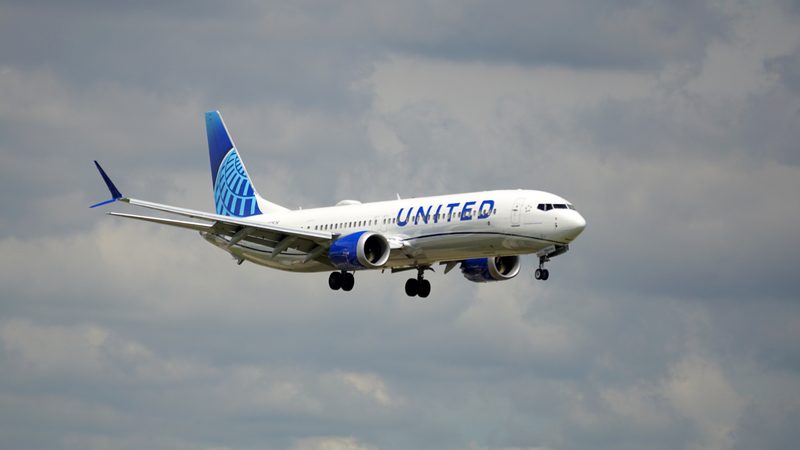
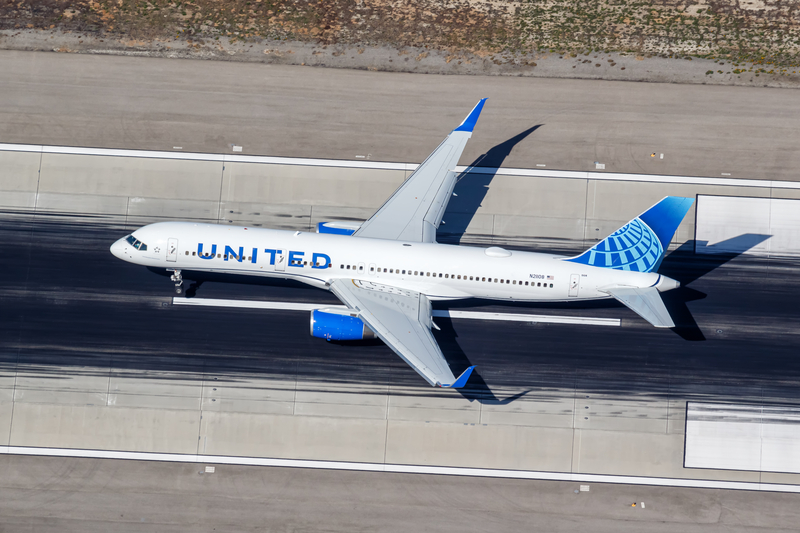
United Airlines is restoring its Saipan (SPN) – Tokyo Narita (NRT) route from July 12, 2026, bringing back one of the Northern Mariana Islands’ most important international links after weeks of disruption caused by Typhoon Sinlaku.

The service will return at three weekly flights, ending a suspension that began on May 7 after the storm damaged infrastructure and disrupted operations at Saipan. That may look like a straightforward route restart, but it means more than that. For Saipan, every restored international route matters disproportionately because the island’s air access is thin, tourism-dependent, and still vulnerable to operational shocks.
For aviation readers, this is really a recovery story.
Read our stories in your inbox
Two aviation newsletters. Zero fluff.
Tokyo Is One Of Saipan’s Most Important Overseas Markets
The Saipan–Narita route is not just another international city pair.
Japan has long been one of the most important source markets for Saipan, and direct access to Tokyo Narita Airport (NRT) gives the island a critical leisure and visiting traffic link back into one of Asia’s largest outbound travel markets. Losing that route, even temporarily, leaves a visible gap in Saipan’s external connectivity.

That is why United’s restart matters. It is not simply restoring one schedule. It is helping stabilize one of the island’s most commercially important international corridors.
The Suspension Reflected More Than A Schedule Adjustment
United suspended the route on May 7 after the effects of Typhoon Sinlaku disrupted airport operations and wider travel reliability in the Northern Mariana Islands.
That timing matters because it shows the route was not cut for commercial reasons. It was suspended because the storm had created conditions severe enough to make continued operation impractical. In that sense, the July restart is not a relaunch driven by strategy or demand shifts. It is the return of a route that was knocked out by an external shock.
For Saipan, that distinction is important. This is recovery, not retrenchment.
Saipan’s Wider Air Service Recovery Is Taking Shape
United is not the only airline reappearing in the market.
According to current schedule data, Jeju Air is expected to resume its Saipan service on June 20, with Philippine Airlines following on June 21. At the same time, local Star Marianas Air services from Rota and Tinian have continued operating normally.
That gives the market a more complete recovery picture. It suggests that international air service to Saipan is returning in stages rather than all at once, with regional and local flying helping sustain the system while larger international links come back online.
This is exactly how air service tends to recover in small island markets after severe weather disruption.

Three Weekly Flights Is A Cautious Restart
United is not returning Narita–Saipan at full frequency dominance or with a major expansion.
The service is coming back at three weekly flights, which is a sensible and measured pace. That gives the airline enough presence to restore market confidence and reconnect the route while still keeping capacity aligned with recovery conditions.
For a market like Saipan, frequency matters a great deal, but so does resilience. Restarting carefully is often better than overcommitting too early and then having to retrench again if demand or operations remain unstable.
Guam Remains The Short-Term Lifeline
While the Narita route has been suspended, United has maintained Saipan–Guam service at reduced and emergency levels.
That matters because Guam effectively becomes the buffer and fallback point for the wider regional system in times like this. It is the larger and more resilient aviation hub in the immediate geography, and keeping Guam connected to Saipan helps preserve at least some onward access while the rest of the network is rebuilt.
This is one of the key dynamics in Micronesian aviation: when smaller markets are disrupted, Guam often becomes the operational anchor.
The Bigger Issue Is Connectivity Fragility
The restart also highlights a structural reality.
Saipan does not have the same network redundancy that larger international destinations enjoy. When a storm or infrastructure problem knocks out one or two routes, the effect is immediate and highly visible. Tourism, local mobility, and economic recovery all become more difficult because there simply are not that many alternatives.
That is why a three-weekly route to Tokyo matters so much more here than it might in a larger market. In Saipan, one restored link can materially change the airport’s recovery trajectory.
Bottom Line
United’s decision to resume Saipan–Tokyo Narita flights from July 12, 2026, at three weekly frequencies, is an important step in rebuilding international air access to the Northern Mariana Islands after Typhoon Sinlaku.
The route’s return is significant not just because of Tokyo’s importance, but because it forms part of a broader phased recovery that also includes Jeju Air and Philippine Airlines. For Saipan, this is not just a route restart. It is a visible sign that the island’s external air links are slowly coming back.
Keep reading FlyMag
Get the Daily Brief in the morning or the Route Watch weekly recap on Fridays. Or both.