American Airlines’ 2026 schedule updates read less like a flashy route dump and more like a textbook network-planning exercise: put the right gauge on the right city pair, lean on hubs that can actually feed long-haul efficiently, and build seasonal capacity around predictable demand spikes.

For summer 2026, the headline is “Six for ’26” — six long-haul adds/returns across Europe and South America — paired with a meaningful premium upgauge to Tokyo Haneda (HND) from Dallas–Fort Worth (DFW) and Los Angeles (LAX). On the domestic side, American is layering in 15 new routes (mostly regional-jet flying) designed to pull smaller markets into the airline’s global banks through Chicago O’Hare (ORD), Phoenix (PHX), Dallas–Fort Worth (DFW), Charlotte (CLT), Miami (MIA), and Boston (BOS).
What makes this interesting for airline folks: the aircraft choices tell you exactly what American thinks these markets can sustain — and how much connectivity it expects its hubs to do on the back end.
Read our stories in your inbox
Two aviation newsletters. Zero fluff.
A network built to feed the long-haul machine
American’s core advantage is breadth: a massive domestic footprint that can funnel traffic into a handful of long-haul gateways. That matters in 2026 because two of the most “avgeek exciting” additions — Prague (PRG) and Budapest (BUD) — are classic long-thin markets. They’re not the kind of routes you launch from every coastal megacity and hope O&D magically appears; they’re routes you launch from a hub that can pull passengers from dozens (or hundreds) of spokes, then distribute them into a single daily widebody with tolerable risk.
That’s why you’ll see Philadelphia (PHL) doing the heavy lifting into Central Europe, while Miami (MIA) leans into Italy, and Dallas–Fort Worth (DFW) plays both transatlantic and South America — plus the transpacific premium story.
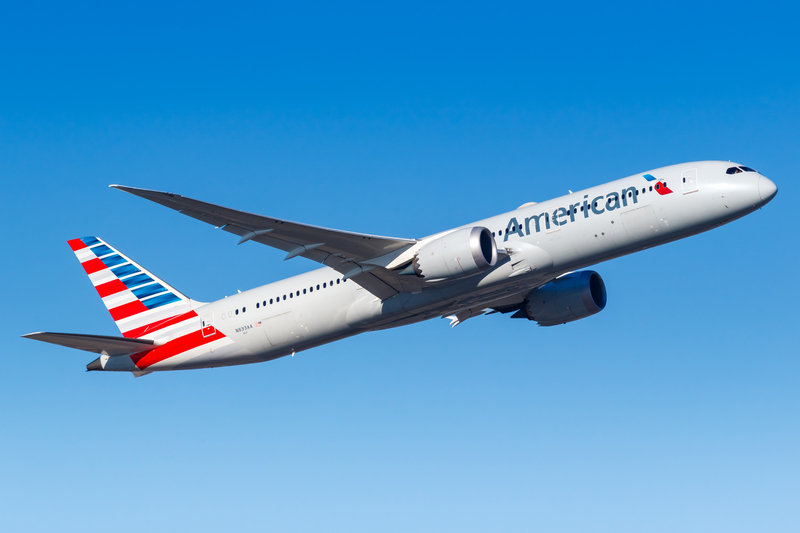
“Six for ’26”: the new and extended long-haul routes
American’s summer 2026 long-haul package is tightly clustered around three hubs — DFW, PHL, and MIA — with most flying operated by the Boeing 787-8 Dreamliner. The 787-8 is a natural fit here: a long-range, mid-capacity widebody (typically around 248 seats in a two-class layout) built for route profiles where range is non-negotiable but demand can be seasonal or still developing. It’s also the right tool when you want daily frequency without the trip cost of larger-gauge aircraft.
Here’s the long-haul slate, with start dates and planned aircraft:
-
Dallas–Fort Worth (DFW) to Athens (ATH): summer seasonal starting May 21, 2026 on Boeing 787-8
-
Dallas–Fort Worth (DFW) to Buenos Aires Ezeiza (EZE): extended seasonal flying May 21 to August 3, 2026 on Boeing 787-8
-
Dallas–Fort Worth (DFW) to Zurich (ZRH): summer seasonal May 21 to August 4, 2026 on Boeing 777-200
-
Miami (MIA) to Milan Malpensa (MXP): year-round starting March 29, 2026 on Boeing 787-8
-
Philadelphia (PHL) to Budapest (BUD): summer seasonal starting May 21, 2026 on Boeing 787-8
-
Philadelphia (PHL) to Prague (PRG): summer seasonal starting May 21, 2026 on Boeing 787-8
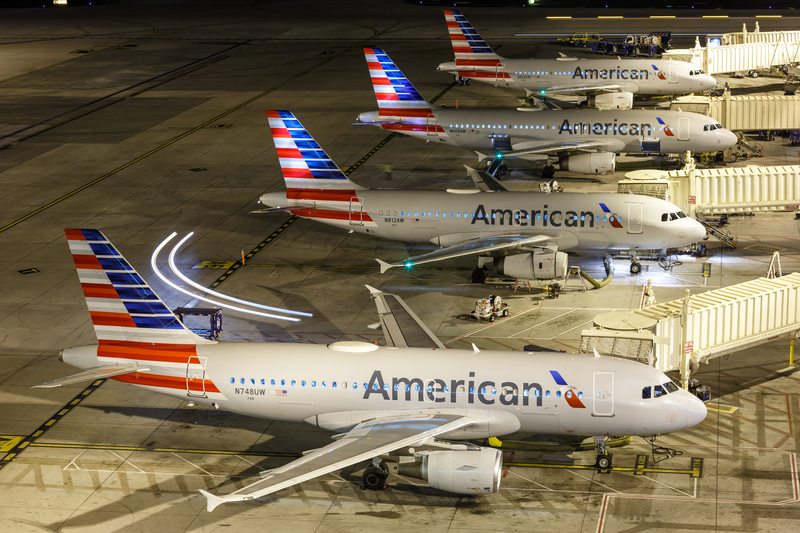
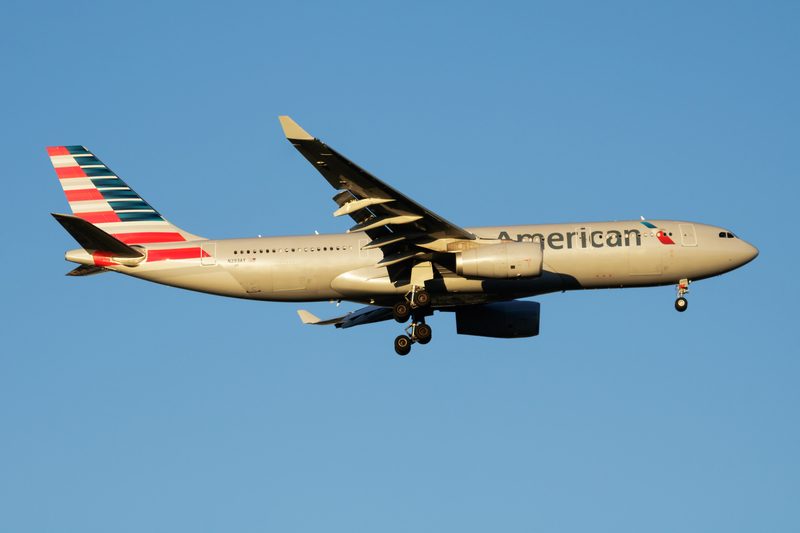
Sales for these routes were slated to open on August 11, 2025 — meaning inventory and early pricing strategies have likely been in the market for a while now, and what you’ll watch next is how the airline tunes frequency, cabin mix, and connection flows as 2026 approaches.
Central Europe from Philadelphia: why PHL is doing Prague and Budapest
If you’re looking for the “network logic” behind this announcement, it’s Philadelphia (PHL). In 2026, American plans a deep transatlantic schedule from PHL, and Central Europe fits neatly into that strategy: build a stronger hub identity for connecting traffic while adding destinations that are compelling enough to stimulate leisure demand and capture high-yield visiting-friends-and-relatives flows.
Philadelphia (PHL) to Budapest (BUD) is particularly notable because American positioned it as the only nonstop U.S.–Budapest option. Whether you view that as a first-mover advantage or a demand-proof challenge depends on your read of the market — but either way, it’s a clear signal that American believes it can aggregate enough traffic through PHL to support a daily 787-8 in peak season.
Prague (PRG) is a slightly different beast: more established leisure draw, broader seasonality, and a steadier mix of point-of-sale markets. For both routes, the 787-8 is the right play because it can deliver long-haul range with a capacity profile that doesn’t require mega-hub O&D to work.
PHL also quietly matters on product: American has invested in premium ground experience at Philadelphia (PHL), and the airline is clearly happy to sell the idea of PHL as a comfortable transatlantic connection point — lounges, bank structures, and shorter minimum connecting times can all be part of the pitch to win connecting traffic away from competing hubs.
DFW’s summer surge: Athens, Zurich, and a longer Buenos Aires season
Dallas–Fort Worth (DFW) is where American can scale. It’s a massive connecting engine with a geography that works for both Europe and South America, and the 2026 adds show American using DFW to do three different things:
-
Add a marquee Mediterranean route
DFW–Athens (ATH) launching May 21, 2026 is a high-visibility move. Greece has been one of the strongest post-pandemic leisure stories, and American is essentially using a daily 787-8 to keep the route in a “right-sized” band while still offering the schedule quality (daily service) that sells. -
Seasonal Zurich, but with bigger gauge
DFW–Zurich (ZRH) running May 21 to August 4, 2026 is planned on the Boeing 777-200 — larger than the 787-8 and a different economics profile. The 777-200’s extra capacity and cargo capability can make sense when you’re chasing a short, intense peak season and you want the downside protection of larger belly volume and a cabin mix that can soak up premium demand. It also aligns with how airlines often treat Switzerland in summer: strong leisure and premium demand, but not always year-round at daily frequency from every hub. -
Extend South America flying into the peak
DFW–Buenos Aires (EZE) is being extended deeper into summer, from May 21 through August 3, 2026, again on the 787-8. That’s a classic capacity extension: keep the route alive longer when demand peaks, maximize fleet utilization during the northern-hemisphere summer, and take advantage of DFW’s ability to feed South America beyond pure local traffic.
American also explicitly tied some of this DFW and MIA–EZE flying to global soccer demand, which is basically code for “we expect predictable, time-bounded surges and we’re willing to tailor capacity around it.” For airline planners, it’s a reminder that big event demand isn’t just marketing — it can justify real capacity decisions when your hub and fleet flexibility are strong enough.
Miami to Milan: a year-round Italy bet with the 787-8
Miami (MIA) to Milan (MXP) goes year-round beginning March 29, 2026, and that’s arguably the most strategically “committed” long-haul add in the batch because it isn’t confined to a narrow summer window.
MIA is American’s powerhouse for Latin America and a major connecting hub for flows from across the U.S., the Caribbean, and Central/South America — which means MIA–MXP isn’t just about Miami-origin leisure. It can also capture one-stop demand from a huge catchment area that can’t easily reach Northern Italy nonstop.
Running it on the 787-8 makes sense: long-range efficiency, daily frequency viability, and the ability to keep the operation economically sane outside the absolute peak weeks.
Tokyo Haneda gets more premium metal (and more premium soft product)
The other major pillar of American’s 2026 update isn’t a brand-new city pair — it’s a capacity-and-product story to Tokyo Haneda (HND), one of the most slot-constrained, high-yield airports in the world.
Starting March 29, 2026, American plans:
-
Dallas–Fort Worth (DFW) to Tokyo Haneda (HND): daily Boeing 777-300 service
-
Los Angeles (LAX) to Tokyo Haneda (HND): twice-daily Boeing 777-200 service
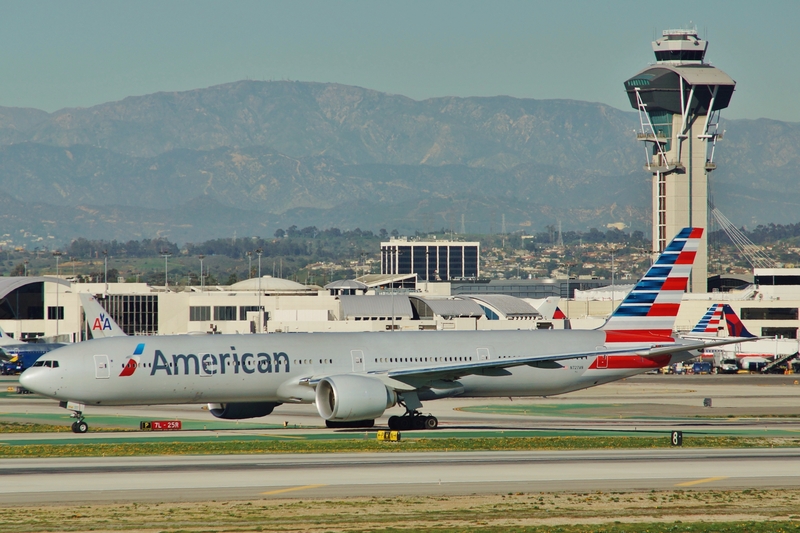
From a fleet standpoint, this is a clear “premium seat math” move. The Boeing 777 family is built for exactly this kind of mission: long-range, high-capacity, premium-heavy widebody flying. The 777-300ER (the variant American operates) is one of the industry’s go-to tools for thick long-haul routes, while the 777-200 remains a versatile long-range platform that airlines can tune for different cabin mixes and mission profiles.
American also tied the capacity increase to an improved Business Class experience on widebody routes to East Asia and other long-haul regions, including upgraded sleep amenities (like pajamas and mattress pads) and refreshed dining and beverage programs. For professionals, the point isn’t the pajamas — it’s what they signal: American is chasing higher-yield travelers on competitive long-haul markets where product perception influences share, especially when you’re selling connecting itineraries through hubs like DFW (DFW) and LAX (LAX).
Domestic expansion: 15 new routes designed to feed hubs (not steal headlines)
American’s 15 new domestic routes for 2026 are mostly about connectivity — and the aircraft choices confirm it. You’re looking at a heavy mix of Embraer 175 (E175), Embraer 170 (E170), and Bombardier CRJ variants (CRJ-700 and CRJ-900), with one notable mainline narrowbody deployment: Airbus A321neo on Phoenix (PHX) to Anchorage (ANC).
A few moves stand out:
-
Lincoln, Nebraska (LNK) gets real hub connectivity. American is launching service into Lincoln (LNK) from multiple hubs, including Chicago O’Hare (ORD) and Dallas–Fort Worth (DFW), using CRJ-700s. This is exactly how a big network carrier rebuilds relevance in smaller markets: consistent daily service (or better), timed for connections, and aircraft sized to minimize risk.
-
Phoenix (PHX) continues to grow as a connecting platform. PHX is adding routes like PHX–Abilene (ABI), PHX–McAllen (MFE), and PHX–Rapid City (RAP), plus PHX–Anchorage (ANC) on the A321neo (seasonal). The A321neo’s range and efficiency make it well-suited to long domestic sectors like PHX–ANC where an RJ isn’t viable and widebody capacity would be overkill.
-
Chicago O’Hare (ORD) is getting depth, not just breadth. New service from ORD to Erie (ERI), ORD to Tri-Cities (TRI), and ORD to Lincoln (LNK) is the kind of incremental growth that improves network utility — especially when you’re trying to keep ORD relevant in a fiercely competitive hub environment.
Chicago O’Hare: 500+ daily departures and a premium-forward positioning
American’s messaging around Chicago O’Hare (ORD) is unusually direct: more than 500 daily departures next summer, growth toward 180+ destinations, and a spring schedule up more than 30% versus 2025 with peak days exceeding 480 departures.
Two details matter for the pro crowd:
-
Dual-class aircraft across the board. American states every ORD flight will operate with dual-class cabins, which is a clear corporate-and-loyalty strategy: protect premium upsell opportunities even on regional routes.
-
Premium long-haul product anchored at ORD. American has used Chicago (ORD) as an early market for its evolving premium strategy — including service where “Flagship Suite” branding is part of the sales story on select long-haul flying. That’s consistent with American’s broader push to win higher-yield traffic in competitive hubs through cabin product, not just schedule.
Bottom Line
American’s 2026 plan is a case study in modern network management: use the 787-8 for long-thin and seasonal long-haul (PHL–BUD, PHL–PRG, DFW–ATH, DFW–EZE, MIA–MXP), upgauge to 777 family aircraft where premium demand and slot value justify it (DFW/LAX–HND, DFW–ZRH), and stitch the whole thing together with regional lift that feeds hubs efficiently (especially ORD, PHX, and DFW).
It’s not just “new routes.” It’s a deliberate bet on connectivity, right-sized capacity, and a premium narrative that’s clearly aimed at winning share where it actually matters: constrained global gateways and high-value summer demand peaks.
Keep reading FlyMag
Get the Daily Brief in the morning or the Route Watch weekly recap on Fridays. Or both.