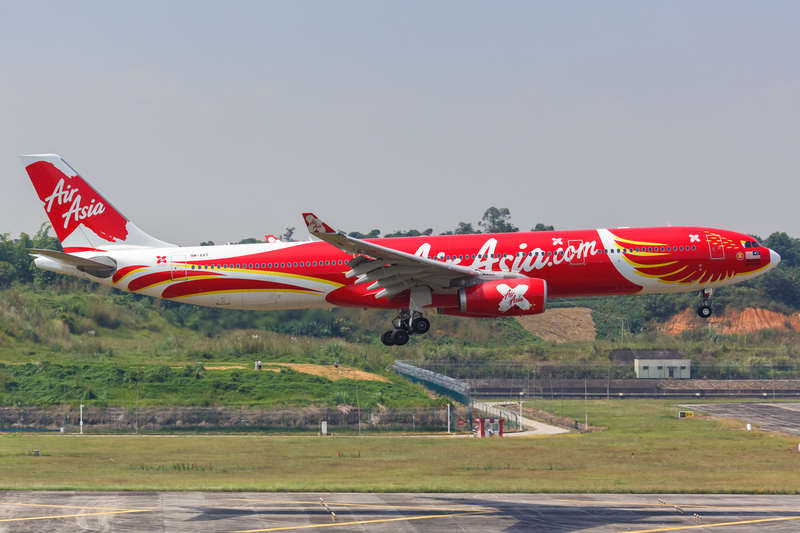
AirAsia X (D7) is making a structural shift that long-haul low-cost carriers rarely attempt at scale: building a strategic hub outside its traditional Southeast Asia base, with Bahrain International Airport (BAH) as the anchor point to connect Asia with the Middle East, Europe, and Australia. The plan follows a Letter of Intent signed in November 2025 with Bahrain’s Ministry of Transportation and Telecommunications and is now being positioned as a practical, near-term network engine—not a distant ambition.

For airline professionals, the significance isn’t the marketing line about “connectivity.” It’s the operating logic: Bahrain gives AirAsia X a mid-point that can turn aircraft and crews more efficiently, unlock fifth-freedom opportunities, and extend the airline’s addressable market without immediately committing to a wave of brand-new long-haul stations.
Why BAH Works: Geography, Infrastructure, and a Hub That Doesn’t Need Reinventing
Bahrain’s location is the obvious first-order reason. BAH sits in the core flow of east–west traffic, close enough to act as a stepping stone for sectors that can be challenging for high-density widebodies to operate nonstop, yet positioned to feed multiple regions with manageable stage lengths. That geographic advantage matters even more for a low-cost long-haul model that is sensitive to fuel burn, payload limits, and the cost of irregular operations.
Read our stories in your inbox
Two aviation newsletters. Zero fluff.
The second-order advantage is that BAH is already a mature airport operation with a long runway system and proven long-haul handling capability—critical if you’re planning repeated widebody turns and building a banked schedule. Unlike “greenfield hub” concepts, Bahrain doesn’t require AirAsia X to wait for years of airport build-out to get started.
The Network Strategy: A Mid-Haul Hub That Creates Two Revenue Legs
The hub idea works best when it creates two sellable markets, not one long itinerary that passengers tolerate only when it’s cheap. AirAsia X is signaling exactly that: Bahrain is intended to function as a platform where the airline can carry traffic on both sides of the hub—Asia–BAH and BAH–West—so aircraft earn money on each segment rather than relying entirely on end-to-end flows.

This is why the Bahrain move is closely tied to AirAsia X’s recently highlighted Kuala Lumpur (KUL) – Bahrain (BAH) – London Gatwick (LGW) structure, which establishes the template: operate a long sector to Bahrain, then push onward into Europe using a second sector that can be monetized independently (including with fifth-freedom traffic where permitted). Put simply: it’s a hub model designed to produce “two strong loads” instead of “one long thin route.”
Fleet Implications: A330 Heavy Lifting Now, Narrowbody Long-Range Later
AirAsia X’s current practical tool for this build-out is the Airbus A330 family—particularly the A330-300, which is the airline’s established long-haul workhorse. In high-density configurations, the A330-300 is an efficient seat-mile platform, but it has range limitations at the edges—especially on ultra-long missions with payload and wind considerations. Bahrain helps by breaking up those extremes into two sectors that fit better within the aircraft’s comfortable performance envelope.
What makes the strategy more interesting is how it can evolve. AirAsia’s broader fleet narrative increasingly emphasizes next-generation, longer-range narrowbodies—aircraft that can open thinner city pairs and “secondary-to-secondary” routes without widebody risk. Even if AirAsia X’s near-term Bahrain plan is widebody-led, the hub concept becomes more powerful if future aircraft allow point-to-point spokes into and out of BAH with lower trip costs and more flexible frequency.
More Than Passengers: Cargo and Maintenance Are Part of the Bahrain Play
AirAsia isn’t framing Bahrain as “just a route stop.” The wider ecosystem angle is explicit: the hub concept is expected to support growth in cargo and maintenance services as well.
Two parts matter here:
-
Cargo: AirAsia’s logistics arm has been building momentum, and a Bahrain base can act as a practical consolidation and transfer point for time-sensitive freight flows across regions.
-
MRO: AirAsia’s engineering ambitions—particularly the idea of establishing significant hangar capability in Bahrain—signal that the plan isn’t only about selling seats. A hub that includes maintenance capability reduces downtime friction, improves recovery options, and can also become a revenue line in its own right if third-party work is in scope.
For a long-haul low-cost carrier, these “non-ticket” levers can be decisive. They smooth operational peaks and help offset the volatility that comes with leisure-heavy demand and seasonal swings.
The Commercial Thesis: Stimulate New Demand Without Picking a Direct Fight With the Gulf Giants
AirAsia X is walking into a region dominated by high-frequency network carriers with deep premium cabins and massive connection banks. The smarter play for a long-haul LCC isn’t trying to out-network them on frequency—it’s to stimulate demand on price and simplicity, then widen the funnel with digital distribution and ancillary revenue.
That’s why the airline keeps emphasizing ancillary strength and digital capabilities. A Bahrain hub gives AirAsia X a broader “surface area” to sell bundles, seats, bags, meals, and add-ons across more markets, while keeping the core low-fare proposition intact.
In a nutshell: Bahrain is a hub that can be scaled in a modular way—add routes, add banks, add ancillary opportunities—without the all-or-nothing commitment that comes with launching multiple new long-haul destinations directly from Southeast Asia.
Bottom Line
AirAsia X’s Bahrain strategy is a notable shift away from a single-hub long-haul LCC model. By building Bahrain (BAH) into a mid-haul hub linking Asia with the Middle East, Europe, and Australia, the airline is aiming to turn one difficult long-haul problem into two monetizable sectors, reduce range and payload pressure on its widebody fleet, and create new fifth-freedom and connectivity opportunities. If AirAsia X can translate the concept into reliable bank structure, consistent aircraft utilization, and meaningful ancillary capture, Bahrain could become the airline’s most important network lever outside Southeast Asia—one that expands reach while keeping capacity risk tightly controlled.
Keep reading FlyMag
Get the Daily Brief in the morning or the Route Watch weekly recap on Fridays. Or both.