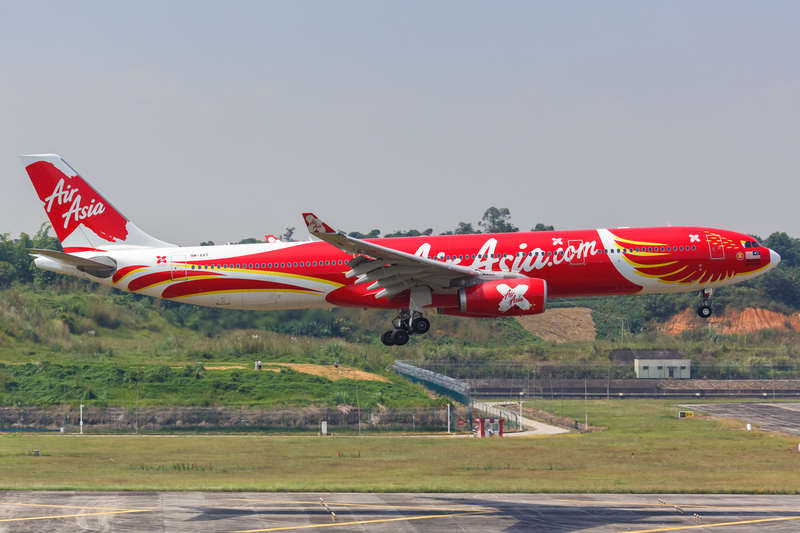
AirAsia X looks set to make another run at the UK market—this time with a fundamentally different operating concept from its short-lived, nonstop era. Industry chatter and schedule signals point to a formal announcement on February 12 for a Kuala Lumpur (KUL)–London Gatwick (LGW) service operated by Airbus A330-300s with an intermediate stop in Bahrain (BAH). If it materializes as expected, it would mark AirAsia X’s first UK service in more than a decade—and its first Middle East station at BAH, a stop that appears to be doing double duty as both a range enabler and a strategic foothold.

AirAsia X previously served the London market nonstop in the late 2000s and early 2010s—initially to London Stansted (STN) before switching to Gatwick (LGW)—but those flights ended in 2012. The revived plan is not a nostalgic replay. It is a network design pivot shaped by aircraft capability, a changing competitive landscape, and AirAsia Group’s broader Middle East ambitions.
Read our stories in your inbox
Two aviation newsletters. Zero fluff.
What’s being proposed: a long-haul LCC “one-stop” to London
The expected relaunch structure is straightforward:
-
KUL–BAH–LGW in one direction, LGW–BAH–KUL in the other
-
Airbus A330-300 operation (AirAsia X’s long-haul workhorse)
-
A total journey time that stretches into the mid-teens of hours, depending on ground time in BAH
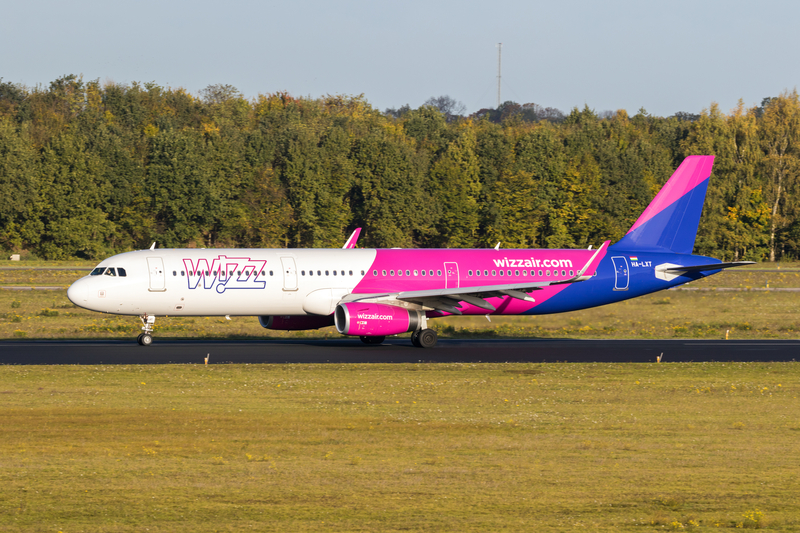
The stop in Bahrain (BAH) is the tell. While AirAsia X has experience operating long sectors with its A330 fleet, KUL–LGW nonstop is a very long mission for a high-density A330-300. The airline’s typical A330-300 configuration—often cited at 377 seats—prioritizes unit costs and seat count, but that density comes with payload/range tradeoffs. An intermediate stop effectively de-risks the operation: less performance pressure, more fuel flexibility, and a built-in recovery point if winds, payload, or alternates complicate dispatch.
Why Bahrain matters: range, economics, and a Middle East platform
BAH is not just a “gas-and-go” stop in this context. AirAsia’s parent (Capital A) has been public about Bahrain as a prospective Middle East base for expansion—an idea that fits neatly with a London routing. Put simply: if you’re going to stop somewhere anyway, you stop where you can build something bigger than a single route.

There’s also the regulatory and commercial upside: fifth freedom rights are widely rumored to be in play. If AirAsia X can carry passengers on BAH–LGW (and potentially LGW–BAH) in addition to end-to-end KUL traffic, the economics improve immediately. It changes the flight from “one long, thin leisure route with a stop” into “two monetizable city pairs stitched together,” which is often the difference between headline-grabbing and balance-sheet-surviving.
A look back: from A340 nonstop to A330 via-stop reality
AirAsia X’s original London push happened in a different era—one where the carrier used Airbus A340-300s on its longest routes. The A340’s four-engine profile made it operationally flexible for very long sectors, but it also carried a fuel-burn penalty that became increasingly hard to justify as oil prices and competitive pressure moved the wrong way.
Today’s AirAsia X is anchored on twin-engine Airbus A330s, which are excellent LCC tools on long-haul missions—high seat-mile efficiency, strong cargo capability for the class, and wide availability in the global leasing and MRO ecosystem. But they’re also governed by physics. A high-density A330-300 can deliver very compelling economics on missions in its sweet spot; it is far less forgiving at the edge of performance, especially when you layer in winter winds, alternates, and payload demands. A stop at BAH is an elegant operational answer—even if it’s a tougher sell to passengers.
The London–Kuala Lumpur market is already crowded, just not at Gatwick
The competitive environment AirAsia X is walking into is more complex than the one it left in 2012.
Nonstop capacity today is concentrated at London Heathrow (LHR) rather than LGW, with British Airways operating the route using the Boeing 787-9, and Malaysia Airlines flying Airbus A350-900s (with the airline’s A380s long since removed from the market). That gives the Heathrow market a strong premium and connectivity bias—especially with corporate contracts, alliance feed, and long-haul connection banks.
Yet a meaningful share of London–KUL traffic still travels one-stop, often via Middle East hubs. That’s the gap AirAsia X is targeting—not by out-premiuming the full-service carriers, but by undercutting on price and leveraging KUL’s onward connectivity into Asia and Australia. The problem is that AirAsia X is proposing a two-sector journey that may still end up competing with slicker one-stop routings on Gulf carriers—many of which offer seamless connections, full-service inclusions, and high-frequency schedules.
This is where pricing and ancillary strategy becomes decisive.
The product equation: 16 hours on an LCC, and everything is optional
AirAsia X’s model is familiar to anyone who watches long-haul low-cost: base fares that get you a seat and a cabin bag, and a menu for everything else—checked baggage, meals, seat selection, and in-flight entertainment. On a short haul hop, that’s routine. On a multi-sector trip approaching 16 hours, it becomes a very different consumer calculation.
For industry readers, the interesting question isn’t “Will people do it?”—they will, at the right price. The sharper question is: what fare level offsets the friction of a stop, plus the add-ons most passengers will inevitably buy? Once luggage, meals, and preferred seating are added, the all-in price can drift toward full-service competitors—especially during peak travel periods. That’s where AirAsia X will need disciplined revenue management and a clear strategy for where it wants to win: pure leisure price shoppers, VFR traffic, or sixth-freedom connections beyond KUL.
Bahrain–London becomes the unexpected battleground
BAH–London is not a blank canvas. Gulf Air (GF) already flies Bahrain (BAH)–London Heathrow (LHR) and has added London Gatwick (LGW) flying as well, typically deploying the Boeing 787-9—a long-haul twin that pairs strong economics with a full-service product and premium cabin depth.
If AirAsia X does secure the ability to sell seats on BAH–LGW, it could inject genuine price pressure into the market—particularly for leisure passengers willing to trade comfort and inclusions for headline fares. That said, Gulf Air’s product, schedule, and nonstop simplicity will remain a powerful counterweight. A fifth-freedom LCC can stimulate demand, but it also tends to be volatile: price-sensitive passengers come quickly and leave quickly if fares rise or reliability stumbles.
Bottom Line
AirAsia X’s expected Kuala Lumpur (KUL)–London Gatwick (LGW) comeback via Bahrain (BAH) is less a return to the past than a re-engineered attempt to make the UK work within the constraints—and advantages—of its Airbus A330-300 fleet. The stop in BAH looks like a deliberate blend of operational practicality (range and payload margin) and strategy (a Middle East platform, potentially supported by fifth-freedom traffic). The challenge is commercial: the London–KUL corridor already has strong nonstop service via Heathrow (LHR) and a deep bench of one-stop Middle East options. To win meaningful share from Gatwick (LGW) with a two-sector itinerary, AirAsia X will need aggressive pricing, tight operations, and a compelling all-in value story once ancillaries are counted.
Keep reading FlyMag
Get the Daily Brief in the morning or the Route Watch weekly recap on Fridays. Or both.