Uganda Airlines has laid out a 10-year growth plan built around a much larger network, new infrastructure, and a broader long-haul ambition, with the airline targeting 32 regional and international destinations over the next decade.
That is an ambitious goal for a carrier that currently serves 17 destinations in 14 countries. It is also a revealing one. Uganda Airlines is not just talking about adding flights. It is talking about becoming a more complete national aviation platform, with investments in maintenance, cargo, premium ground product, and eventually a larger mixed fleet to support the next phase of expansion.
For aviation readers, the key point is this: the route target is bold, but the real story is whether the airline can match that ambition with disciplined fleet growth and stronger governance.
Read our stories in your inbox
Two aviation newsletters. Zero fluff.
The Network Goal Is Big Relative To The Current Airline
A move from 17 destinations to 32 is not incremental.
It implies a much broader geographic reach and a materially larger operation, especially for a state carrier whose current fleet remains relatively small and partly constrained by aircraft in maintenance or out of service. On paper, 32 destinations would give Uganda Airlines a much stronger East African and intercontinental profile. In practice, it means the airline will need more aircraft, better reliability, and a much clearer sense of which markets can actually support service sustainably.
That is why the plan should be read as strategic intent rather than near-term inevitability.
The Infrastructure Plan Is Almost As Important As The Route Plan
One of the more interesting parts of the strategy is that it goes well beyond route announcements.
Uganda Airlines says it wants to invest in an upgraded head office, an aircraft maintenance hangar, a cargo warehouse, a business-class lounge, and even a premium-class hotel. That tells you management and government stakeholders are thinking in ecosystem terms rather than simply chasing route count.
This matters because airlines rarely become stronger just by adding destinations. They become stronger when operations, maintenance, cargo, and customer experience all improve together. In that sense, the infrastructure side of the plan may ultimately be more important than the 32-route headline.
The Financial Picture Has Improved — But Losses Are Still Losses
The latest reported numbers show a more encouraging trend than many state carriers manage to produce.
According to Uganda’s Ministry of Finance, the airline reduced its net loss by 27% in the 2024/25 financial year, while revenue rose by 22%, from UGX349 billion to UGX437.3 billion. The airline also now accounts for about 27% of passenger traffic at Entebbe.
Those are meaningful signals of progress. But they do not change the underlying reality that the airline is still loss-making. Revenue growth is important; profitability is more important. For the 10-year plan to become credible, Uganda Airlines will need to convert traffic growth into a much more sustainable financial base.
The Fleet Is Growing, But It Is Still Operationally Thin
Fleet scale remains one of the biggest constraints.
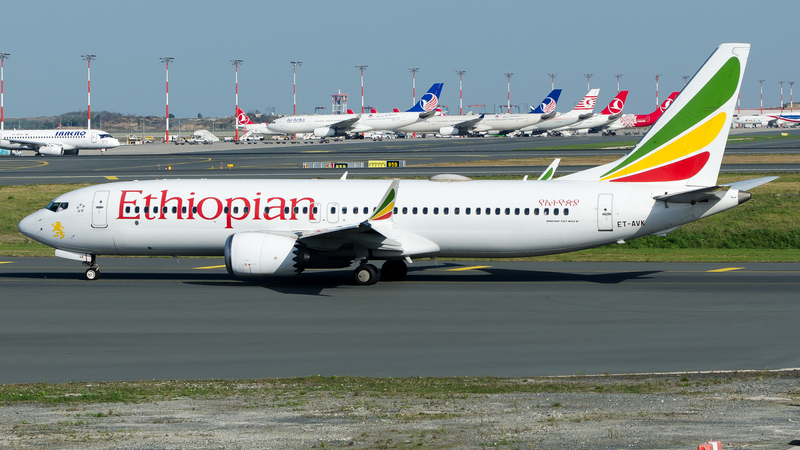
Uganda Airlines currently has seven aircraft, including two Airbus A330-800neos and four CRJ900LRs, while a wet-leased A320-200 had been used until mid-May and is expected to be replaced by two Boeing 737-800s from Ethiopian Airlines. At the same time, not every aircraft is fully available: one A330 and one CRJ are reported as being out of the operating pool.
That matters because a 32-destination network is difficult to support if the fleet remains this tight. Growth plans in airlines are usually constrained less by ambition than by usable aircraft hours.
The Government Has Already Approved More Aircraft Funding
Uganda’s parliament has already approved substantial supplementary funding tied to future fleet additions.
That package included support for two Boeing 787 passenger aircraft, one Boeing freighter, and two mid-range Airbus narrowbodies, together with related bridge leasing costs. That suggests the state is still willing to back the airline’s expansion, at least in principle.
If those aircraft eventually arrive, the route target starts to look more plausible. Without them, the 32-destination plan remains much harder to imagine at scale.
Leadership And Governance Still Matter As Much As Aircraft
The strategic plan is arriving at a sensitive management moment.
The government has placed Girma Wake in the acting CEO role after the dismissal of the previous chief executive, and has explicitly framed his experience as part of an effort to stabilize and professionalize the airline. That matters because airline turnarounds and growth plans usually depend less on the written strategy than on the quality of execution behind it.
Uganda Airlines also remains close to procurement and governance controversy, with continuing scrutiny over past aircraft-approval decisions and broader allegations around abuse of office, embezzlement, and accounting issues. That means the airline’s next phase will be judged not only on what it flies, but on how cleanly and credibly it manages the process.
Cargo And Maintenance Could Quietly Become The Most Valuable Parts Of The Plan
The route target will get the headlines, but the cargo warehouse and maintenance hangar may end up being two of the most consequential pieces of the strategy.
A carrier operating from Entebbe can strengthen itself materially if it builds a credible cargo operation and reduces dependence on outside maintenance support. Those are the kinds of investments that can improve utilization, reduce delays, and create additional revenue streams even before the long-haul passenger network reaches its final shape.
In other words, Uganda Airlines does not need to hit 32 destinations quickly for this plan to start creating value. It needs to get the operational foundations right first.
Bottom Line
Uganda Airlines’ 10-year plan to grow to 32 destinations is ambitious, but not irrational. The airline has improved revenue, reduced losses, increased its share at Entebbe, and secured political backing for future fleet additions. At the same time, it still operates with a small and partly constrained fleet, remains loss-making, and continues to face governance scrutiny.
The plan will not be judged by the headline number alone. It will be judged by whether Uganda Airlines can translate state support, new aircraft, and infrastructure investment into a more reliable, financially stronger, and better-governed airline. That is the real flight path ahead.
Keep reading FlyMag
Get the Daily Brief in the morning or the Route Watch weekly recap on Fridays. Or both.