Two foreign nationals died in separate incidents at Kuala Lumpur International Airport Terminal 2 on May 1, after falling from height in cases police have said are unrelated and still under investigation.
The events happened hours apart and have drawn intense attention not only because of the loss of life, but because they occurred inside one of Southeast Asia’s busiest low-cost travel gateways. For airport operators, airlines, and aviation security professionals, incidents of this nature immediately raise difficult questions about terminal design, public-area oversight, emergency response, and how airports manage distressed passengers in highly exposed public spaces.
The Two Incidents Happened Hours Apart
The first case involved a 27-year-old Chinese woman, who fell from a Level 3 balcony area in the Green Zone of Terminal 2 during the afternoon. She was taken to hospital but later died from her injuries.
Read our stories in your inbox
Two aviation newsletters. Zero fluff.
Later that evening, a 30-year-old Algerian man fell from an outer balcony area at the same terminal. He too was hospitalized and later died.
Police have said the two incidents are being treated separately and have classified both as sudden-death cases while investigations continue.
Terminal 2’s Role Makes The Incidents Especially Sensitive
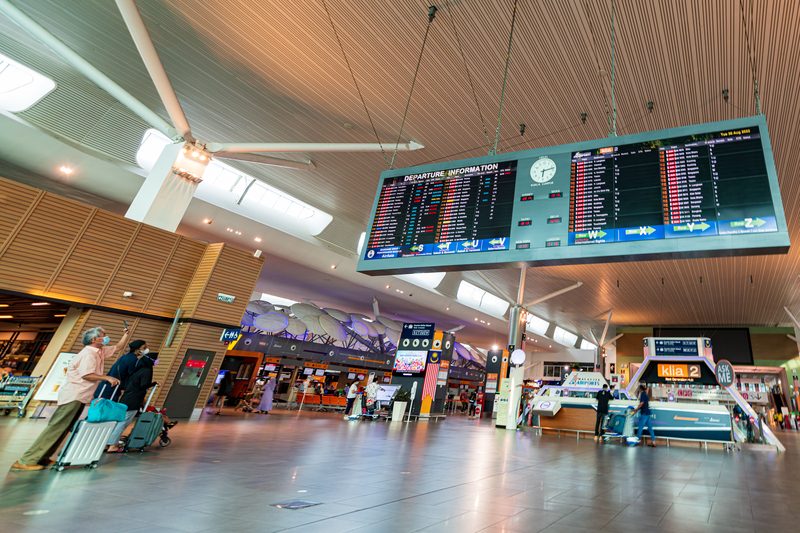
Kuala Lumpur International Airport Terminal 2 is not a marginal facility. It is the airport’s major terminal for low-cost and high-volume short-haul traffic, which means it handles large passenger flows, extensive waiting areas, and the constant movement of travelers, families, meeters, greeters, and staff.
That matters because incidents in public terminal zones are very different from incidents in secure back-of-house or airside operational areas. Public-facing airport spaces are designed to be open, accessible, and efficient. But that openness can also create vulnerabilities, especially in elevated circulation areas such as balcony levels, mezzanines, or atrium-facing public walkways.
For airport planners, the challenge is always the same: maintain openness and passenger comfort without reducing passive safety.
The Immediate Airport Response Will Be Closely Examined
Whenever a fatal incident occurs in a terminal, the first questions usually concern response time, staff awareness, and whether there were warning signs before the fall.

In this case, reporting around the first incident suggests airport personnel responded quickly and the injured passenger was taken to hospital. The second case also appears to have prompted a rapid medical response. Even so, these are exactly the kinds of events that usually trigger internal review of CCTV monitoring, security deployment, public-area staffing, and how quickly intervention can happen when a person is in distress near an exposed barrier or elevated edge.
This is not just a police matter. It is also an airport-operations matter.
Airports Face A Difficult Public-Space Safety Challenge
Modern terminals are built to move enormous numbers of people smoothly, but they are also among the most complex public environments to secure comprehensively.
Unlike a stadium or a single-purpose venue, an airport terminal includes check-in halls, public food courts, viewing areas, arrival and departure levels, retail zones, transit corridors, and in some cases multiple open balcony or atrium features. That design improves flow and commercial appeal, but it can complicate surveillance and intervention when an emergency involves passenger behavior rather than a conventional security threat.
That is one reason these incidents will be taken seriously by airport operators far beyond Malaysia. They highlight a risk category that is difficult to eliminate entirely through standard aviation security measures alone.
The Police Request For Restraint Is Important
Authorities have urged the public not to speculate while the investigations continue.
That is an important request and one that should be respected. In airport incidents involving fatalities, early online commentary can spread quickly and often outruns the facts. Investigators need time to establish chronology, witness accounts, medical findings, CCTV timelines, and any other relevant context before drawing conclusions.
For aviation reporting, that means sticking to what is known: two people fell in separate incidents, both later died, and the police have said the cases are unrelated and under active investigation.
The Broader Issue Is Passenger Welfare In High-Stress Environments
Airports are emotionally intense spaces even under normal conditions.
Travel stress, fatigue, missed flights, immigration pressure, family separation, financial strain, and long waiting periods can all affect passenger behavior. Most of the time, those pressures remain manageable. But when something goes wrong, airports must be able to detect distress quickly and respond in ways that combine security, medical support, and human judgment.
That is one of the less visible parts of airport operations, but it is increasingly important. Passenger welfare is not just a customer-service issue. In some cases, it becomes a safety issue.
Bottom Line
The two fatal falls at Kuala Lumpur International Airport Terminal 2 are tragic and deeply serious incidents that will likely prompt close review of public-area safety, terminal monitoring, and emergency-response procedures.
Police have said the cases are unrelated and remain under investigation. Beyond the immediate facts, though, the events are a reminder that airport safety is not only about runways, aircraft, and security checkpoints. It also includes the design and management of the terminal itself, especially in large, high-pressure public spaces where intervention sometimes has to happen very quickly.
Keep reading FlyMag
Get the Daily Brief in the morning or the Route Watch weekly recap on Fridays. Or both.