American Airlines is temporarily suspending six domestic routes this summer and early fall, with every affected market touching California.

The cuts are scheduled to run from August 5 through October 5, 2026, according to recent schedule filings and aviation schedule trackers. Four of the routes are from Los Angeles International Airport (LAX), while the other two connect American’s Charlotte Douglas International Airport (CLT) hub with California airports.
The affected routes are Los Angeles (LAX) to Cleveland (CLE), Columbus (CMH), Pittsburgh (PIT), and Washington Dulles (IAD), along with Charlotte (CLT) to Ontario (ONT) and Sacramento (SMF).
Read our stories in your inbox
Two aviation newsletters. Zero fluff.
The suspensions are not massive in the context of American’s full network. American and American Eagle operate thousands of daily flights, and six temporary route pauses will not materially reshape the airline. But they are still revealing. These are longer domestic sectors, many of them competitive, and several were only recently launched or restored. When fuel prices rise sharply, these are exactly the kinds of routes that come under scrutiny first.
Six Routes Being Paused
The six suspended routes fall into two clear groups: Los Angeles point-to-point flying and Charlotte-to-California hub flying.
| Route | Recent Service Context | Planned Aircraft Before Suspension |
|---|---|---|
| Los Angeles (LAX) – Cleveland Hopkins (CLE) | Launched April 2026 | Boeing 737 |
| Los Angeles (LAX) – John Glenn Columbus (CMH) | Restored in 2025 after a pandemic-era absence | Boeing 737 |
| Los Angeles (LAX) – Pittsburgh (PIT) | Restored in 2025 after last being served several years earlier | Boeing 737-800 |
| Los Angeles (LAX) – Washington Dulles (IAD) | Restored April 2026 | Boeing 737 |
| Charlotte (CLT) – Ontario (ONT) | Long-haul domestic hub route to Southern California’s Inland Empire | Airbus A321 |
| Charlotte (CLT) – Sacramento (SMF) | Long-haul domestic hub route to Northern California | Airbus A321 |
The timing is important. The affected period begins after the peak early-summer travel rush and runs into early October, a softer shoulder period for many domestic markets. Airlines often use this part of the year to trim marginal flying, reduce exposure to lower-yield demand, and reposition aircraft for stronger opportunities.
In normal conditions, a route can survive with a thinner margin if it supports network strategy, loyalty relevance, or competitive presence. In a high-fuel-price environment, that tolerance narrows.
Los Angeles Takes The Biggest Hit
Los Angeles (LAX) accounts for four of the six suspensions, and that is the most telling part of the update.
American has long had an uneven relationship with LAX. The airport remains important for the carrier’s brand, AAdvantage loyalty base, premium customers, entertainment-industry traffic, and West Coast presence. But it is not a fortress hub in the way Dallas/Fort Worth (DFW), Charlotte (CLT), Miami (MIA), Philadelphia (PHL), or Phoenix (PHX) are.

At LAX, American faces strong competition from Delta Air Lines, United Airlines, Southwest Airlines, Alaska Airlines, JetBlue, and a range of international carriers. That makes the airport strategically important but difficult to optimize. American needs enough LAX flying to remain relevant in Southern California, but not every route from Los Angeles can be defended when costs rise.
The four suspended LAX routes illustrate that tension.
Los Angeles (LAX) to Cleveland (CLE) and Los Angeles (LAX) to Washington Dulles (IAD) were announced earlier this year as daily Boeing 737 routes beginning April 7, 2026. Their temporary suspension only months later shows how quickly route economics can change when fuel costs and competitive pressure collide.
Los Angeles (LAX) to Columbus (CMH) and Pittsburgh (PIT) are also notable. Both are logical midsize markets with business, leisure, university, medical, and visiting-friends-and-relatives demand. But they are also long domestic sectors where American is not necessarily the dominant player and where nonstop competition or connecting alternatives can weaken yields.
United’s Presence Matters
The Los Angeles routes are also important because United Airlines is present in all four markets.
United has long been strong at LAX and has major network relevance at Washington Dulles (IAD), where it operates a hub. Cleveland (CLE), while no longer a United hub, remains a market with historical United strength from the Continental era. Pittsburgh (PIT) and Columbus (CMH) have also attracted additional nonstop capacity from carriers trying to build Midwest-to-Los Angeles demand.
For American, competing in these markets from LAX means more than filling seats. It must achieve fares high enough to justify the aircraft time, fuel burn, crew cost, airport cost, and opportunity cost of using a Boeing 737 on a transcontinental or near-transcontinental sector.
That is where the math becomes difficult.
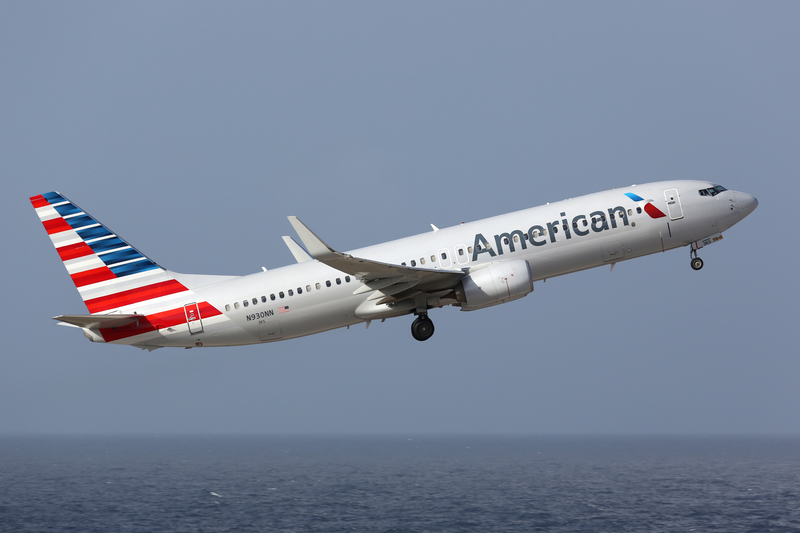
A Boeing 737-800 or 737 MAX 8 in American’s fleet typically carries 172 passengers, including 16 First Class seats, 24 Main Cabin Extra seats, and 132 Main Cabin seats. That is a substantial amount of capacity to sell every day in markets where American is not necessarily the incumbent nonstop carrier.
If fares soften, fuel rises, or connection alternatives through Dallas/Fort Worth (DFW), Phoenix (PHX), Chicago O’Hare (ORD), or Charlotte (CLT) are sufficient, American may be better off temporarily pulling the nonstop and redeploying the aircraft elsewhere.
Charlotte–California Routes Are A Different Story
The Charlotte (CLT) routes to Ontario (ONT) and Sacramento (SMF) are different from the LAX cuts.
Charlotte (CLT) is one of American’s strongest hubs and one of the most efficient connecting complexes in its network. Long domestic routes from CLT can work even with modest local demand because they carry a large amount of connecting traffic.
That is especially true for Sacramento (SMF). The Charlotte–Sacramento route is not just about people flying between North Carolina and California’s capital. It also connects Sacramento passengers to points across the Southeast, Mid-Atlantic, Florida, Caribbean, and East Coast through CLT.
Ontario (ONT) plays a similar role for Southern California’s Inland Empire. For some travelers, ONT is easier than Los Angeles (LAX), especially for passengers in San Bernardino County, Riverside County, and eastern Los Angeles County. A nonstop to Charlotte (CLT) gives that region access to American’s southeastern hub without requiring a drive to LAX or a connection over Dallas/Fort Worth (DFW) or Phoenix (PHX).
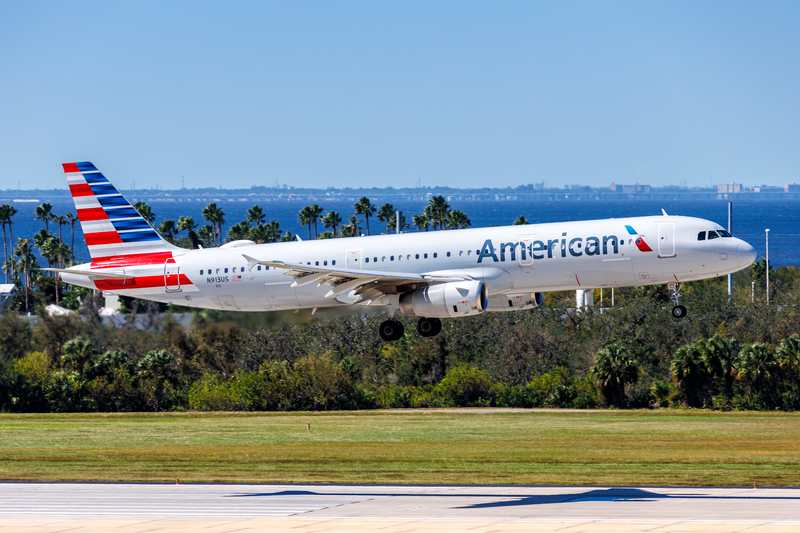
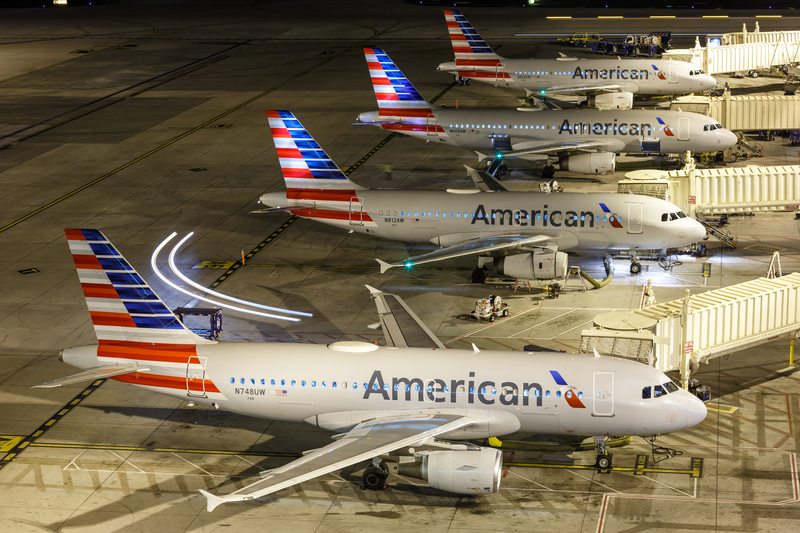
Still, these are long routes. Charlotte (CLT) to Sacramento (SMF) is roughly 2,240 miles, while Charlotte (CLT) to Ontario (ONT) is roughly 2,080 miles. Both are typically flown with Airbus A321 aircraft, and American’s standard A321 has 190 seats, including 20 First Class seats, 35 Main Cabin Extra seats, and 135 Main Cabin seats.
That is a lot of aircraft and fuel to commit during a softer demand window.
Fuel Costs Are Driving Tougher Network Choices
Fuel is the central economic backdrop.
American has already warned investors that higher fuel prices are adding billions of dollars to its 2026 cost base. For airlines, fuel is usually the second-largest expense after labor, and it has an immediate effect on route profitability.
Longer domestic sectors are particularly exposed. They use more fuel, tie up aircraft for longer periods, and often require higher average fares to cover their cost. If the route is a strong hub-to-hub market or a premium business route, the economics may still work. If the route is marginal, seasonal, newly launched, or heavily competitive, it can quickly become vulnerable.
That is what appears to be happening here.
The affected routes are not random short hops. They are mostly longer domestic routes that require Boeing 737 or Airbus A321 aircraft. These aircraft are highly flexible and can be redeployed across American’s network, including to hubs where the airline has stronger pricing power or better connecting traffic.
In a high-cost environment, the opportunity cost of flying a marginal route rises. American may be deciding that the aircraft are more valuable elsewhere between August and early October.
The Suspensions Do Not Necessarily Mean Permanent Exits
It is important not to overread the schedule change.
The routes are currently reported as suspended from August 5 through October 5, not permanently eliminated. Airlines frequently make temporary cuts in shoulder periods and later restore routes when demand strengthens, fuel prices ease, aircraft availability improves, or schedules are rebuilt for another season.
That said, temporary suspensions can become permanent if the underlying economics do not improve.
The LAX routes will be worth watching closely. When an airline launches or restores a route and then pulls it only months later, even temporarily, it raises questions about long-term commitment. American may bring the flights back in October as scheduled. It may also reduce frequency, shift aircraft, or reassess the routes as part of a broader LAX strategy.
The Charlotte routes may have a stronger case for return because they feed a major American hub. Even if local demand is limited, CLT’s connecting power can support longer domestic spokes. But high fuel costs still put pressure on routes where yields do not justify the aircraft time.
What Passengers Will Feel
For passengers, the immediate effect is fewer nonstop options.
Travelers booked on affected flights will likely be reaccommodated over American hubs such as Dallas/Fort Worth (DFW), Phoenix (PHX), Charlotte (CLT), Chicago O’Hare (ORD), or Philadelphia (PHL), depending on the market. Some passengers may also be eligible for refunds if American changes their itinerary significantly.
The biggest inconvenience will be in markets where American’s nonstop was the preferred option but not the only option. Los Angeles (LAX)–Washington Dulles (IAD), for example, still has strong United service. But passengers loyal to American may lose the ability to fly nonstop and earn or redeem within the AAdvantage ecosystem on that city pair.
For LAX–Cleveland (CLE), LAX–Columbus (CMH), and LAX–Pittsburgh (PIT), the effect will depend on the competitive schedule available at the time. Some travelers may have other nonstop choices. Others may need to connect.
For Charlotte (CLT)–Ontario (ONT) and Charlotte (CLT)–Sacramento (SMF), the loss is more about connectivity. Passengers in Ontario and Sacramento may still reach American’s network through other hubs, but the direct link to CLT provides a useful eastbound gateway that is hard to replicate with the same convenience.
What This Says About American’s Network
The cuts reveal several things about American’s current priorities.
First, the airline is being more disciplined with marginal flying. American has powerful hubs, but not every route connected to those hubs is immune from cost pressure.
Second, LAX remains a strategic but difficult market. American wants to be relevant in Los Angeles, but it is not trying to defend every route at any cost. That is especially true when competitors already serve the same city pairs.
Third, aircraft utilization matters more when fuel is high. A Boeing 737-800, 737 MAX 8, or Airbus A321 can be used in many parts of American’s system. If one route underperforms, the aircraft can be moved to a stronger hub route, a more profitable leisure market, or a flight with better connecting support.
Fourth, the airline is not simply cutting small regional routes. These are mainline sectors using 172-seat Boeing 737s and 190-seat Airbus A321s. That makes the capacity pullback more meaningful than a routine regional-jet schedule tweak.

The California Link Is Hard To Miss
All six routes touch California.
That may be partly coincidental, but it is still significant. California is a high-cost operating environment, and longer domestic routes into and out of the state can be expensive when fuel prices rise. LAX in particular is competitive, operationally complex, and strategically important to multiple carriers.
For American, California is not a fortress. The airline has meaningful presence at LAX, strong historical relevance in Southern California, and important corporate and premium customers. But Delta, United, Southwest, Alaska, and other carriers all compete aggressively in the state.
The Charlotte-to-California routes are different because they are tied to American’s CLT hub. Even so, they are still long domestic sectors at a time when airlines are reassessing fuel-heavy flying.
That common California thread makes the cuts more than a scattered schedule adjustment. It suggests American is looking carefully at where expensive aircraft time can be reduced during a weaker part of the calendar.
Bottom Line
American Airlines is temporarily suspending six domestic routes from August 5 through October 5, 2026: Los Angeles (LAX) to Cleveland (CLE), Columbus (CMH), Pittsburgh (PIT), and Washington Dulles (IAD), plus Charlotte (CLT) to Ontario (ONT) and Sacramento (SMF).
The cuts are small relative to American’s enormous network, but they are strategically revealing. Four of the six routes are from Los Angeles (LAX), where American remains important but far from dominant. The other two are long Charlotte (CLT) hub routes to California that require Airbus A321 capacity during a period when fuel costs are pressuring route economics.
The aircraft involved are not small regional jets. American had planned Boeing 737-800 or 737 MAX 8 service on the LAX routes and Airbus A321 service on the Charlotte routes. Those are mainline aircraft with meaningful capacity, and they can be redeployed to stronger opportunities elsewhere.
The suspensions do not automatically mean the routes are gone for good. They are currently scheduled as temporary pauses. But they show how quickly airline network decisions can change when fuel prices rise, demand softens, and competitive routes no longer justify the aircraft time.
For passengers, the immediate impact is fewer nonstop options. For American, the message is broader: in a high-cost environment, even recently launched routes must prove they can earn their place in the schedule.