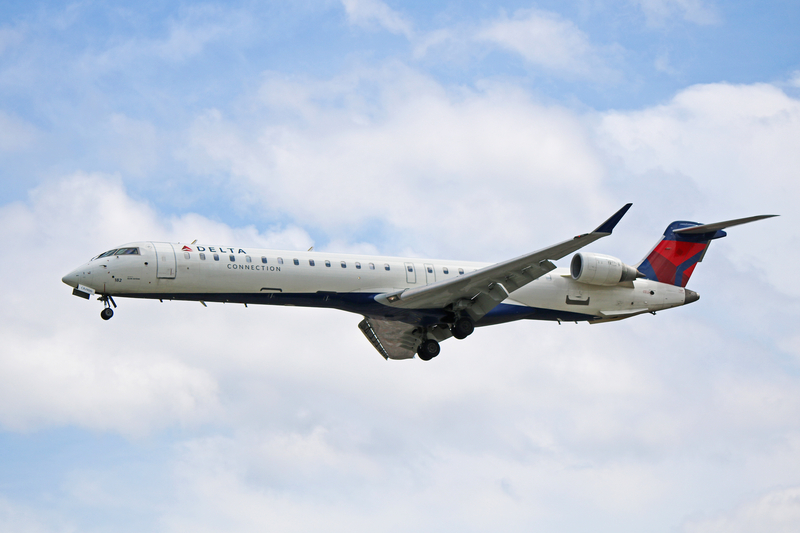
Delta Air Lines is changing its onboard service rules in a way that will be immediately visible to economy passengers on hundreds of short domestic flights.

Starting May 19, passengers in Delta Main Cabin and Delta Comfort on flights of 349 miles or less will no longer receive any onboard food or beverage service. At the same time, flights of 350 miles and above will move to a full beverage and snack service, replacing the airline’s current “express service” concept on many short-haul sectors.
That means the move is not a simple downgrade across the board. It is a reallocation of service.
Read our stories in your inbox
Two aviation newsletters. Zero fluff.
The Change Hits Around 450 Flights — But Benefits Even More
The headline number attracting attention is the roughly 450 daily flights that will lose Main Cabin and Delta Comfort service entirely.
That is significant, especially because many of these sectors are common high-frequency domestic hops where passengers still expect at least water, coffee, or a quick snack. Routes under 350 miles often include some of the busiest short-haul business and shuttle-style markets in Delta’s network, so the removal will be noticed quickly.
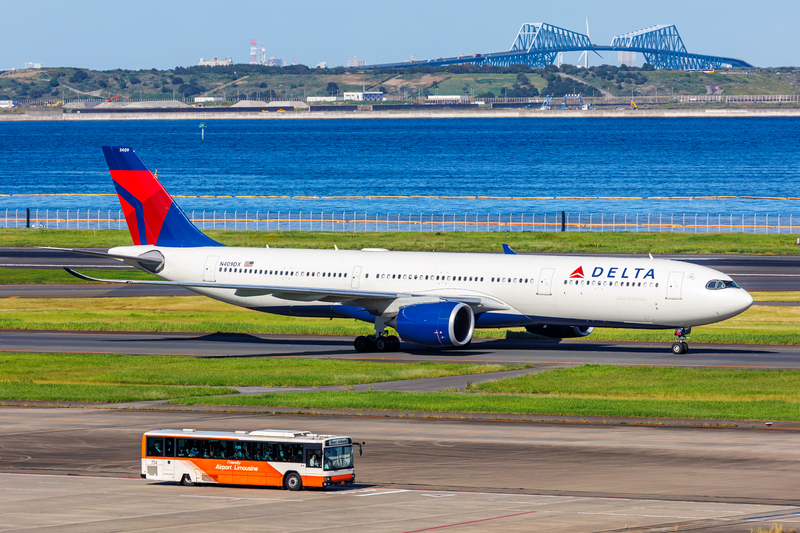
But the other side of the change matters too. Around 600 daily flights in the 350-to-499-mile range will actually get an upgrade, moving from the current limited “express” model to full beverage and snack service.
So this is not really a story about Delta cutting service everywhere. It is a story about Delta deciding that some short flights are too short to serve at all, while others should now get a more complete product.
Delta Is Eliminating The “Express Service” Middle Ground
The real structural change is the disappearance of the middle tier.
Until now, Delta’s short-haul service model had three broad categories:
- 0 to 250 miles: no service
- 251 to 499 miles: express service
- 500+ miles: full service
From May 19, that becomes much simpler:
- 0 to 349 miles: no service
- 350+ miles: full service
That is a cleaner structure operationally. The airline no longer has to maintain a separate “express” service concept, which appears to have been neither especially popular with customers nor especially easy for crews to execute consistently on short flights.
First Class Is Unaffected
One important detail that should be made clear: Delta First passengers will still receive full service on all flights, regardless of distance.
This change applies only to Delta Main Cabin and Delta Comfort.

That matters because it shows the airline is not simply cutting service to save time. It is making a more deliberate distinction between premium and non-premium cabins on very short sectors. In other words, the flights themselves are not too short for service. They are now too short for service in the back of the aircraft.
That is an important difference, and one frequent flyers will notice.
This Is Probably As Much About Flight Attendants As It Is About Passengers
Operationally, the change makes sense, even if some customers will dislike it.
On very short flights, cabin crews often struggle to complete even a limited service before they need to secure the cabin again for arrival. That can lead to uneven execution, frustrated passengers in the back, and extra pressure on flight attendants who are already working within a very tight service window.
By removing service entirely below 350 miles, Delta appears to be deciding that a clean, consistent “no service” experience is better than an uneven or rushed one.
And by upgrading service above 350 miles, the airline is effectively saying that once a route is long enough to make service practical, it should be done properly rather than halfway.
The Customer Reaction Will Be Mixed
Passenger reaction is likely to split in predictable ways.
Travelers on flights between 251 and 349 miles will see this as a clear downgrade. Even if the old express service was limited, it still meant there was some acknowledgment of onboard hospitality. On routes like that, removing all drinks and snacks in economy can feel more noticeable than Delta may expect.
By contrast, travelers on flights between 350 and 499 miles may see a genuine improvement, since they now move from an abbreviated offering to a standard full service.
That is why this is not a pure cost-cutting story. It is a cabin-service redesign that produces winners and losers depending on route length.
Delta Is Standardizing The Experience Around Time, Not Tradition
What this really reflects is Delta’s growing preference for consistency over legacy expectations.
A lot of airline service decisions used to be built around tradition, what passengers “should” get, what was done before, or what competitors did. This new structure looks much more like a time-and-workload calculation. If the sector is short enough that service cannot be delivered cleanly, Delta would rather not offer it at all. If the sector is long enough to support proper execution, Delta wants to deliver a fuller product.
That logic is operationally defensible. The question is whether passengers on sub-350-mile flights will accept the trade-off.
This Also Fits Delta’s Broader Product Segmentation
The service change also matches a wider trend at Delta: sharper distinctions between cabins and fare experiences.
The airline has increasingly emphasized premium products, extra-legroom seating, and clearer differences between what passengers get depending on where they sit and what they buy. Keeping full service in First while removing it from the back on the shortest routes fits that same pattern.
It is not just about snacks and drinks. It is about product hierarchy.
Bottom Line
Delta is not simply removing drinks and snacks from 450 flights. It is redrawing the service line.
From May 19, flights of 349 miles or less in Delta Main Cabin and Delta Comfort will have no onboard food or beverage service, while flights of 350 miles and above will move to full beverage and snack service. Delta First keeps full service throughout.
For some travelers, especially those on the shortest routes, this will feel like a noticeable downgrade. For others in the 350-to-499-mile band, it will be an upgrade. The bigger takeaway is that Delta is simplifying onboard service around what crews can realistically deliver — and making a clearer distinction between premium and non-premium cabins in the process.
Keep reading FlyMag
Get the Daily Brief in the morning or the Route Watch weekly recap on Fridays. Or both.