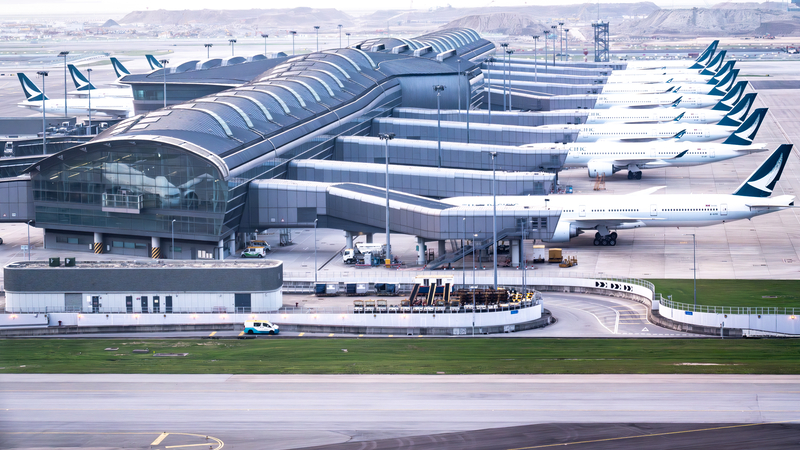
The U.S. has issued a fresh security warning for travelers heading to or transiting through Hong Kong International Airport (HKG), after new implementing rules under Hong Kong’s national security framework took effect in late March.
For the aviation industry, the significance goes beyond legal language. Hong Kong is not simply a destination market. HKG remains one of Asia’s most important transfer airports, particularly for long-haul traffic moving between North America and Asia. That means any policy change that raises questions about passenger privacy, device access, or legal exposure can quickly become relevant to airlines, corporate travel managers, and premium travelers.
The central issue is that authorities can now require access assistance for electronic devices in national security investigations, and refusal can carry criminal penalties. That is the point that has elevated this from a local legal development into an aviation story with broader international implications.
Read our stories in your inbox
Two aviation newsletters. Zero fluff.
The Real Issue Is Transit Confidence, Not Just Destination Demand
What makes this especially sensitive is that the warning does not stop with travelers entering Hong Kong in the traditional sense. It also touches passengers transiting through HKG, which is where the airport’s global importance comes into play.
Hub airports depend on trust as much as geography. A traveler flying between North America and Southeast Asia may never leave the airport, but if that passenger believes a transit point carries elevated legal or privacy risk, the commercial damage can still be real. In practical terms, that can influence booking behavior, corporate travel policy, and even airline sales strategy on connecting itineraries.
That is why this development matters more than a routine government advisory. HKG’s recovery depends heavily on transfer traffic, and transfer traffic is highly sensitive to perception.
North American Airlines Are Rebuilding Hong Kong Capacity
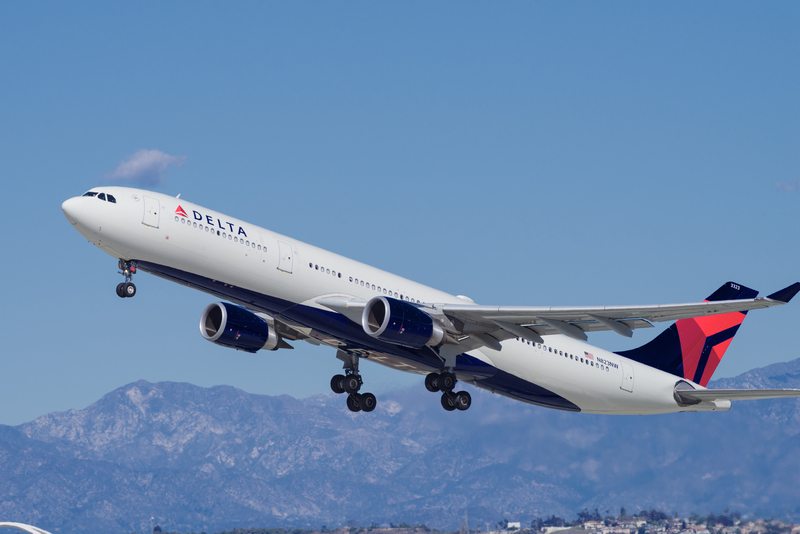
The timing is notable because Hong Kong’s North American network is expanding again. Cathay Pacific is adding more long-haul strength into the market, including its return to Seattle-Tacoma International Airport (SEA), while Delta Air Lines is preparing to resume Los Angeles International Airport (LAX) service. United Airlines also remains in the market from the U.S. West Coast.
Aircraft deployment underlines the seriousness of that rebuild. Cathay Pacific is using the Airbus A350-900 on Seattle, a type well suited to long-haul missions where fuel efficiency, cargo capability, and premium-cabin economics all matter. Delta is also scheduled to use the Airbus A350-900 on LAX-HKG, giving the market another modern long-haul widebody with strong premium and cargo credentials.
That matters because these are not marginal aircraft decisions. They reflect airlines committing real long-haul capacity to Hong Kong at a time when the airport is still working to restore its global position. Any development that complicates traveler confidence therefore lands at an especially awkward moment.
Legal Scope Matters, but So Does Perception
There is an important nuance here. The U.S. warning has been read by many as suggesting that any traveler who refuses to unlock a phone at HKG now risks immediate criminal exposure. Hong Kong officials, however, have said the new powers are tied to national security investigations and formal legal process, not random device searches of the general traveling public.
That distinction is important and should not be lost. The issue is not that every transit passenger is now likely to be stopped and required to unlock a phone. The issue is that the legal framework has become more serious, more explicit, and more visible to international travelers.
For airlines and airports, perception often matters almost as much as enforcement volume. Business travelers, airline crews, diplomats, journalists, and multinational firms do not wait for mass enforcement before reassessing risk. In many cases, the possibility alone is enough to trigger policy reviews.
HKG’s Hub Economics Make This More Than a Legal Story
Hong Kong International Airport (HKG) handled strong passenger growth in 2025 and continues to rebuild its long-haul role, but hubs are unusually vulnerable to reputational friction. A point-to-point airport can sometimes absorb concern in one origin market. A transfer airport has far less insulation, because it relies on travelers actively choosing it over other available hubs.
That is why this story matters in network terms. HKG competes not only on schedule and geography, but also on ease of use, predictability, and confidence. If legal uncertainty begins to weigh on transit demand, the effect may not show up immediately in route suspensions, but it can influence yields, connecting volumes, and premium demand over time.
For Cathay Pacific in particular, this is not an abstract issue. The carrier has been rebuilding North American service methodically, and that strategy works best when Hong Kong is seen as a reliable and commercially attractive transfer point.
Bottom Line
The U.S. warning over Hong Kong’s new device-access rules is significant not because it guarantees widespread disruption at Hong Kong International Airport (HKG), but because it introduces a new layer of uncertainty into one of Asia’s most important transit markets.
For travelers, the key point is that the risk environment has changed. For airlines, the bigger issue is confidence. HKG is rebuilding long-haul traffic, North American routes are returning, and modern aircraft such as the Airbus A350-900 are being deployed to support that recovery. But hub airports thrive on predictability, and any legal development that unsettles that perception can have broader consequences than the headline first suggests.
In that sense, this is not just a security-policy story. It is a network-confidence story, and that makes it highly relevant to the aviation industry.
Keep reading FlyMag
Get the Daily Brief in the morning or the Route Watch weekly recap on Fridays. Or both.