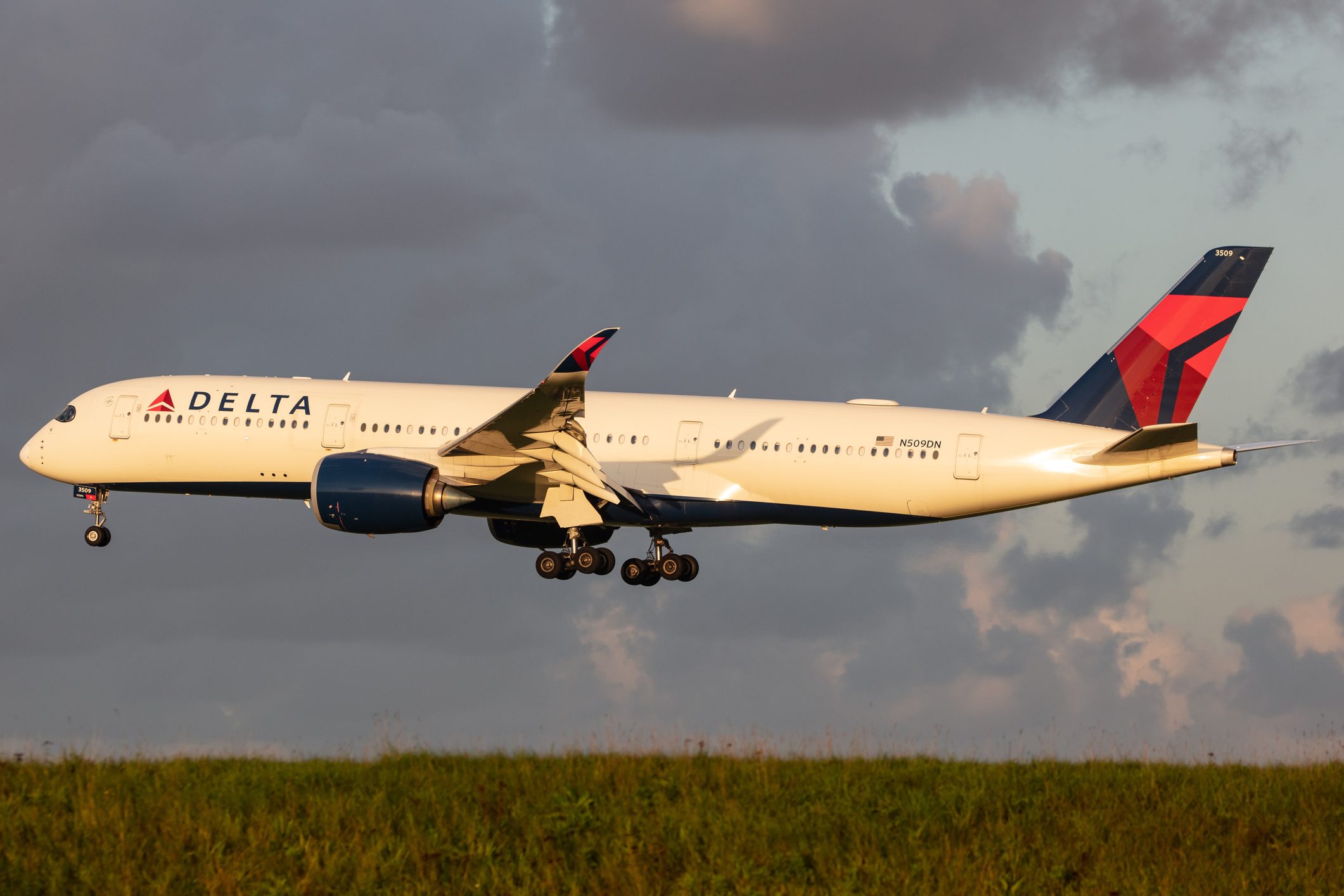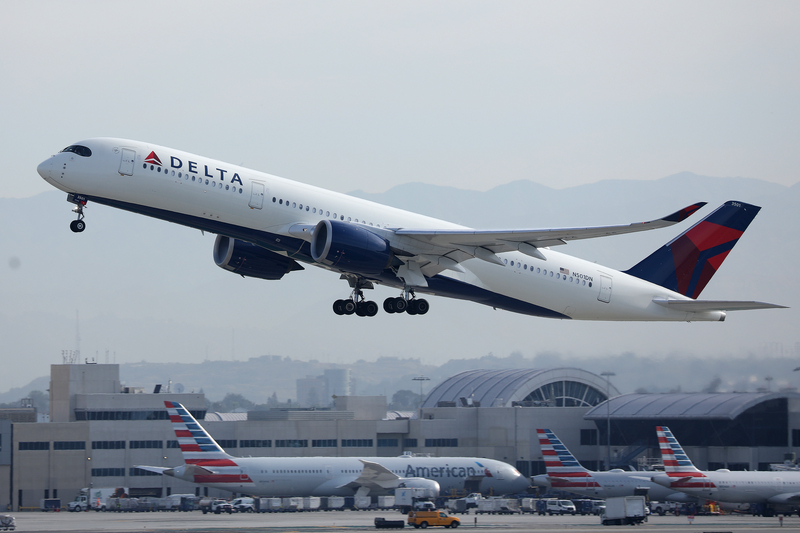
Delta Air Lines has returned to Hong Kong, launching daily nonstop service between Los Angeles International Airport (LAX) and Hong Kong International Airport (HKG) with the Airbus A350-900.

The new route began on June 6, 2026, restoring Delta’s presence in Hong Kong after an absence of nearly eight years. It also brings Delta back to the Los Angeles–Hong Kong market for the first time in decades, giving the carrier a high-profile transpacific route from one of its most important coastal gateways.
The flight is one of Delta’s longest scheduled services. At roughly 7,260 miles, Los Angeles (LAX) to Hong Kong (HKG) is a serious ultra-long-haul mission, with a westbound schedule of more than 15 hours depending on winds, season, and routing.
Read our stories in your inbox
Two aviation newsletters. Zero fluff.
For Delta, the route is about more than adding a dot in Asia. It strengthens Los Angeles (LAX) as an international gateway, restores access to one of Asia’s most important financial and cargo hubs, and gives the airline another premium long-haul market from Southern California.
Daily A350 Flights Between LAX And Hong Kong
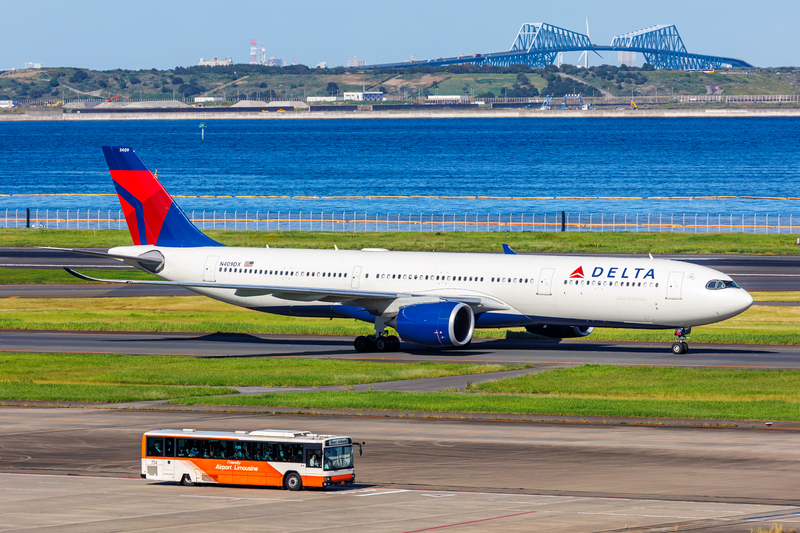
Delta is operating the route daily with Airbus A350-900 aircraft.
The current operating schedule is:
| Flight | Route | Departure | Arrival | Aircraft |
|---|---|---|---|---|
| DL89 | Los Angeles (LAX) – Hong Kong (HKG) | 11:05 p.m. | 5:05 a.m. +2 | Airbus A350-900 |
| DL88 | Hong Kong (HKG) – Los Angeles (LAX) | 9:25 a.m. | 7:55 a.m. | Airbus A350-900 |
The westbound schedule is built around a late-night departure from Los Angeles (LAX), allowing passengers to leave Southern California after the business day and arrive in Hong Kong (HKG) early in the morning two calendar days later after crossing the International Date Line.
The eastbound flight departs Hong Kong (HKG) in the morning and arrives in Los Angeles (LAX) the same morning local time. That timing is useful for business travelers, connecting passengers, and those continuing onward across Delta’s U.S. network.
The schedule also makes good use of Delta’s premium ground experience at LAX. Delta One passengers departing Los Angeles have access to the Delta One Lounge, which gives the carrier a stronger premium proposition in a market where it faces well-established competition.
A Return To Hong Kong After Years Away
Delta’s return to Hong Kong is strategically important because the airline has not served the market since 2018.
Delta inherited a long history of Asia flying through its merger with Northwest Airlines, including routes that connected the United States with Hong Kong via Tokyo Narita (NRT). The airline later shifted toward nonstop U.S.–Asia service, but as its Pacific strategy evolved, Hong Kong eventually disappeared from the network.
The carrier last served Hong Kong from Seattle (SEA), ending that service in October 2018. Its new Los Angeles route therefore marks a true return to the city, but not a first-ever Delta presence in the market.
Delta also has history on Los Angeles (LAX)–Hong Kong (HKG). The airline operated the city pair in the 1990s, initially via Anchorage and later nonstop. That makes the 2026 launch a revival of a long-absent LAX–HKG route rather than an entirely new airport pair for Delta.
That history matters because it shows how much the transpacific market has changed. In the 1990s, U.S.–Asia flying was shaped by aircraft range, fifth-freedom routings, and intermediate stops. In 2026, Delta can operate the route daily with a modern Airbus A350-900 designed specifically for long-haul missions like this.
Why The Airbus A350-900 Matters
Delta’s Airbus A350-900 is the right aircraft for the job.
The A350-900 gives Delta the range, fuel efficiency, cabin product, and cargo capability needed for a demanding transpacific route. Delta lists the aircraft with an 8,000-mile range, which places Los Angeles (LAX) to Hong Kong (HKG) comfortably within the type’s operating envelope.
The aircraft is also one of Delta’s flagship long-haul platforms. Its 306-seat configuration includes 32 Delta One seats, 48 Delta Premium Select seats, 36 Delta Comfort seats, and 190 Main Cabin seats.
That cabin mix is important for Hong Kong.
This is a premium-heavy market with business traffic, finance-sector demand, technology links, high-end leisure travel, and strong cargo potential. Delta One gives the airline a lie-flat premium product, while Premium Select gives travelers a middle cabin that can be especially attractive on a 15-hour flight. Comfort and Main Cabin round out the aircraft with broader economy capacity.
The A350 also gives passengers a modern onboard experience, including a quieter cabin, larger windows, improved cabin pressure, and better humidity compared with older-generation widebodies. On a flight of this length, those features matter.
Cargo Is A Major Part Of The Route
Hong Kong is not only a passenger market. It is one of the world’s most important cargo gateways.
Delta has specifically highlighted cargo as part of the business case for the route, noting that the A350 can carry more than 20 tons of cargo per flight. That is meaningful on a daily service between two major Pacific Rim markets.
Los Angeles (LAX) is one of the largest U.S. gateways for transpacific freight, while Hong Kong (HKG) remains central to electronics, e-commerce, high-value goods, perishables, and regional distribution across Asia.
For a long-haul route like this, cargo can materially improve the economics. Passenger demand may vary by season and cabin, but belly cargo gives Delta another revenue stream on every flight.
That is especially important because the Los Angeles–Hong Kong market is competitive. Cargo can help support the route even when passenger yields are under pressure.
Delta Faces Cathay Pacific And United
Delta is entering a market with two powerful incumbents.
Cathay Pacific is the home carrier at Hong Kong (HKG) and has long been the dominant airline between Hong Kong and the United States. On Los Angeles (LAX)–Hong Kong (HKG), Cathay has the strongest brand recognition, local sales power, and hub advantage.
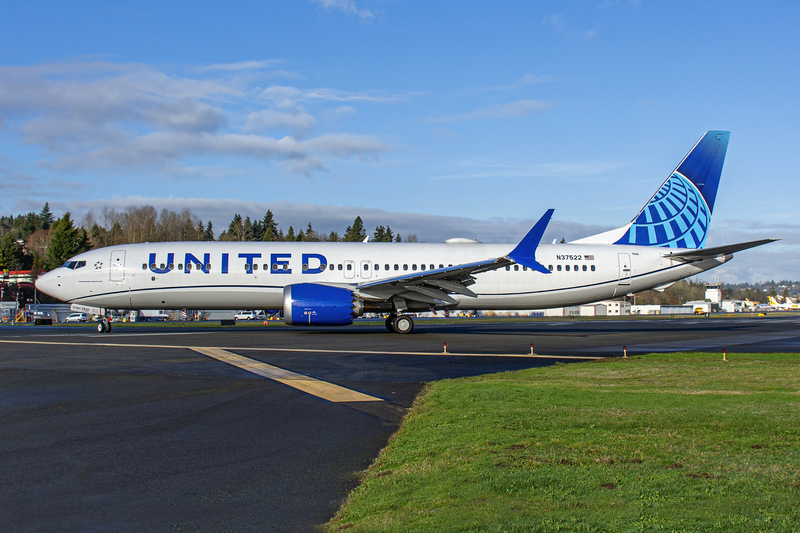
United Airlines is also a major competitor. United operates Boeing 787-9 Dreamliners between Los Angeles (LAX) and Hong Kong (HKG), giving it a strong premium long-haul product and additional feed through its broader U.S. network.
That means Delta is not entering an underserved route. It is choosing to compete in a high-value market where premium travelers, corporate accounts, loyalty members, and cargo customers already have strong options.
Delta’s advantages are different. It has been investing heavily in Los Angeles (LAX), it has a strong SkyMiles base in Southern California, it operates a premium A350 product, and it has built a more complete customer experience at LAX with Delta One check-in and lounge facilities.
The route will need to win on more than geography. It will need to win on product, reliability, loyalty, and corporate relevance.
LAX Is Becoming More Important To Delta’s Pacific Strategy
The Hong Kong route is part of Delta’s broader push to strengthen Los Angeles (LAX) as a global gateway.
Delta has spent heavily at LAX, including its terminal transformation, Delta Sky Way project, premium check-in, Sky Club investment, and Delta One Lounge. The airline has also expanded long-haul flying from Los Angeles, including service to Asia and the South Pacific.
Los Angeles is a natural Pacific gateway. It has a large local market, deep business and entertainment ties, a major Asian community, and strong demand for nonstop long-haul service. For Delta, the challenge has been turning that local strength into a durable competitive position against United, American, Cathay Pacific, Singapore Airlines, Korean Air, ANA, Japan Airlines, Qantas, Air New Zealand, and other major carriers.
Hong Kong adds another major Asian market to the LAX portfolio.
It also complements Delta’s broader transpacific strategy with Korean Air. Delta’s joint venture with Korean Air gives it extensive access through Seoul Incheon (ICN), but not every customer wants to connect in Seoul. Some markets need nonstop service. Hong Kong is one of them.
Hong Kong Still Matters
Hong Kong’s aviation market has changed significantly since Delta last served the city, but it remains one of Asia’s most important long-haul markets.
Hong Kong International Airport (HKG) is a major passenger and cargo hub, a key financial center, and a gateway to southern China and the Pearl River Delta. While the market has faced political, economic, and pandemic-era disruption, long-haul demand has been rebuilding.
For U.S. airlines, Hong Kong remains strategically valuable but challenging. The market is long-haul, highly competitive, cargo-heavy, and exposed to broader geopolitical and economic shifts. It requires the right aircraft and a strong commercial base.
Delta’s decision to return from Los Angeles suggests it sees enough premium and cargo demand to justify the risk.
The airline is also likely betting that Southern California is a stronger local market for Hong Kong than some of its previous U.S. gateways. Los Angeles has the population, corporate demand, cargo base, and Pacific geography to make the route viable if Delta can capture enough share.
The Flight Experience Will Be A Key Differentiator
On a route this long, onboard product matters.
Delta One passengers receive a lie-flat suite product, premium bedding, and an enhanced long-haul meal service. Premium Select provides a wider seat, more recline, and a more spacious cabin than standard Economy. Delta Comfort offers additional legroom, while Main Cabin provides the largest seating block on the aircraft.
That four-cabin structure is important because LAX–HKG has multiple passenger segments. Some travelers will be premium corporate passengers. Others will be visiting friends and relatives, leisure travelers, students, connecting passengers, or price-sensitive flyers choosing among several nonstop and one-stop options.
The A350 gives Delta enough cabin segmentation to compete across all of those groups.
Ground experience also matters. Delta One Lounge access at LAX gives premium travelers a stronger start to the journey, and that may help Delta compete against Cathay Pacific’s Hong Kong-centered premium experience and United’s Polaris product.
Not Just A Summer Experiment
The daily schedule suggests Delta is treating the route as a serious long-haul commitment, not a short seasonal test.
Daily service is important in business markets. A three- or four-weekly schedule can work for leisure routes, but Hong Kong needs frequency to appeal to corporate travelers, premium passengers, and cargo customers. Daily flying gives Delta schedule credibility from the start.
It also helps the cargo proposition. Freight forwarders and shippers value consistent capacity. A daily A350 provides predictable lift between LAX and HKG, which is much more useful than an irregular or low-frequency operation.
The route will still face pressure. Ultra-long-haul flights are expensive to operate, and Delta will need to fill premium seats and cargo holds consistently. But daily service gives the route a stronger commercial foundation.
What Success Will Require
The route’s success will depend on several factors.
Delta must capture a meaningful share of local Los Angeles–Hong Kong demand. It must attract premium travelers who may already be loyal to Cathay Pacific or United. It must build cargo relationships between Southern California and Hong Kong. It must use SkyMiles and corporate sales to keep passengers inside the Delta ecosystem. It must also make connections over LAX useful enough for passengers beyond Southern California.
The A350 gives Delta a strong aircraft platform, but aircraft alone do not make a route profitable. The airline will need strong execution on pricing, loyalty, schedule reliability, and premium service.
The timing is also relevant. Hong Kong traffic continues to recover and evolve, while transpacific airline capacity is still being rebuilt unevenly. Delta is returning at a moment when market share is not fully settled.
That creates both risk and opportunity.
Bottom Line
Delta Air Lines has returned to Hong Kong with daily Airbus A350-900 service between Los Angeles (LAX) and Hong Kong (HKG).
The route launched on June 6, 2026, and operates as DL89 from Los Angeles to Hong Kong and DL88 from Hong Kong to Los Angeles. The westbound flight is scheduled at more than 15 hours, making it one of Delta’s longest routes and a major new transpacific link from Southern California.
This is not Delta’s first time in Hong Kong, nor its first time on the Los Angeles–Hong Kong market. The carrier last served Hong Kong from Seattle in 2018 and previously operated LAX–HKG in the 1990s. What is new is the modern version of the route: daily nonstop service with Delta’s flagship A350-900, four cabin products, Delta One Lounge support at LAX, and more than 20 tons of cargo capacity per flight.
Competition will be intense. Cathay Pacific and United already serve the Los Angeles–Hong Kong market, and both have strong reasons to defend it. Delta is betting that its LAX investment, premium A350 product, SkyMiles base, and cargo opportunity can carve out a profitable place in one of the Pacific’s most important city pairs.
For Delta, the route is a major Asia comeback. For Los Angeles, it adds another nonstop link to one of the world’s most important business and cargo hubs.
Keep reading FlyMag
Get the Daily Brief in the morning or the Route Watch weekly recap on Fridays. Or both.