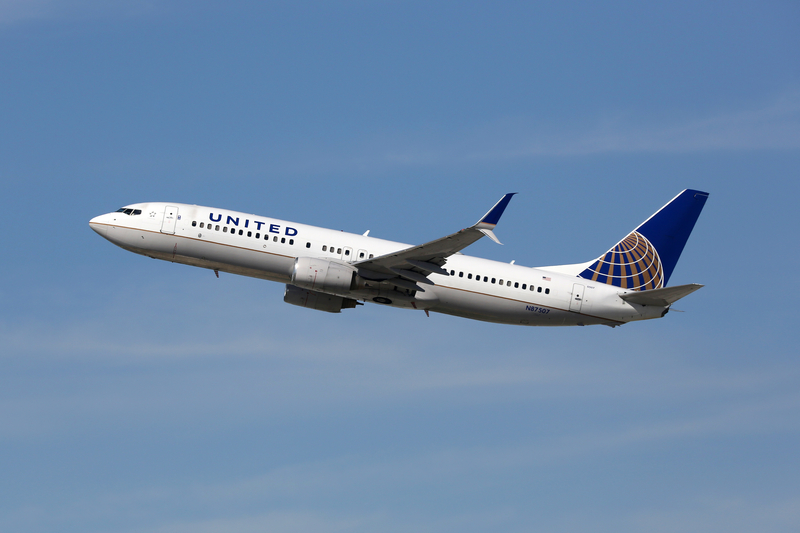
A United Airlines Boeing 737-800 approaching San Diego International Airport (SAN) triggered immediate concern this week after the crew reported a possible encounter with a small object near the aircraft during arrival.

Early coverage framed the event as a likely drone strike. The more careful reading, however, is that this appears to have been a reported drone sighting or near miss, not a confirmed impact. That distinction matters, especially for an aviation audience.
The aircraft landed safely, no injuries were reported, and post-flight inspection found no damage. Those facts do not make the incident unimportant. They simply change what kind of incident it most likely was.
Read our stories in your inbox
Two aviation newsletters. Zero fluff.
What Happened On Approach To San Diego
United flight 1980 was operating from San Francisco International Airport (SFO) to San Diego International Airport (SAN) on Wednesday morning when the crew reported seeing a small object near the aircraft during the approach.
The Boeing 737-800 was carrying 48 passengers and six crew members. The pilots described the object as small, red, and shiny. The aircraft continued to land normally at San Diego, and passengers deplaned at the gate without incident.

United later said its maintenance team inspected the aircraft and found no damage.
That is a crucial detail. In an actual strike, investigators would normally expect at least some physical evidence, whether impact marks, residue, dents, or surface damage. The absence of any visible damage makes a confirmed collision look less likely than the first wave of headlines suggested.
Why The Altitude Still Makes This A Serious Event
Even if there was no impact, the reported sighting remains significant.
The object was reportedly seen around 3,000 to 4,000 feet during the arrival phase. That is far above the altitude most consumer drones should be operating, especially in controlled airspace near a major airport. For airline crews, an unexpected object in the arrival corridor is a serious hazard even if it never actually hits the aircraft.
Approach is one of the highest-workload phases of flight. Pilots are configuring the aircraft, monitoring speed and altitude, communicating with air traffic control, and preparing to land. A sudden object sighting in that environment adds distraction and uncertainty at exactly the wrong moment.
Why Drones Concern Airlines More Than Bird Strikes
One reason these reports attract so much attention is that drones are not like birds.
Bird strikes are serious, but aircraft are designed with that risk in mind. Drones introduce a different threat profile because they can contain hard plastics, metal, batteries, motors, and cameras. Even a relatively small unmanned aircraft can produce a very different damage pattern if it strikes a windshield, engine, wing leading edge, flap, stabilizer, or sensor.
That is why suspected drone encounters are treated carefully. A drone does not have to be large to create a problem, particularly during takeoff or landing.
In this case, though, the current evidence suggests the aircraft either did not make contact at all or did not strike anything with enough force to leave damage.
The FAA Framing Points More Toward A Sighting Than A Strike
One of the clearest reasons not to overstate the event is the way it has been described in follow-up reporting.
The object was treated operationally as a possible drone sighting during the approach to San Diego. Air traffic control reportedly warned other pilots in the area, but there were no immediate follow-up reports confirming additional sightings or establishing that a collision had occurred.
That matters because wording in incidents like this is important. “Possible drone strike” and “reported drone sighting” are not the same thing. At this stage, the cleaner and more accurate reading is that the crew reported a suspicious airborne object near the aircraft, not that a drone impact has been proven.
Why Confirmed Airliner Drone Strikes Remain Rare
Part of the reason this story spread so quickly is that confirmed drone strikes involving commercial airliners are still unusual.
There have been confirmed cases involving helicopters and smaller aircraft, but fully documented collisions with large airline jets remain rare. That does not mean the risk is low in absolute terms. It means most events end up falling into the category of suspected sightings, near misses, or unconfirmed encounters rather than hard-evidence impacts.
That is why physical inspection matters so much after an event like this. Without visible evidence or recovered debris, certainty is difficult.
The Bigger Safety Issue Is Still Real
Even if this was only a near miss, it still highlights a genuine aviation problem.
Small drones are cheap, widely available, mobile, and hard to detect. If they are flown irresponsibly near major airports, they create a hazard that is difficult for crews and controllers to manage in real time. Aircraft on approach do not have much room to maneuver, and crews cannot be expected to identify every small airborne object with confidence in seconds.
That is what makes these incidents troubling even when they end with no damage. They expose a weak point in modern aviation safety: commercial aircraft are operating in airspace that can still be penetrated by unauthorized small objects with very little warning.
Bottom Line
United flight 1980’s arrival into San Diego International Airport (SAN) was disrupted by a reported sighting of a small red, shiny object near the aircraft during approach. The Boeing 737-800 landed safely, no one was hurt, and no damage was found during inspection.
Based on what is known so far, this looks more like a possible drone near miss or sighting than a confirmed strike. That does not make the event minor. A drone or drone-like object in controlled terminal airspace is still a serious safety concern. But accuracy matters, and at this stage the evidence supports caution, not certainty, about any actual impact.
Keep reading FlyMag
Get the Daily Brief in the morning or the Route Watch weekly recap on Fridays. Or both.