Air Arabia Dammam will open its international network with a five-times-weekly service between Dammam (DMM) and Amman Queen Alia (AMM), adding Jordan to a schedule that has so far been confined to Saudi domestic routes.

The new service will begin November 19, 2026, less than two months after the airline started flying from its Dammam base. According to the carrier’s published schedule, flights will operate on Tuesdays, Wednesdays, Fridays, Saturdays and Sundays.
Flight 4P301 will leave DMM at 3:00 p.m. and arrive at AMM at 5:50 p.m. The return flight, 4P302, is scheduled to depart Amman at 6:40 p.m. and reach Dammam at 8:55 p.m. All times are local.
Read our stories in your inbox
Two aviation newsletters. Zero fluff.
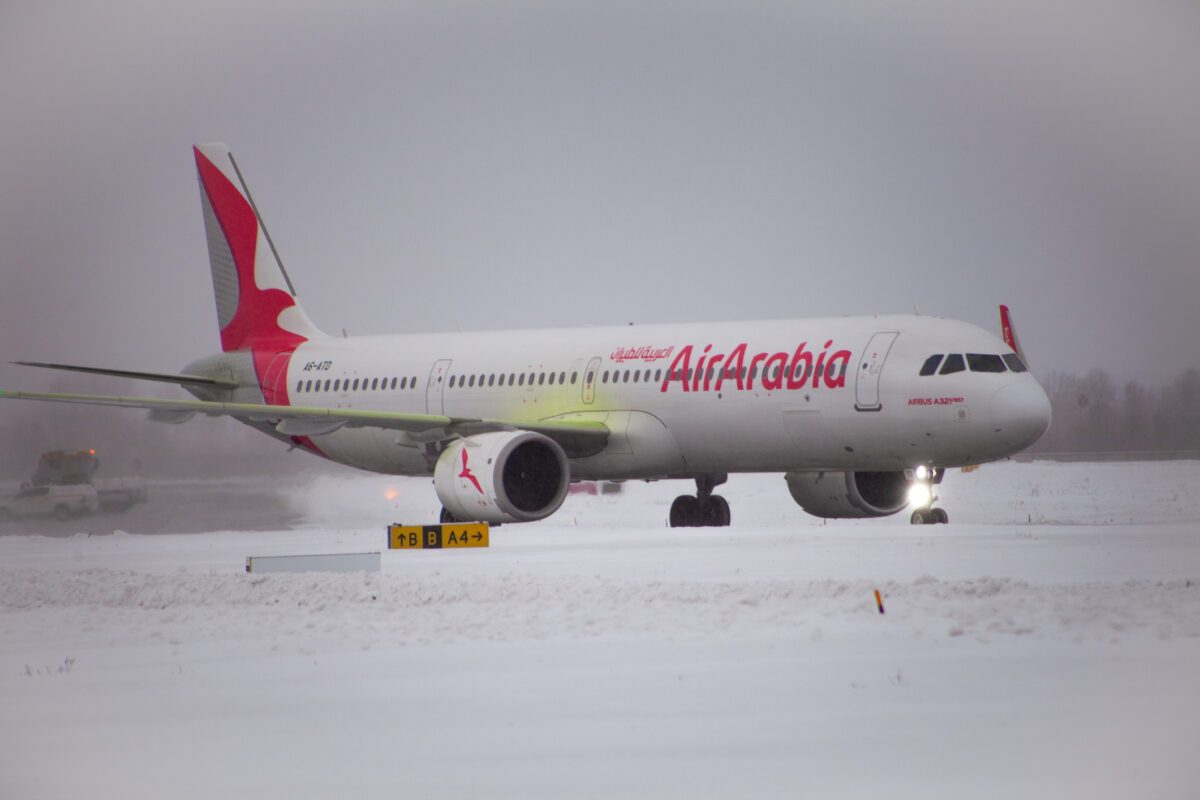
The airline will use a 174-seat Airbus A320 in a single-class configuration. Five weekly rotations provide 870 seats in each direction, or 1,740 two-way seats, during a full operating week.
Amman Extends a Domestic-Focused Launch Schedule
Air Arabia Dammam began operations on September 20 with an inaugural flight to Riyadh. Its initial network also included Jeddah and Madinah, giving the new carrier three large domestic markets from which to establish utilization, distribution and brand recognition before moving across the Saudi border.
The launch schedule called for two daily flights to Riyadh, two daily flights to Jeddah and a daily Madinah service. That amounted to 35 weekly departures from DMM. Amman adds another five, taking the published pattern to 40 weekly departures if the original domestic frequencies remain unchanged.
That sequence makes Amman more than another point on the route map. It is the first test of Air Arabia Dammam’s ability to sell and operate an international service under its own 4P flight code, while retaining the fleet and product standard used across the wider Air Arabia system.
The timing also creates an afternoon and evening rotation rather than committing the carrier to a daily service from the outset. Five weekly frequencies preserve broad coverage across the week while leaving Mondays and Thursdays open for aircraft utilization elsewhere, schedule recovery or future adjustments.
Two Airbus A320s Support the Initial Operation
Air Arabia Group’s third-quarter fleet presentation showed two aircraft allocated to Saudi Arabia as of September 30. The focused A320 fleet allows the Dammam operation to use the same cockpit, cabin and maintenance platform that underpins Air Arabia’s other operating companies.
At 174 seats, the Dammam aircraft sit close to the upper end of the A320’s conventional all-economy capacity. Airbus lists a maximum of 180 seats and a range of up to 6,200 kilometers for the A320ceo with Sharklets. The aircraft therefore brings far more range capability than this regional sector requires; its value here lies in capacity, fleet commonality and the ability to combine short domestic sectors with international rotations.
The onboard offer follows Air Arabia’s established low-cost format. The carrier provides SkyTime entertainment streamed to passengers’ own devices, while food and drinks are sold through the SkyCafe menu. AirRewards, the group’s loyalty program, also applies to the Saudi operation.
A Saudi-Owned Carrier Built Around Air Arabia’s Model
Air Arabia Dammam was established by a consortium comprising Air Arabia Group, Nesma Group and KUN Holding Company, with majority Saudi ownership. Saudi Arabia’s General Authority of Civil Aviation awarded the consortium the competition to establish a new Dammam-based low-cost airline in July 2025.

GACA issued the carrier’s Air Operator Certificate on September 14, 2026, after completion of the regulator’s technical, safety, security and operating requirements. The airline entered service six days later.
The regulator has attached much larger long-term targets to the project than the four-city network now on sale. In its AOC announcement, GACA said the carrier is intended eventually to serve 24 domestic and 57 international destinations, carry about 10 million passengers annually by 2030 and create more than 2,400 direct jobs.
Those figures describe the scale envisaged for the airline rather than its current footprint. For now, Dammam is operating with two aircraft, three domestic destinations and one international route. Amman is the first tangible step toward the much broader cross-border network set out when the license was awarded.
Dammam Joins Air Arabia’s Multi-Hub Network
The Saudi operation opened as Air Arabia Group’s newest base in a network spanning the United Arab Emirates, Morocco, Egypt and Pakistan. By the end of September, the group had 100 Airbus A320 and A321 aircraft and 224 routes, according to its latest operating update.
That scale gives the Dammam company access to an established low-cost operating template, but the Saudi airline holds its own AOC and operates as a national carrier. Its development will therefore depend on building a locally relevant network from the Eastern Province rather than simply reproducing the route maps of Air Arabia’s other bases.
Amman provides the first indication of that international strategy: a high-frequency regional destination served with the same aircraft and cabin used on the domestic operation, introduced at a measured five flights per week rather than daily from launch.
Bottom Line
The Amman route marks the point at which Air Arabia Dammam begins moving from a domestic startup into the international role envisaged by Saudi regulators. Jordan gains additional nonstop capacity from the Eastern Province, while the airline gets an international market that can be operated within the limits of its initial two-aircraft fleet.
The five-weekly pattern is significant. It gives the carrier enough frequency to compete for passengers traveling throughout the week without consuming the aircraft time required by a daily schedule. With 174 seats per departure, Air Arabia Dammam can also test demand and pricing before deciding whether Amman warrants a seventh weekly flight or additional capacity.
The next network announcements will show how quickly the carrier intends to advance toward GACA’s long-term target of 57 international destinations. The key indicators will be additional aircraft allocated to Dammam, the balance between domestic and international flying, and whether the airline continues with nearby regional markets or begins using the A320’s range for longer sectors.