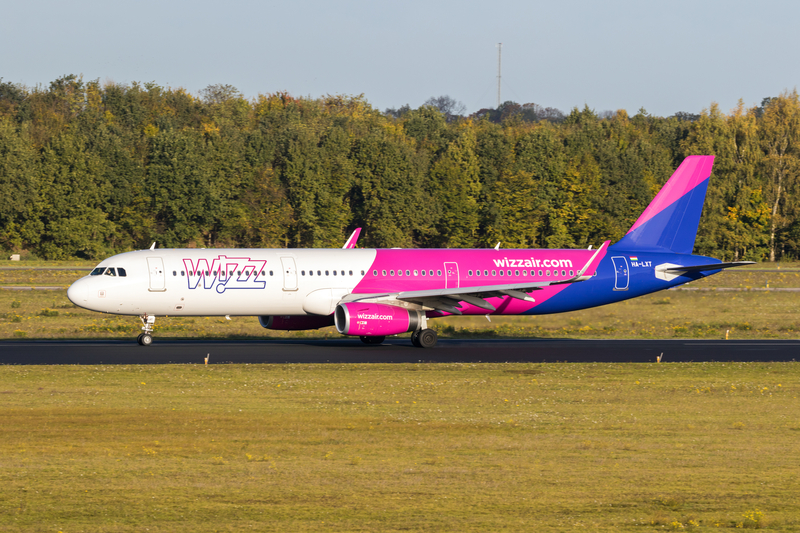
Wizz Air’s ambitious attempt to use the Airbus A321XLR for nearly seven-hour ultra-low-cost flights between London and Saudi Arabia has been interrupted, leaving the carrier without a clear scheduled mission that requires the aircraft’s full range.

Flights between London Gatwick Airport (LGW) and both King Abdulaziz International Airport in Jeddah (JED) and Prince Mohammad bin Abdulaziz International Airport in Medina (MED) have disappeared from portions of Wizz Air’s near-term schedule amid continuing Middle East disruption.
Recent departures have been canceled, while Reuters reported on July 8 that Wizz Air’s Medina services remained suspended indefinitely. Jeddah flights from several European markets have also been suspended as the airline responds to regional security concerns and changing airspace availability.
Read our stories in your inbox
Two aviation newsletters. Zero fluff.
The disruption is significant because Jeddah and Medina were Wizz Air’s longest scheduled routes and the most visible test of whether its high-density, all-economy business model could be extended to sectors approaching seven hours.
However, reports that both routes have been permanently eliminated are not yet fully supported by the available evidence.
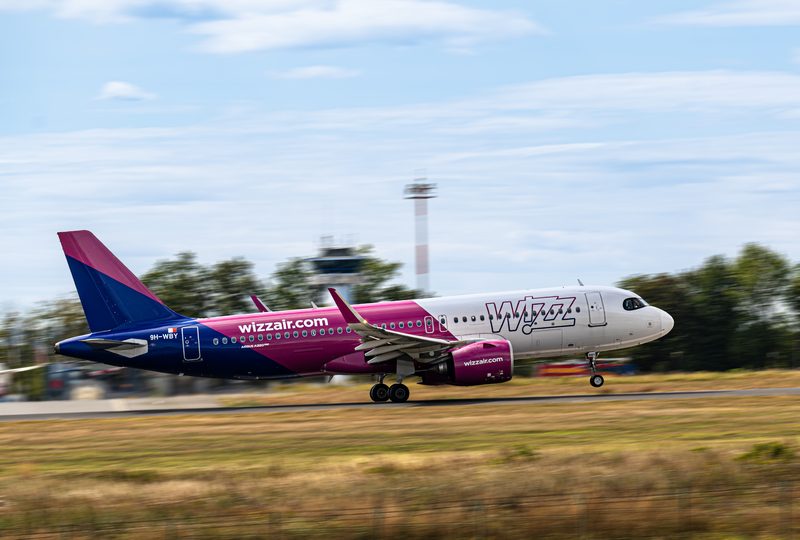
Wizz Air’s own fare pages continued showing future London–Saudi Arabia inventory after the reported removal, including Medina (MED)-London Gatwick (LGW) fares for November 2026 and January 2027. Independent schedule data also continued listing both routes for a possible August return. Those listings may be stale or tentative, but their presence means the routes should currently be described as suspended or removed from near-term sale—not definitively abandoned forever.
What is much clearer is the strategic change behind the disruption: Wizz Air no longer intends to build a long-haul network around the A321XLR.
Wizz Air’s Two Longest Routes Are Off the Immediate Schedule
The affected flights linked London Gatwick Airport (LGW) with two of Saudi Arabia’s most important international gateways.
| Route | Original launch | Approximate distance | Scheduled block time | Aircraft |
|---|---|---|---|---|
| London Gatwick (LGW)-Jeddah (JED) | March 31, 2025 | 2,945 miles | Up to 7 hours, 25 minutes | Airbus A321XLR |
| London Gatwick (LGW)-Medina (MED) | August 1, 2025 | 2,808 miles | Up to 7 hours, 10 minutes | Airbus A321XLR |
Wizz Air introduced Jeddah as the launch route for its first Airbus A321XLR. The airline initially planned daily service from Gatwick (LGW), describing the aircraft as the platform that would allow it to connect Europe and the Middle East using narrowbody operating economics.
Medina followed in August 2025 as the first nonstop service between Gatwick (LGW) and Prince Mohammad bin Abdulaziz International Airport (MED). Wizz Air also planned that route on a daily basis, targeting religious travelers, visiting-friends-and-relatives traffic, and passengers seeking a lower-fare alternative to connecting itineraries.
The Saudi routes were not simply long flights within Wizz Air’s network. They represented an attempt to apply the airline’s established European formula—dense seating, high aircraft utilization, unbundled fares and rapid turnarounds—to a considerably longer mission.
Current Cancellations Do Not Yet Prove a Permanent Exit
Near-term Wizz Air UK flights between Gatwick (LGW) and Jeddah (JED) have been canceled. Flight W95607, for example, was shown as canceled on several July dates, including July 14.
Medina service has faced a broader suspension. Reuters reported that Wizz Air had suspended all flights to Medina (MED) indefinitely as part of its response to the conflict and airspace disruption affecting the Middle East.
“Indefinitely” is important wording. It means that no reliable resumption date has been committed to; it does not necessarily mean that the route has been permanently closed.
There are also conflicting schedule signals.
Wizz Air’s Medina-to-London fare page continued displaying fares for November 26, 2026, and January 29, 2027, with prices reportedly refreshed within the preceding 48 hours. The page also showed fare availability during September, October and December.
Independent schedule provider FlightsFrom continued listing daily Gatwick-Medina service from August 10 under W95613. It also showed daily Gatwick-Jeddah service under W95607 from the same date.
That information should not be treated as confirmation that the flights will operate. Airline fare pages and external schedule databases can retain inventory after commercial or operational decisions have changed, particularly during a fast-moving disruption.
It does demonstrate that the situation is not as straightforward as both routes being permanently erased.
Until Wizz Air publishes a formal route-closure announcement, removes all future inventory or directly confirms that the services will not return, the most accurate description is that the flights have been suspended and their long-term status is uncertain.
The Dedicated A321XLR Strategy Has Effectively Ended
Even if one or both Saudi routes eventually return, Wizz Air’s original A321XLR strategy has already changed substantially.
The carrier originally committed to 47 A321XLRs. Those aircraft were intended to support longer services from Europe and, more importantly, expansion from Wizz Air Abu Dhabi’s base at Zayed International Airport (AUH).
In November 2025, Wizz Air converted 36 of those orders to standard Airbus A321neos, reducing the planned XLR subfleet from 47 aircraft to 11. The airline also deferred delivery of 88 Airbus aircraft as it shifted its focus from aggressive expansion toward lower-risk and more profitable growth.
By May 2026, six of the remaining 11 XLRs had been delivered, with the final five scheduled to arrive during the year.
Wizz Air Group Chief Commercial Officer Ian Malin subsequently acknowledged that the aircraft no longer aligned with the company’s network strategy following the closure of Wizz Air Abu Dhabi.
The airline plans to treat the XLRs almost exactly like its standard A321neos. They will not be identified as a separate product or assigned exclusively to long-range flying.
“We’ll operate them as Neos, and we’re not even going to demark them in the system as XLRs,” Malin said at Routes Europe in May.
That is the more consequential development.
The A321XLR is remaining in the fleet, but Wizz Air is abandoning the idea of building a specialized long-range network around it.
Wizz Air Abu Dhabi Was Supposed to Give the XLR Its Purpose
The closure of Wizz Air Abu Dhabi removed much of the original business case for the aircraft.
Wizz Air established its Abu Dhabi subsidiary to operate routes between the United Arab Emirates, the Middle East, Central Asia, Africa and South Asia. The geographic position of Zayed International Airport (AUH) created numerous potential city pairs that sat beyond the comfortable range of a standard A321neo but did not necessarily justify a widebody aircraft.
The A321XLR appeared ideally suited to that strategy. It could connect Abu Dhabi with thinner destinations while preserving the narrowbody fleet commonality and dense seating central to Wizz Air’s cost model.
That strategy unraveled as the Abu Dhabi operation encountered repeated difficulties.
Wizz Air announced in July 2025 that the subsidiary would stop operating on September 1. The carrier cited geopolitical instability, supply-chain constraints, regulatory barriers and limited access to important markets. The company also experienced accelerated challenges with Pratt & Whitney GTF engines in the Gulf’s hot operating environment.
CEO József Váradi later said the Middle Eastern operation had been affected by frequent airspace closures, weaker demand during periods of conflict, engine durability problems and restricted access to commercially attractive routes in India and Pakistan.
Without the Abu Dhabi base, Wizz Air was left with a group of long-range aircraft inside a predominantly European network.
Most Wizz Air routes within Europe, North Africa, the Caucasus and the nearer portions of the Middle East are already within the capability of the standard A321neo. On those missions, the XLR’s additional fuel capacity and higher maximum takeoff weight provide limited commercial advantage.
What Makes the Airbus A321XLR Different?
The Airbus A321XLR is the longest-range version of the A320neo family.
It retains the same basic fuselage dimensions as the A321neo, measuring 146 feet long with a wingspan of 117 feet, 5 inches. The principal differences are found beneath the cabin floor and within the aircraft’s structural and fuel systems.
The XLR incorporates a permanent Rear Center Tank capable of carrying approximately 12,900 liters of additional fuel. Airbus also increased the aircraft’s maximum takeoff weight to 101.5 metric tons and made structural, landing-gear and systems changes to support longer missions.
Airbus advertises a maximum range of approximately 4,700 nautical miles and flight durations of as much as 11 hours, depending on payload, winds, reserves, routing and operating conditions.
That is substantially farther than a standard A321neo and allows the aircraft to serve routes that were previously limited to widebodies or specially configured narrowbodies.
The XLR is powered by either CFM International LEAP-1A or Pratt & Whitney PW1100G-family geared turbofan engines. Wizz Air became the first operator to receive a Pratt & Whitney-powered A321XLR when Airbus delivered its initial aircraft in May 2025.
The aircraft itself is not the problem. Malin explicitly described it as a “terrific” airplane and a superior product for the correct operator.
The problem is the difference between what the XLR can do and what Wizz Air now needs it to do.
Wizz Air Uses the XLR Very Differently From Premium Operators
Airbus designed the A321XLR to support numerous cabin strategies.
An airline can install lie-flat business-class seating, premium economy, inflight entertainment and larger galleys for long transatlantic or intercontinental flights. Airbus lists a typical two-class capacity of 206 to 220 passengers, although the aircraft can be certified for as many as 244 seats.
Wizz Air’s aircraft are configured with 239 seats in a single economy cabin.
That is only five seats below the A321XLR’s published maximum capacity and considerably denser than the layouts chosen by many network carriers. Airbus confirmed that Wizz Air’s XLRs use a 239-seat all-economy Airspace cabin.
The configuration preserves Wizz Air’s low seat cost, but it removes one of the economic advantages other airlines expect from the XLR: premium revenue.
A carrier operating a 170-to-210-seat XLR across the Atlantic can generate substantial revenue from lie-flat business-class seats, premium economy and corporate contracts. Those higher fares help offset the cost of keeping an aircraft and crew committed to a long mission.
Wizz Air instead relies on selling a large number of comparatively inexpensive seats while charging separately for baggage, seating and other services.
That model works extremely well when an aircraft can complete several short sectors in one day. It becomes harder on a seven-hour flight because the aircraft produces fewer daily departures and therefore fewer opportunities to generate ancillary revenue.
A Seven-Hour Flight Changes Low-Cost Economics
The cost advantage of a narrowbody does not automatically make every long narrowbody route profitable.
A seven-hour sector ties up the aircraft for most of the operating day. Once the return flight, ground time, overnight restrictions and schedule recovery are considered, one XLR may produce only one round trip in approximately 24 hours.
A standard Wizz Air A321neo operating within Europe can potentially complete several sectors during the same period.
Longer flights also require more fuel reserves, more crew duty time, additional catering and water, greater maintenance planning and more complicated disruption recovery.
A technical problem at Jeddah (JED) or Medina (MED) can leave one of Wizz Air UK’s relatively small XLR subfleet far from its main maintenance resources at Gatwick (LGW). A cancellation can displace hundreds of passengers on a route that may not operate again for another day and where Wizz Air has few alternative flights.
Airspace closures create another challenge.
A route between the United Kingdom and Saudi Arabia may require significant deviations when portions of the Middle East are restricted. The XLR has the range to absorb some additional distance, but rerouting increases fuel burn, block time and crew-duty exposure.
A business model built around high aircraft utilization and tight operating costs is particularly sensitive to that kind of unpredictability.
The Saudi Routes Were an Important Passenger Experiment
Gatwick-Jeddah and Gatwick-Medina tested more than the aircraft’s technical range.
They tested whether passengers would accept Wizz Air’s normal short-haul product on a flight lasting approximately seven hours.
The 239-seat cabin provides the same basic narrowbody width as other members of the A320 family. Wizz Air did not install a separate business cabin or reduce seating density to create a more spacious long-haul product.
That allowed the carrier to advertise fares far below those normally associated with nonstop United Kingdom-Saudi Arabia travel.
Jeddah (JED) offered a mixture of local traffic, tourism, visiting-friends-and-relatives demand and passengers traveling onward toward Mecca. Medina (MED) was particularly relevant to religious travelers, becoming the first nonstop route between the city and Gatwick (LGW).
The markets had clear passenger demand. The commercial question was whether Wizz Air could earn enough from each passenger to compensate for long aircraft missions, seasonal traffic, disruption risk and the absence of premium cabins.
The disappearance of the flights does not prove that passengers rejected the onboard experience. The 2026 Middle East conflict and resulting airspace restrictions make it difficult to isolate demand, pricing or cabin preference as the cause.
Engine Availability Has Complicated Wizz Air’s Fleet Planning
Wizz Air’s fleet strategy has also been constrained by the Pratt & Whitney GTF inspection and maintenance program.
The airline had 41 aircraft grounded because of engine-related inspections as of June 30, 2025. The carrier later reduced that number, but management has said it may take until 2027 to return the entire affected fleet to service.
Engine shortages create unusual fleet decisions.
In 2025, Wizz Air reportedly parked some newly delivered A321XLRs so their available engines could support other aircraft. From a network perspective, an engine can sometimes produce more revenue on an A321neo operating several short European flights each day than on an XLR assigned to one long rotation.
The GTF issue is not unique to the XLR. Standard Wizz Air A321neos use related Pratt & Whitney engines and have also been affected.
However, a small six-aircraft XLR subfleet offers less resilience. If one or two aircraft are unavailable, a significant share of the long-range operation can disappear.
Using XLRs interchangeably with standard A321neos allows Wizz Air to spread those aircraft across its broader network instead of protecting a small group of specialized long-haul routes.
Wizz Air Will Keep the 11 Remaining XLRs
Wizz Air has considered transferring some of its A321XLRs to another operator, but management said in May that all 11 remaining aircraft would stay within the group.
Six had already been delivered, and the remaining five were expected during 2026.
The airline can use them on ordinary A321neo routes without creating a noticeably different passenger experience. Both variants carry 239 passengers in Wizz Air service, use Airbus A320-family flight crews and share a large portion of their maintenance and operational systems.
For passengers, an XLR operating a two-hour European flight will appear almost identical to a standard A321neo.
For Wizz Air, the aircraft is heavier and more capable than necessary for that mission, but it remains a modern, fuel-efficient A321. The airline has already committed to the aircraft, and operating it within the regular network may be preferable to attempting to sell, sublease or create a complex standalone operation for 11 jets.
The XLR’s range will remain available when needed. Malin said the aircraft could prove useful for occasional longer routes, diversions and situations in which airspace closures force extended routings.
The XLR Is Not a Failed Aircraft
Wizz Air’s retreat should not be interpreted as evidence that the Airbus A321XLR has failed commercially.
The aircraft was designed primarily as a route opener for markets that need long range but cannot support a large widebody. It is particularly attractive to airlines that can combine premium cabins, corporate demand and connecting traffic.
That model differs substantially from Wizz Air’s 239-seat, all-economy operation.
An airline using the XLR between a major business center and a secondary transatlantic destination may need to fill fewer than 200 seats while generating significant revenue from business class.
Wizz Air needs to fill almost 240 seats and earn sufficient revenue from fares and optional charges without relying on a premium cabin.
The closure of Wizz Air Abu Dhabi removed the geographic network for which its XLR order was originally intended. The Saudi suspensions then removed the only Wizz Air UK routes consistently testing the airplane’s additional range.
The resulting problem is strategic—not technical.
Could the Saudi Flights Still Return?
A return remains possible, particularly if Middle East airspace stabilizes and the forward reservations shown by Wizz Air remain valid.
FlightsFrom currently lists daily service from Gatwick (LGW) to both Jeddah (JED) and Medina (MED) beginning August 10. Wizz Air’s own pages have displayed fares into late 2026 and early 2027.
Those listings should be viewed cautiously.
Wizz Air could restore the flights, delay them again, operate only part of the schedule or remove the remaining inventory. The airline’s website has also been undergoing technical maintenance, further complicating attempts to distinguish live availability from cached fare data.
The Medina route is particularly uncertain because Reuters described it as suspended indefinitely rather than paused until a specified date.
A Jeddah return may be more plausible because the market is larger and served by multiple airlines from London. Wizz Air could also operate the route seasonally rather than maintain the ambitious year-round schedule originally planned.
Even if both routes resume, they are unlikely to signal a revival of Wizz Air’s wider long-haul ambitions. Management has made clear that the XLR fleet will not receive a dedicated network strategy.
What Comes Next for Wizz Air’s Longest Routes?
With Jeddah and Medina temporarily absent, Wizz Air’s longest scheduled flights are likely to revert to routes that remain within normal A321neo capability.
Those include longer services between Central or Eastern Europe and destinations in the Gulf, the Caucasus, Central Asia and North Africa.
The distinction is significant because those routes do not require Wizz Air to maintain a specialized long-range subfleet. An ordinary A321neo can operate them while remaining available for shorter services elsewhere in the network.
Wizz Air has also said it does not intend to launch regular scheduled transatlantic service. Although Wizz Air UK sought U.S. authority connected with charter opportunities, management has remained cautious about building a conventional passenger network across the Atlantic.
That leaves few obvious scheduled routes where Wizz Air consistently needs 4,700 nautical miles of range.
The remaining XLRs may therefore spend most of their lives operating missions that could also be flown by a standard A321neo, with their additional capability reserved for occasional opportunities.
Bottom Line
Wizz Air’s London Gatwick (LGW) services to Jeddah (JED) and Medina (MED) have been removed from the immediate operating schedule amid widespread Middle East disruption.
The two routes were Wizz Air’s longest flights and its most important test of the Airbus A321XLR’s ability to support seven-hour ultra-low-cost operations from the United Kingdom.
The original report goes too far by declaring both routes permanently scrapped.
Recent flights have unquestionably been canceled, and Medina service has been suspended indefinitely. However, Wizz Air’s own fare pages have continued displaying future inventory, while independent schedule databases show possible service from August. Those records may be outdated or provisional, but they prevent a definitive conclusion that the routes will never return.
What has ended is Wizz Air’s original strategic vision for the XLR.
The airline reduced its commitment from 47 aircraft to 11 after closing Wizz Air Abu Dhabi, the operation that was supposed to support much of its long-range growth. Six XLRs had been delivered by May 2026, with five more expected during the year.
Wizz Air now intends to operate those aircraft as ordinary A321neos. They will carry the same 239 passengers, appear within the same scheduling system and primarily serve routes that do not require their full 4,700-nautical-mile range.
The A321XLR remains a highly capable aircraft. Its permanent additional fuel tank, 101.5-ton maximum takeoff weight and single-aisle economics allow it to open long, thin markets that would be difficult to operate with a widebody.
Wizz Air’s problem is that its network no longer contains enough of those markets.
The Saudi suspensions may eventually be reversed, but the broader experiment—building a dedicated long-range ultra-low-cost network around the A321XLR—has effectively come to an end.