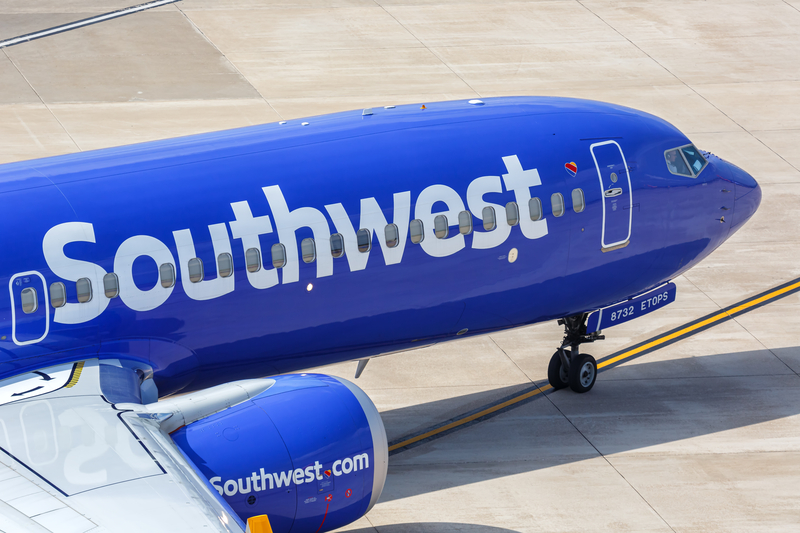
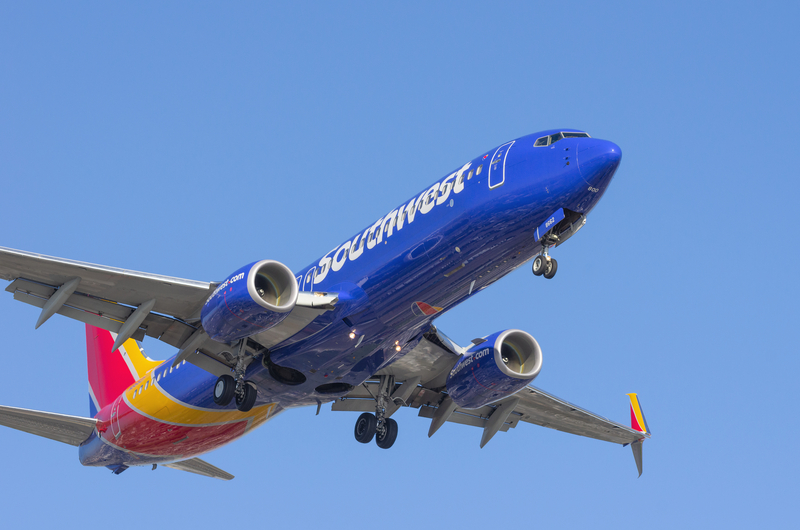
Southwest Airlines is introducing a stricter onboard battery policy from April 20, limiting passengers to one portable charger per person and tightening how those devices can be carried and used in the cabin.

That is an important distinction. This is not a full ban on power banks. Passengers will still be allowed to bring one lithium portable charger onboard. But the airline is clearly trying to reduce the chance that a battery overheating event turns into a harder-to-manage cabin fire.
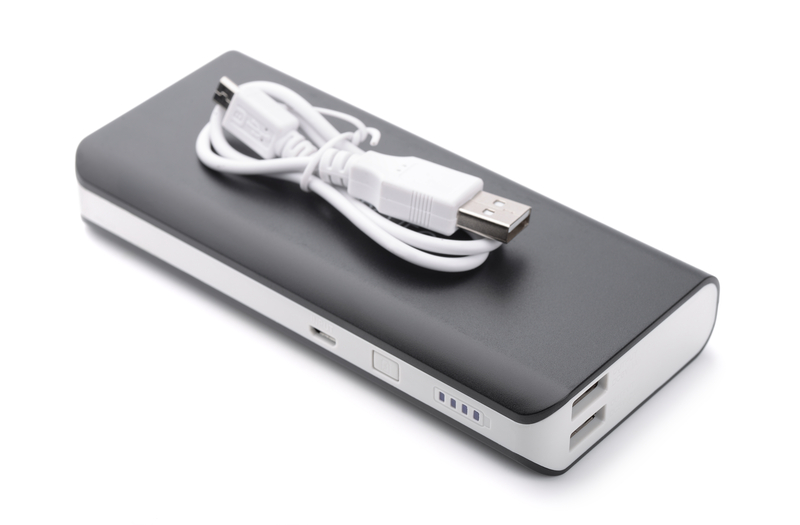
Under the new rule, power banks cannot be stored in overhead bins and cannot be recharged using in-seat power during the flight. Southwest wants them kept either on the passenger or in an under-seat carry-on bag, where cabin crew can reach them more quickly if something goes wrong.
Read our stories in your inbox
Two aviation newsletters. Zero fluff.
Why Southwest Is Taking a Harder Line
The logic is simple: visibility and access.
Lithium battery incidents are dangerous not only because they can produce smoke, flame, and extreme heat, but because they escalate quickly. If a power bank overheats in an overhead bin, detection can be delayed and access is slower. If it is on the passenger or under the seat, cabin crew have a better chance of spotting the problem early and responding before it worsens.
That makes Southwest’s approach more aggressive than a standard baggage-rule change. It is a cabin-fire mitigation policy dressed as a carry-on rule.
For airline professionals, this reflects a broader shift in thinking. Portable chargers used to be treated mainly as a baggage compliance issue. They are now being treated more explicitly as an onboard safety-management issue.
Southwest Goes Beyond the New Global Baseline
What makes the move more notable is that Southwest is going further than the latest international baseline.
The International Civil Aviation Organization recently moved to limit passengers to two power banks and banned recharging them during flight. Southwest has gone tighter, allowing only one per passenger.
That makes the airline one of the more restrictive operators on this issue, at least for now. It also suggests that Southwest sees value in being clearer and simpler than the global standard. From an enforcement standpoint, one charger is easier to communicate and easier for passengers to understand than a more nuanced limit.
This Is Part of a Much Bigger Safety Trend
Southwest is not acting in isolation. Across the industry, portable batteries have moved sharply up the risk agenda after a series of high-profile lithium-ion incidents, including the Air Busan fire in 2025 and other events that pushed regulators and airline safety teams to act faster.
The concern is not hypothetical. Battery-related events involving smoke, fire, or extreme heat continue to rise, and portable chargers have become a growing share of those incidents. That matters because power banks are now among the most common battery items travelers carry, especially on longer flights where people expect to recharge phones, tablets, and laptops.
For airlines, this creates a difficult balancing act. Passengers increasingly rely on portable power, but the same devices also create a cabin-fire risk that is harder to ignore with each new incident.
What This Means for Passengers
For travelers, the change will make premium convenience less relevant than safety discipline.
The biggest practical shift is that passengers will need to be more selective about what they carry. Bringing multiple backup chargers will no longer be an option on Southwest. Travelers also cannot plug in a power bank to recharge it during the flight, even if a seat outlet is available.
That does not mean portable chargers are unusable onboard. It means they must be handled more carefully and kept in a place where they can be monitored. That is a subtle but important correction to some of the more alarmist early coverage.
In practice, frequent travelers will need to think more like airline crews already do: batteries should be easy to find, easy to isolate, and never buried somewhere inaccessible.
Southwest’s Fleet Plan Explains the Longer-Term Goal
There is also a product angle here. Southwest says it plans to equip its entire fleet with in-seat power by mid-2027, which gives some context to the stricter charger rule.
Southwest’s all-Boeing 737 fleet has historically not been built around the kind of widespread seat-power availability that many passengers now expect. If the airline can eventually offer in-seat charging across the fleet, it may reduce passenger dependence on portable chargers in the first place.
That does not remove the battery risk altogether, but it does suggest Southwest is trying to solve the problem from both directions: tighter rules now, less reliance on power banks later.
Bottom Line
Southwest’s new one-power-bank rule is not just a quirky baggage restriction. It is a sign that airlines are becoming far less relaxed about lithium batteries in the cabin.
The carrier is not banning portable chargers outright, but it is restricting them more tightly than the new international standard by allowing only one per passenger, keeping them out of overhead bins, and banning in-flight recharging of the power bank itself.
For travelers, that means more planning and less flexibility. For the airline industry, it is another sign that battery risk is moving from a background concern to a frontline cabin-safety issue.