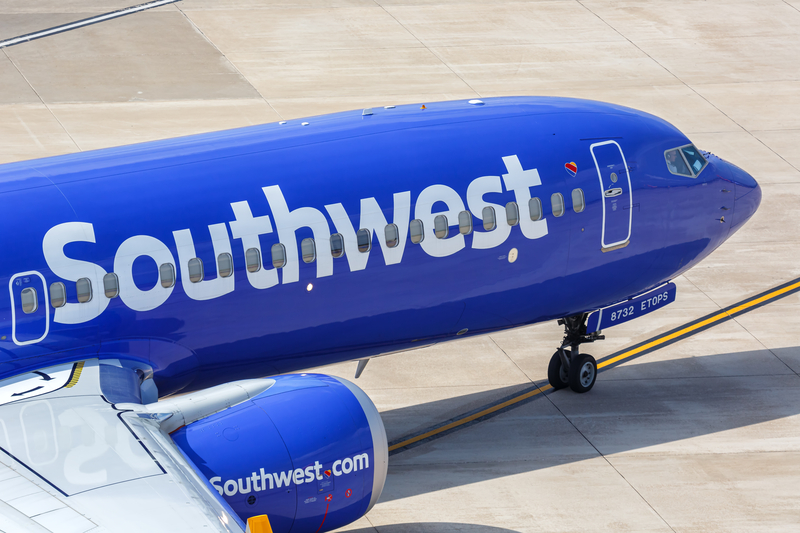
Southwest Airlines is adding seven international routes to its network in 2026, a meaningful expansion for a carrier that remains overwhelmingly domestic despite its enormous size.

That point matters more than the headline count alone. Southwest carried about 3.9 million international passengers in 2025, which sounds substantial until it is placed in context: international flying still represented only a small share of the airline’s total traffic. So when Southwest adds seven new international routes in a single planning cycle, it is not just filling in schedule gaps. It is continuing a gradual effort to make its cross-border network more relevant.
What stands out most is how selective the airline is being. These are not giant intercontinental plays or aggressive multi-frequency launches. They are carefully chosen routes to leisure-heavy markets in Mexico, the Dominican Republic, and St. Maarten, where Southwest believes its brand, domestic feed, and low-fare model can work.
Read our stories in your inbox
Two aviation newsletters. Zero fluff.
Four Of The Seven Routes Are Already Flying
Southwest has already launched four of the seven routes that are new to its Q3 2026 international map.
The first was San Diego International Airport (SAN) to Licenciado Gustavo Díaz Ordaz International Airport (PVR) in Puerto Vallarta, which began on March 5. That route is particularly interesting because Southwest has served Puerto Vallarta before, but this specific return from San Diego gives it another way to deepen a California–Mexico leisure corridor that is highly competitive and strongly seasonal.
Two days later, on March 7, the airline launched Kansas City International Airport (MCI) to Punta Cana International Airport (PUJ). This is one of the more strategically intriguing additions because it opens a new kind of long-haul leisure market from the Midwest. Punta Cana is an established destination with strong demand, but until now the Kansas City market had lacked nonstop service. That gave Southwest an opportunity to enter with a route that already had visible indirect traffic.
Then came St. Maarten. Southwest began Orlando International Airport (MCO) to Princess Juliana International Airport (SXM) on April 7, followed by Baltimore/Washington International Thurgood Marshall Airport (BWI) to St. Maarten on April 11. These routes matter not just because St. Maarten is a high-profile Caribbean destination, but because they expand Southwest’s reach in a region where it still has relatively modest scale compared with some rivals.
Kansas City–Punta Cana May Be The Most Revealing Route Of The Group
Of all the new additions, Kansas City International Airport (MCI) to Punta Cana International Airport (PUJ) may say the most about Southwest’s current network thinking.
This is not a typical hub-to-resort trunk route. It is a large unserved leisure market from a mid-continent airport that does not often see new long-haul international experimentation. Southwest appears to be betting that the combination of local demand and domestic feed into Kansas City will make the route more sustainable than it might look at first glance.
That is classic Southwest logic: find a market where nonstop service can stimulate demand, where the aircraft can be used efficiently, and where the brand already has strong local recognition.
It is also worth noting that Punta Cana becomes one of Southwest’s longest routes from Kansas City, which subtly reflects how the carrier is willing to stretch its network into longer leisure sectors when the economics look right.
St. Maarten Gives Southwest Something It Did Not Have Before
The St. Maarten additions are also important because they bring Southwest into a destination that fits its Caribbean portfolio extremely well.
Princess Juliana International Airport (SXM) has strong U.S. leisure demand, good brand recognition, and an appeal that goes beyond a standard beach market. By launching from both Orlando International Airport (MCO) and Baltimore/Washington International Airport (BWI), Southwest is doing more than adding two routes. It is creating a broader access pattern into the island from two parts of the U.S. network where it already has meaningful customer density.
That makes the routes more strategically useful than if they were isolated one-offs.
Las Vegas Finally Goes International For Southwest In June
The other three new routes begin on June 4, and together they mark an especially notable development: Southwest’s first international flying from Harry Reid International Airport (LAS).
From Las Vegas, the airline will add service to Cancún International Airport (CUN), Los Cabos International Airport (SJD), and Puerto Vallarta International Airport (PVR).
That is a significant step because Las Vegas is one of Southwest’s strongest airports domestically, yet the carrier has historically had a limited international profile there. Adding these three routes changes that immediately.
For Cancún, the logic is especially compelling. The local market is sizeable, but the bigger story is that Southwest can also feed the route from across its enormous Las Vegas network. That gives the airline a stronger base than previous operators that relied much more heavily on local origin traffic alone.
Los Cabos and Puerto Vallarta follow the same broad pattern. They are established Mexican leisure destinations with proven U.S. demand, and Southwest is effectively using Las Vegas to open a new international front without having to invent demand from scratch.
This Is Expansion — But Not Without Retrenchment Elsewhere
The broader network picture is not all positive.
While Southwest is adding seven new international routes in the Q3 2026 comparison, it is also losing several routes that were in the network during the same period last year. These include Chicago O’Hare International Airport (ORD) to Cancún International Airport (CUN), Colorado Springs Airport (COS) to Cancún, Fort Lauderdale-Hollywood International Airport (FLL) to Sangster International Airport (MBJ) in Montego Bay, Kansas City (MCI) to Los Cabos, and Oakland International Airport (OAK) to Los Cabos.
That context matters because it reinforces the idea that Southwest is not broadly ramping up international flying across the board. It is actively reshaping it. Some routes are being added because they fit better. Others are being pulled because they did not perform strongly enough or no longer align with the airline’s strategic priorities.
Chicago O’Hare, in particular, reflects a broader shift, as Southwest continues consolidating around Chicago Midway International Airport (MDW) rather than maintaining a split Chicago presence.
Southwest’s International Growth Still Looks Deliberate, Not Aggressive
That may be the most important conclusion.
Southwest is not trying to become a large international carrier overnight. Its route choices show a company still moving carefully, still leaning heavily into leisure demand, and still avoiding the kind of long-range or highly complex international expansion that would fundamentally alter its operating model.
Instead, it is adding city pairs where the airline’s existing domestic scale can support cross-border growth. That is a very different strategy from the one pursued by legacy network carriers, but it is consistent with how Southwest has always expanded: selectively, pragmatically, and only where it believes the network already gives it an advantage.
Bottom Line
Southwest’s seven new international routes in 2026 are not the sign of a radical transformation, but they are an important marker of how the airline is evolving beyond its domestic core.
The additions to Puerto Vallarta (PVR), Punta Cana (PUJ), St. Maarten (SXM), Cancún (CUN), and Los Cabos (SJD) show a carrier still focused on high-confidence leisure markets, while the Las Vegas international launch and Kansas City–Punta Cana service suggest it is willing to be more creative where it sees strong demand and limited risk.
At the same time, the route cuts elsewhere show this is disciplined expansion, not indiscriminate growth. Southwest is still building its international network carefully, one leisure-heavy market at a time.
Keep reading FlyMag
Get the Daily Brief in the morning or the Route Watch weekly recap on Fridays. Or both.