United Airlines is adding another point to its already deep Mexico network, with the Star Alliance carrier set to resume service between Houston George Bush Intercontinental Airport (IAH) and Tuxtla Gutiérrez Ángel Albino Corzo International Airport (TGZ) in Chiapas.

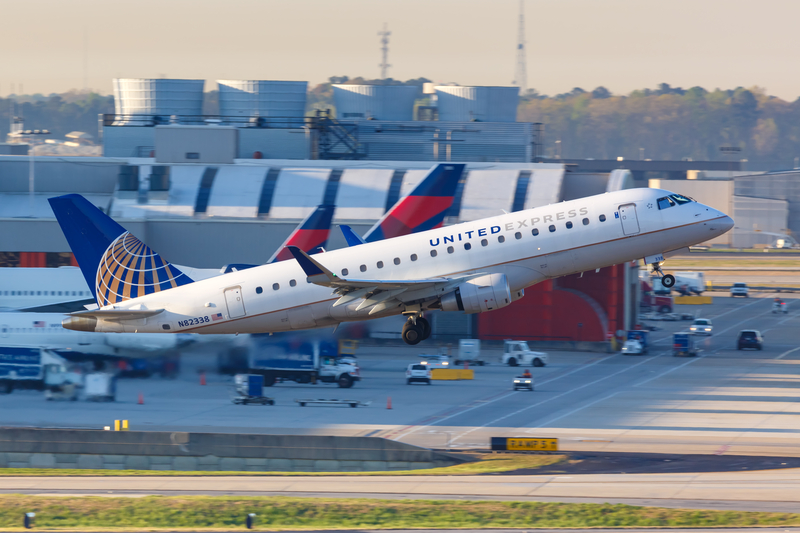
The route is scheduled to begin on October 28, 2026, operating three times weekly under the United Express brand. SkyWest Airlines will operate the flights using Embraer E175 regional jets, giving United a right-sized aircraft for a market that is strategically useful but unlikely to require mainline capacity at launch.
For United, the return to Tuxtla Gutiérrez (TGZ) is more than a niche route addition. It brings the airline’s Mexico network to 25 destinations, further reinforcing Houston (IAH) as one of the most important U.S. gateways to Mexico. For Chiapas, it restores a nonstop link to the United States and gives the state’s capital region direct access to United’s global network through Houston.
Read our stories in your inbox
Two aviation newsletters. Zero fluff.
United Reopens A Route It Last Served More Than A Decade Ago
United previously served Tuxtla Gutiérrez (TGZ) from Houston (IAH) between 2010 and 2013. Its return more than a decade later reflects how much the carrier’s Mexico strategy has matured, particularly from Houston.
The new service will operate three times weekly as UA5340 southbound and UA5341 northbound. The Houston (IAH) departure is scheduled for 9:50 a.m., arriving in Tuxtla Gutiérrez (TGZ) at 12:45 p.m. The return flight is scheduled to leave Tuxtla Gutiérrez (TGZ) at 1:35 p.m. and arrive back in Houston (IAH) at 4:19 p.m.
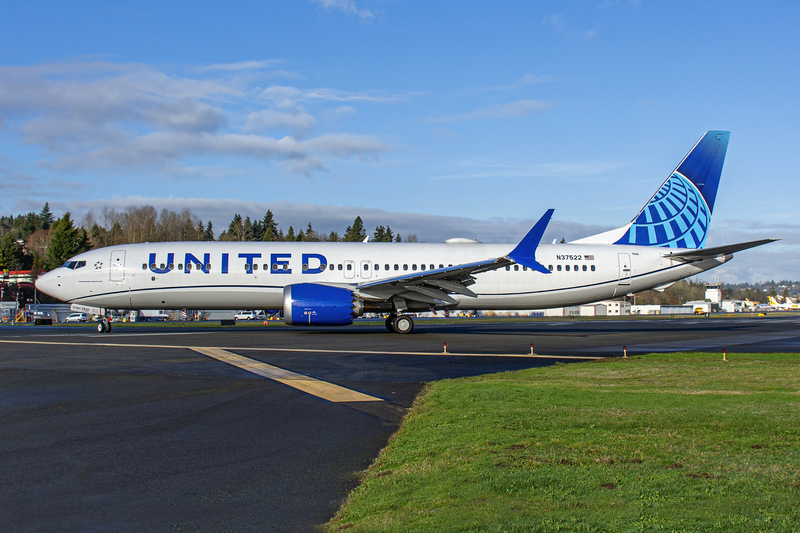
The westbound and northbound timings are useful for connectivity. A morning departure from Houston (IAH) allows United to feed the flight from early arrivals across the U.S., while the afternoon return from Tuxtla Gutiérrez (TGZ) gives passengers access to a large bank of onward domestic and international connections at Houston (IAH).
The route covers roughly 940 miles, putting it comfortably within the operating profile of the Embraer E175. The southbound block time is just under three hours, while the return is scheduled slightly shorter. That makes it a medium-haul regional jet mission rather than a short domestic-style hop.
The Embraer E175 Is The Right Aircraft For The Route
United Express will operate the route with the Embraer E175, flown by SkyWest Airlines on United’s behalf.
The E175 is one of the most capable and passenger-friendly aircraft in the U.S. regional jet market. Unlike smaller 50-seat regional jets, the E175 offers a wider cabin, larger overhead bins, a 2-2 Economy layout with no middle seats, and a proper premium cabin. United Express E175 aircraft generally seat either 70 or 76 passengers depending on configuration, with United First, Economy Plus, and standard Economy seating.
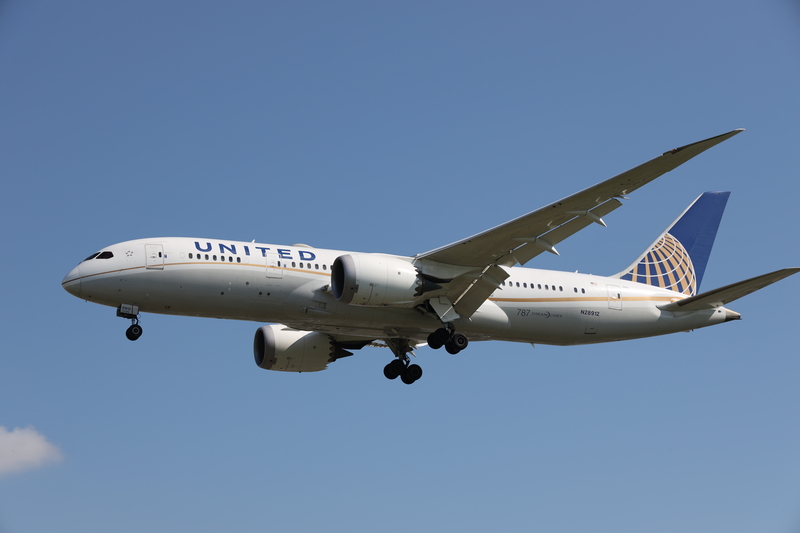
For a route like Houston (IAH) to Tuxtla Gutiérrez (TGZ), the E175 gives United an efficient way to test and sustain demand without committing a Boeing 737 or Airbus A319. That matters because Tuxtla Gutiérrez is not Cancún (CUN), Mexico City (MEX), Guadalajara (GDL), Monterrey (MTY), or Puerto Vallarta (PVR). It is a smaller, more specialized market with a mix of visiting-friends-and-relatives traffic, government and business demand, and tourism flows into Chiapas.
The aircraft also preserves a premium product. United can sell First Class and Economy Plus on the route, which matters for MileagePlus elites, business travelers, and connecting passengers accustomed to a consistent United experience through Houston (IAH).
Operationally, the E175 is also a good match for an airport such as Tuxtla Gutiérrez (TGZ). The airport can handle narrowbody aircraft, but a regional jet provides a lower-risk entry point while still giving the market a nonstop U.S. link.

Houston Remains United’s Mexico Powerhouse
The route again highlights the importance of Houston George Bush Intercontinental Airport (IAH) in United’s Mexico network.
Houston (IAH) is United’s strongest gateway to Mexico by geography, schedule depth, and connectivity. From Houston, United can reach northern Mexico, central Mexico, resort markets, secondary cities, and smaller business and VFR destinations with relatively short stage lengths. That is a major advantage compared with using more northerly hubs such as Chicago O’Hare (ORD), Newark (EWR), or Washington Dulles (IAD) for many Mexico routes.
Houston (IAH) also has the right local market. The Houston region has deep commercial, cultural, energy-sector, and family ties with Mexico. It is one of the most logical U.S. hubs for building a broad Mexico network because it combines local demand with one-stop connectivity from across the United States.
United already serves major Mexican markets from Houston (IAH), including Cancún (CUN), Mexico City (MEX), Monterrey (MTY), Guadalajara (GDL), León/Guanajuato (BJX), Querétaro (QRO), San José del Cabo/Los Cabos (SJD), Aguascalientes (AGU), San Luis Potosí (SLP), Tampico (TAM), Mérida (MID), Oaxaca (OAX), Veracruz (VER), and others.
Adding Tuxtla Gutiérrez (TGZ) fits that pattern. It is not necessarily a high-frequency business trunk route. Instead, it is a network-completion route that gives United coverage in a part of Mexico where nonstop U.S. access is limited.
Tuxtla Gutiérrez Gives United A Unique Chiapas Link
Tuxtla Gutiérrez is the capital of Chiapas and the state’s largest city. It is not usually marketed internationally in the same way as Cancún, Cabo, Puerto Vallarta, or Tulum, but it plays an important role as a commercial, administrative, and transportation center in southern Mexico.
Ángel Albino Corzo International Airport (TGZ) is located in Chiapa de Corzo, southeast of Tuxtla Gutiérrez. It serves the state capital region and also functions as a gateway for travelers heading toward San Cristóbal de las Casas, Sumidero Canyon, Chiapa de Corzo, and other parts of Chiapas.
That gives United a route with several potential demand streams.
There is local traffic between Chiapas and Texas. There is VFR traffic between southern Mexico and the United States. There are travelers connecting beyond Houston (IAH) to cities across United’s domestic network. There is also inbound tourism, particularly for travelers who want to explore Chiapas without connecting through Mexico City (MEX), Cancún (CUN), or another Mexican domestic gateway.
For Chiapas, the flight is especially meaningful because Tuxtla Gutiérrez (TGZ) currently relies heavily on domestic connectivity. Mexican carriers link TGZ with cities such as Mexico City (MEX), Mexico City Felipe Ángeles (NLU), Cancún (CUN), Guadalajara (GDL), Monterrey (MTY), Mérida (MID), Puebla (PBC), and Tijuana (TIJ). United’s return adds a different kind of access: nonstop service to the United States and one-stop connectivity across North America and beyond.
A Small Route With Real Network Value
The three-weekly schedule suggests United is taking a measured approach.
That is sensible. Routes like Houston (IAH) to Tuxtla Gutiérrez (TGZ) are rarely about overwhelming frequency at launch. They are about connectivity, market presence, and capturing traffic that would otherwise flow over Mexico City (MEX), Cancún (CUN), Monterrey (MTY), or other hubs.
A three-weekly schedule gives United enough presence to be bookable for leisure and VFR travelers, while limiting capacity risk. If demand builds, the airline can later evaluate additional frequencies or seasonal adjustments. If the route performs best around specific travel peaks, United has the flexibility to manage capacity without overcommitting.
The schedule also gives SkyWest and United an efficient aircraft rotation. The flight can depart Houston (IAH) in the morning, turn at Tuxtla Gutiérrez (TGZ), and return to Houston (IAH) in the afternoon. That keeps the aircraft within the regional operation and avoids tying up mainline equipment on a lower-frequency international route.
For United, that is exactly how a mature hub airline uses regional aircraft strategically. The E175 is not just a domestic feeder jet. In the right market, it can open international routes that would be too thin for mainline aircraft but too valuable to ignore.
United’s Mexico Network Reaches 25 Destinations
With Tuxtla Gutiérrez (TGZ), United’s Mexico network grows to 25 destinations.
That scale is significant. Mexico is one of United’s most important international short-haul markets, and the airline’s network now extends far beyond the obvious beach destinations and largest metropolitan areas.
United’s Mexico map includes resort airports such as Cancún (CUN), Cozumel (CZM), Puerto Vallarta (PVR), San José del Cabo/Los Cabos (SJD), Mazatlán (MZT), Manzanillo (ZLO), Ixtapa/Zihuatanejo (ZIH), Tulum (TQO), and Puerto Escondido (PXM). It also includes major business and VFR markets such as Mexico City (MEX), Monterrey (MTY), Guadalajara (GDL), León/Guanajuato (BJX), Querétaro (QRO), Aguascalientes (AGU), San Luis Potosí (SLP), Morelia (MLM), Mérida (MID), Veracruz (VER), Tampico (TAM), Puebla (PBC), Oaxaca (OAX), Tepic (TPQ), Acapulco (ACA), and now Tuxtla Gutiérrez (TGZ).
That breadth is important because Mexico demand is highly diverse. Some routes are leisure-heavy. Others are driven by manufacturing, energy, family travel, cultural ties, education, government travel, or small-business flows. United’s strength is that it can support many of those routes through Houston (IAH), where connections are plentiful and stage lengths remain manageable.
Tuxtla Gutiérrez (TGZ) is a good example of that network logic. It may not be one of Mexico’s most internationally recognized airports, but it gives United a unique position in Chiapas and offers passengers a direct path into a region that otherwise requires a domestic connection.
The Competitive Picture At TGZ
United’s return will make it the only airline offering nonstop service between Tuxtla Gutiérrez (TGZ) and the United States.
That matters. Today, travelers between Chiapas and the U.S. generally need to connect through a Mexican hub or gateway. Mexico City (MEX) is the most obvious option, while other routings can involve Cancún (CUN), Monterrey (MTY), Guadalajara (GDL), or other domestic points depending on the airline and itinerary.
United changes that by putting Houston (IAH) directly into the market.
The benefit is not just for Houston-bound travelers. A passenger from Tuxtla Gutiérrez (TGZ) heading to Chicago (ORD), Denver (DEN), Newark (EWR), Los Angeles (LAX), Washington Dulles (IAD), San Francisco (SFO), Orlando (MCO), Boston (BOS), or dozens of other U.S. cities can now make a single connection through Houston (IAH). That is a much more competitive proposition than an itinerary requiring a domestic Mexican connection plus a U.S.-bound flight.
The route also strengthens United’s Star Alliance position in southern Mexico. While Aeromexico, VivaAerobus, Volaris, and Mexicana operate domestic services from Tuxtla Gutiérrez (TGZ), United becomes the carrier providing a direct U.S. network bridge.
Chiapas Is More Than A Niche Destination
From a demand perspective, Chiapas is a more interesting market than its limited international air service might suggest.
The state is one of Mexico’s most distinctive regions, with major cultural, natural, and historical attractions. San Cristóbal de las Casas is one of the country’s most visited colonial cities. Sumidero Canyon is a major natural landmark near Tuxtla Gutiérrez. Chiapa de Corzo, Palenque, indigenous communities, archaeological sites, waterfalls, coffee-growing regions, and ecotourism destinations all contribute to the state’s tourism profile.
The challenge has always been access.
Most international travelers reach Chiapas by connecting through Mexico City (MEX), flying into Tuxtla Gutiérrez (TGZ), and continuing by road. Others use Villahermosa (VSA) for Palenque or combine Chiapas with routes through Cancún (CUN) or Guatemala. A nonstop United flight from Houston (IAH) simplifies the first step for U.S.-based travelers and tour operators.
That does not mean Tuxtla Gutiérrez (TGZ) will suddenly become a major U.S. leisure gateway. But even modest nonstop service can help build awareness and improve itinerary planning for a destination where air access has been a constraint.
Why This Route Makes Sense Now
United’s decision to return to Tuxtla Gutiérrez (TGZ) fits the airline’s broader pattern of adding targeted, lower-risk international routes where its hub structure gives it a strong advantage.
Houston (IAH) is the obvious U.S. end of the route. The Embraer E175 is the right aircraft. The three-weekly frequency limits exposure. The afternoon return creates useful connection opportunities. The market has limited nonstop competition. And United can draw on a broad mix of passengers rather than relying entirely on local Houston–Chiapas demand.
This is the kind of route that may look small on a map but can be strategically valuable if the connecting flows work.
For United, Mexico is not just a vacation market. It is a layered international market with business, leisure, VFR, and regional connectivity components. The airline’s ability to serve large cities, secondary cities, beach destinations, and specialized regional markets gives it a stronger competitive position than a Mexico network built only around Cancún (CUN), Mexico City (MEX), and Cabo (SJD).
Tuxtla Gutiérrez (TGZ) adds another piece to that puzzle.
Bottom Line
United Airlines is returning to Tuxtla Gutiérrez (TGZ), restoring nonstop service from Houston George Bush Intercontinental Airport (IAH) to Chiapas beginning October 28, 2026.
The route will operate three times weekly as a United Express service flown by SkyWest Airlines using the Embraer E175. With United First, Economy Plus, and Economy seating, the E175 gives United a premium-capable but appropriately sized aircraft for a specialized international market.
The addition brings United’s Mexico network to 25 destinations and reinforces Houston (IAH) as the airline’s primary gateway to Mexico. For Tuxtla Gutiérrez (TGZ), the route is even more significant: it restores nonstop access to the United States and opens one-stop connectivity across United’s broader network.
This is not a blockbuster route in the way that a new transatlantic or transpacific launch might be. It is something more subtle but still important — a carefully matched aircraft, hub, and market that gives United a unique foothold in Chiapas while giving travelers a much easier path between southern Mexico and the United States.