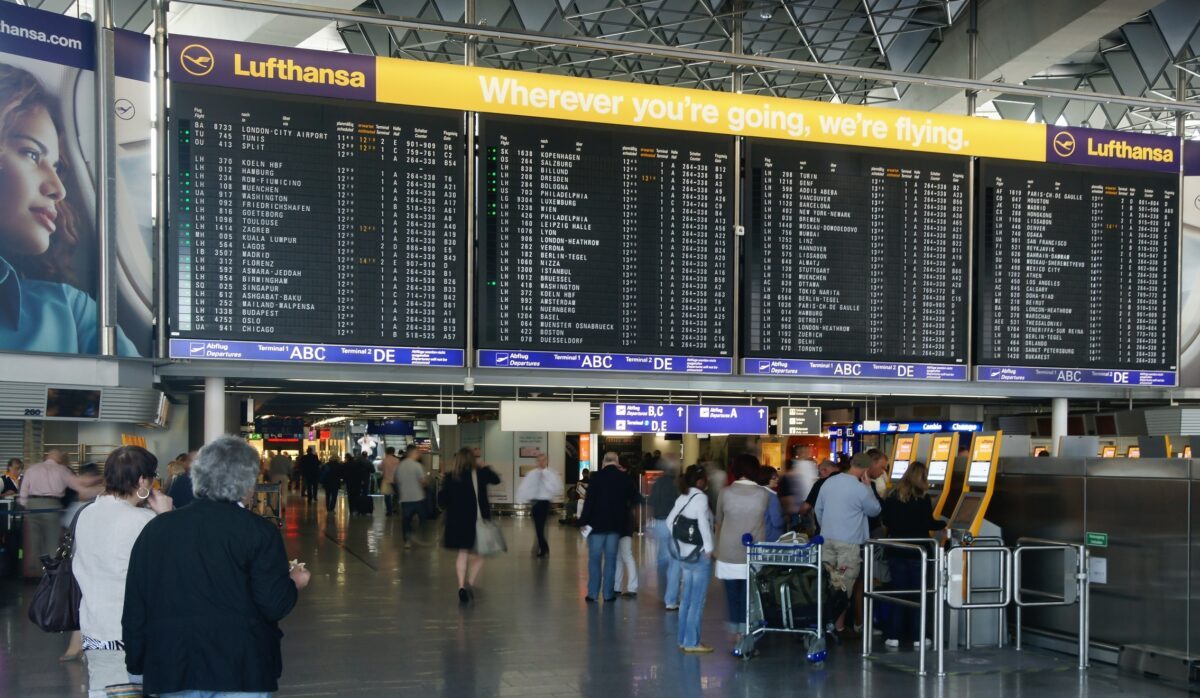
Two people who worked at Frankfurt Airport (FRA) have died after contracting falciparum malaria in a cluster that has affected six airport workers since early July.
Frankfurt’s public health department said in an August 27 update that the other four patients had been discharged from hospital. Five of the six developed symptoms in early July, while the latest patient became ill in mid-August.
All six infections involved Plasmodium falciparum, the parasite responsible for malaria tropica, the form most likely to progress rapidly into severe disease. Authorities believe the cases are associated with the workers’ employment at FRA, but they have not established whether all six infections came from the same imported mosquito or source.
Read our stories in your inbox
Two aviation newsletters. Zero fluff.
The health department continues to classify the risk to the general population as very low. Malaria does not spread between people through ordinary contact. In an airport-malaria event, an infected Anopheles mosquito is carried from an endemic region aboard an aircraft or through its baggage or cargo, survives the journey and subsequently bites someone at or near the destination airport.
Sixth Infection Was Diagnosed After the Worker Died
Hesse’s association of statutory health insurance physicians provided a more detailed timeline for the latest case in an alert issued to doctors. The worker developed symptoms on August 15 and died on August 19. A blood sample collected that day produced a postmortem diagnosis on August 21.

That case followed five infections identified among airport workers in July. The city has not released personal information about the patients, including their employers, jobs or working locations. Two of the six lived in Frankfurt, but the common epidemiological factor is occupational exposure at the airport rather than place of residence.
The precise import pathway also remains under investigation. Frankfurt’s airport-malaria information page says officials cannot yet determine whether a mosquito arrived in a passenger cabin, baggage or freight. No particular flight, airline, aircraft or handling area has been linked to the infections.
Mosquito Traps and Genetic Testing Form Part of Response
The city has deployed mosquito traps at FRA to monitor for Anopheles species capable of transmitting malaria. It is also working with airport operator Fraport to alert workers and employers, while physicians across the Rhine-Main region have been told to consider malaria when treating airport personnel with unexplained fever.
The Hesse state health authority has notified all 24 local health departments in the state, the regional physicians’ association and public health authorities in neighboring German states. Doctors have been asked to establish whether patients with unexplained fever work at or spend time near FRA, even when they have not traveled to a malaria-endemic country.

Officials are also genetically characterizing parasite samples. The results could show whether the cases share a closely related strain, helping investigators assess whether the July group and the August infection form a single cluster. Frankfurt expects that work to take several weeks.
The clinical alert extends beyond fever. Chills, headaches, muscle pain and gastrointestinal symptoms can occur, while Hesse’s notice specifically warns that vomiting and diarrhea may dominate the early presentation. Rapid testing and treatment are particularly important with P. falciparum.
Frankfurt Has Investigated Similar Cases Before
The 2026 cluster is not Frankfurt’s first encounter with airport malaria. The city recorded one case in 2023 and a three-person cluster in 2022.
A published investigation of the 2022 event involved a bus driver, forklift driver and security worker who had not visited malaria-endemic countries. The employees worked in separate parts of FRA and did not share workplaces, canteens or changing rooms. Two developed severe malaria, although all three eventually recovered.

One of those infections was not diagnosed until 70 days after symptoms began, illustrating the central difficulty of airport malaria: without a relevant travel history, clinicians may not initially test for a tropical disease. Genomic analysis subsequently found that the three parasite samples were highly related and most closely associated with strains from West Africa, supporting the assessment that the workers were infected from a common imported source.
Investigators in 2022 inspected work areas and searched for stagnant water around a cargo facility. Traps did not capture an Anopheles mosquito, and no breeding site was found. The inquiry nevertheless showed how molecular evidence can connect infections across a large airfield even when the mosquito and its point of entry cannot be recovered.
Aircraft Disinsection Returns to Focus
The current investigation again raises the question of how effectively international aviation prevents disease-carrying insects from crossing borders. The World Health Organization’s aircraft disinsection guidance covers insecticide treatments for cabins, flight decks and cargo areas, including pre-departure spraying and residual applications.
Requirements are set by national authorities rather than applied uniformly across every international service. Treatments are intended to reduce the already low probability that a mosquito survives a flight from an endemic region, leaves the aircraft and encounters a person before dying.
Frankfurt’s scale makes the occupational-health response unusually complex. Fraport says approximately 80,000 people employed by 450 companies work at the airport. That population includes airline, cargo, security, ground handling, transport, maintenance and terminal staff spread across a wide operating area.
Fraport’s airport medical center works with Frankfurt’s health department on infectious-disease protection and provides emergency care for passengers and employees. In the present cluster, the priority is ensuring that airport exposure becomes part of the diagnostic history whenever a worker develops an unexplained acute illness.
Bottom Line
The most immediate benefit of the response will come from faster clinical recognition, not from a broad warning to travelers. Airport malaria is rare enough that employment at an intercontinental gateway may not ordinarily trigger testing in a patient who has never visited the tropics. Alerting doctors across FRA’s large commuter area reduces the chance that another infection will progress while more common explanations for fever are considered.
For airport operators and airlines, the cluster puts renewed attention on the points where vector control can fail: aircraft cabins, holds, baggage systems, cargo facilities and the surrounding airfield. Disinsection can reduce risk, but the Frankfurt cases show why surveillance at the destination remains necessary. A mosquito that survives transport may disappear long before investigators recognize a pattern among workers in different operational areas.
The genetic results will determine whether Frankfurt is dealing with one extended event or separate introductions in July and August. Investigators’ next findings — particularly any link between parasite samples, working locations and arriving traffic — will shape whether FRA’s response remains centered on medical awareness and trapping or expands into more targeted aircraft and handling controls.
Keep reading FlyMag
Get the Daily Brief in the morning or the Route Watch weekly recap on Fridays. Or both.