Condor is bringing regular service back between Frankfurt Airport (FRA) and Tel Aviv Ben Gurion Airport (TLV) starting in May 2026—an announcement that’s doing double duty as both a network move and a brand statement.

The “full circle” framing isn’t marketing fluff, either. Condor’s tourism operation effectively began with a pilgrimage flight on March 29, 1956, to the Holy Land. Seventy years later, restoring FRA–TLV in the carrier’s anniversary year is a neat way to tie the modern Condor story—scheduled flying, connectivity, and a more deliberate hub strategy—back to where the leisure airline narrative started.
The operational headline: a narrowbody on a solid medium-haul stage
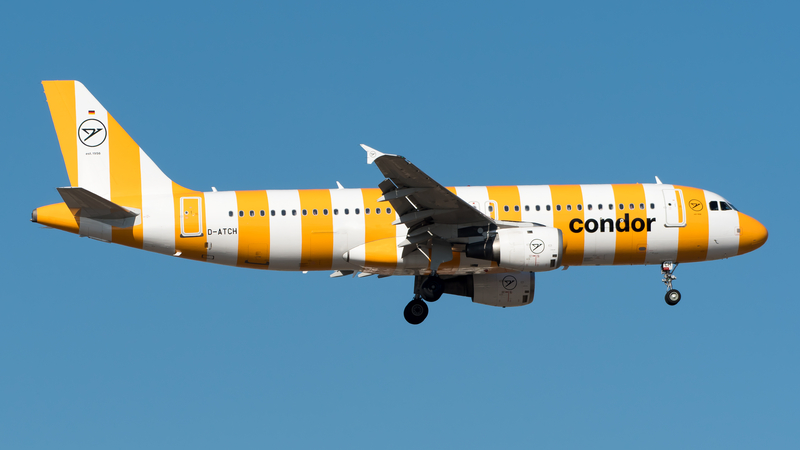
Condor says it will operate the route with an Airbus A320, a workhorse choice that makes real economic sense for FRA–TLV. The great-circle distance is roughly 1,600 nautical miles—comfortably inside the A320’s typical mission envelope—making it the kind of “medium-haul international” sector where a single-aisle can outperform a widebody on trip cost, frequency flexibility, and right-sizing.
Read our stories in your inbox
Two aviation newsletters. Zero fluff.
For airline planners, this is the sweet spot:
-
Long enough to capture meaningful O&D and connecting traffic (and to justify a robust premium upsell in ancillaries and seat products),
-
Short enough to avoid the structural cost penalty of widebodies when demand is choppy or seasonally peaky,
-
Operationally manageable for rotations that can still be built around FRA’s bank structure.
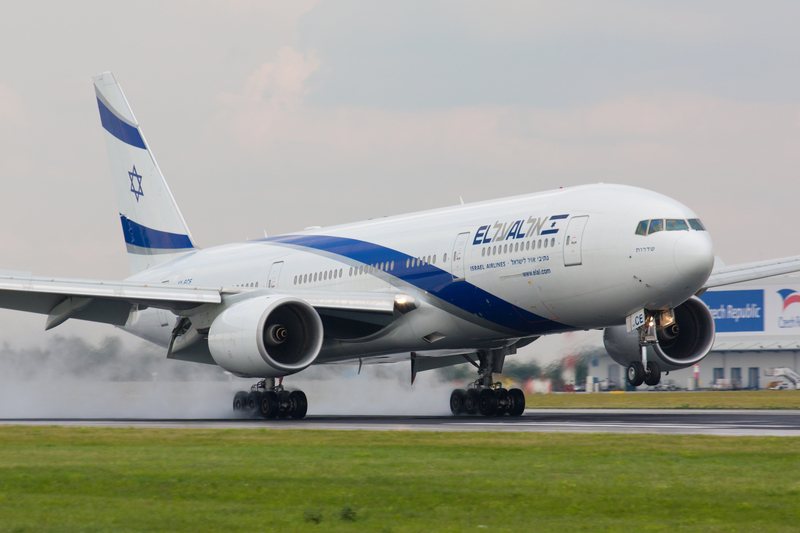
Even without published flight numbers in the initial announcement, the aircraft choice signals Condor is targeting repeatable, schedulable flying—not a one-off seasonal experiment.
Why FRA matters more than ever in Condor’s network logic
Condor has historically been synonymous with leisure point-to-point flying, but the airline has been steadily leaning into a more recognizable hub-and-spoke posture at Frankfurt (FRA). Adding TLV fits that evolution because it’s one of those rare city markets that can draw from multiple demand pools at once:
-
Leisure and “heritage” travel that remains resilient across seasons
-
Business and VFR traffic with strong directional flows
-
Connectivity that benefits disproportionately from a banked hub like FRA, especially when you can feed from both European origins and long-haul arrivals

Condor explicitly positioned the restart as a connectivity play via Frankfurt, which is important: FRA isn’t just an origin market, it’s an engine for making “thin” routes viable when the local market alone wouldn’t support the frequency you want.
The A320 choice says “frequency discipline,” not “capacity bravado”
In practical terms, putting an A320 on FRA–TLV lets Condor scale the route with far more precision than if it committed a widebody. For example, an A320 rotation can be:
-
Added as incremental capacity during peak periods,
-
Banked to connect transatlantic arrivals into FRA, then turned back efficiently,
-
Adjusted without blowing up long-haul fleet utilization if loads soften.
It also allows Condor to keep the onboard proposition consistent with its short/medium-haul product: a single-aisle cabin, buy-up options, and the operational reliability that comes with a fleet type airlines know how to run at high tempo.
Condor has also emphasized “ergonomic seating,” flexible fares, and optional extras for the TLV operation—exactly the levers leisure carriers use to monetize beyond the base fare on routes that can be price-competitive.
A route with symbolism—and real-world diplomatic weight
One of the more unusual elements of this restart is how openly it’s being framed beyond aviation. Uwe Becker, the Hessian State Government Commissioner for Jewish Life and the Fight against Antisemitism, praised the link as an additional bridge of understanding between Germany and Israel—language you don’t typically see attached to a narrowbody route announcement.
For Condor, that matters reputationally. FRA–TLV isn’t just another dot on the map; it’s a high-salience market. When an airline restarts service here, it signals confidence—commercially, operationally, and in the airline’s ability to sustain a route that can be sensitive to external events.
Bottom Line
Condor’s decision to resume Frankfurt (FRA)–Tel Aviv (TLV) flights from May 2026 is more than a nostalgic anniversary gesture. The Airbus A320 deployment is a clear tell: this is a right-sized, connectivity-friendly route designed to plug into FRA’s bank structure and support multiple demand streams without overcommitting capacity. Symbolism may have earned the headlines, but the network logic is what will keep the route in the schedule.
Keep reading FlyMag
Get the Daily Brief in the morning or the Route Watch weekly recap on Fridays. Or both.