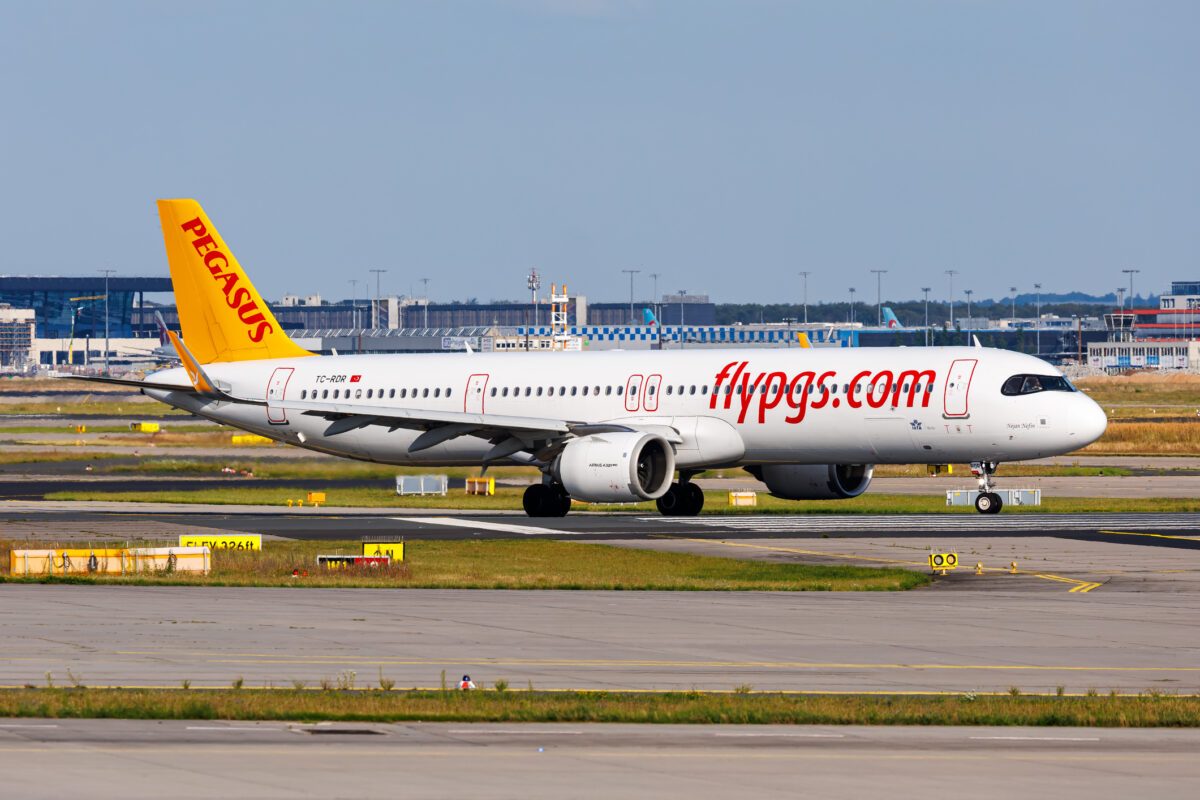
A Pegasus Airlines Airbus A321neo entered a runway in the wrong direction while preparing to depart Frankfurt (FRA) for Istanbul Sabiha Gökçen (SAW), prompting the aircraft to stop, vacate and reposition before taking off safely.
The October 20, 2026, occurrence involved flight PC996. Pegasus confirmed the alignment error in a statement issued October 24, saying the aircraft turned the wrong way as it entered Runway 18 and stopped safely on the runway.
The airline rejected descriptions of the event as an attempted wrong-way takeoff. It said the crew identified the error, coordinated with air traffic control, left the runway and subsequently re-entered it for departure.
Read our stories in your inbox
Two aviation newsletters. Zero fluff.
Germany’s air navigation service provider, DFS, confirmed that the occurrence had been reported to the responsible authorities. Germany’s Federal Bureau of Aircraft Accident Investigation, the BFU, will determine whether the event warrants a formal investigation and, if so, its scope.
Frankfurt’s Runway 18 Is a Southbound Departure Runway
The direction error is operationally significant because Frankfurt’s western runway is not treated as a conventional two-direction runway. Fraport’s description of the airport’s runway system identifies Runway 18 as a north-to-south runway used for takeoffs.
Fraport’s current airport user regulations, valid from April 23, 2026, list Runway 18 as a 4,000-meter by 45-meter takeoff-only runway. Unlike Frankfurt’s three east-west runways, it carries only the 18 designator in operational material rather than an 18/36 pairing.
A crew entering Runway 18 for departure should therefore align toward an approximate magnetic heading of 180 degrees. Fraport says the runway can be used largely independently of the operating direction on Frankfurt’s parallel runway system, where departures and arrivals switch between easterly and westerly flows according to wind conditions.
The distinction matters at an intersection entry. Turning in the wrong direction does not merely place an aircraft on an incorrect heading; it also points the aircraft toward the runway segment behind the intended entry point rather than the declared departure path and available distance assumed for the clearance.
Pegasus did not describe the event as a high-speed rejected takeoff. Its statement instead characterized the sequence as an incorrect turn during runway entry, followed by a safe stop and repositioning. That account leaves an important distinction for investigators: whether the aircraft was still taxiing while the crew recognized the error, or whether thrust and acceleration were consistent with the beginning of a takeoff roll.
Flight Departed After Repositioning
PC996 departed after the aircraft vacated and returned to Runway 18 in the correct direction. Pegasus said the subsequent takeoff and flight to SAW were completed safely.
The airline also said the occurrence was reported and was being reviewed under its standard safety procedures. There were no reported injuries or aircraft damage.
For investigators, the immediate questions are likely to include the aircraft’s cleared entry point, the wording and readback of the takeoff clearance, flight-deck heading checks, the timing of any controller transmission and recorded aircraft parameters during the wrong-way movement. Cockpit voice, flight data and ATC recordings would provide a more precise sequence than the competing descriptions now in circulation.

Runway-direction errors are addressed by several procedural barriers. These include confirmation of the runway designator, comparison of the aircraft heading with the cleared runway, independent monitoring by both pilots and tower surveillance. The Frankfurt event was contained while the A321neo remained on the ground and was able to continue operating.
A321neo Is Central to the Pegasus Fleet
The aircraft type involved is the largest member of Pegasus’ Airbus narrowbody fleet. The airline configures its A321neos with 239 seats, close to the manufacturer’s maximum-density limit, giving Pegasus substantially more capacity per movement than its A320neos.
Pegasus reported 68 A321neos in service at March 31, 2026, within a fleet of 129 aircraft, according to its investor-relations fleet overview. The type has become the main vehicle for the carrier’s capacity growth, particularly on international services where the additional seats can lower unit costs without requiring another frequency.
When Pegasus ordered additional examples, it described the jet as a 239-seat fleet modernization platform offering lower fuel consumption and emissions per seat. Airbus lists a maximum capacity of 244 passengers and a range of up to 4,000 nautical miles for the A321neo, although the short Frankfurt-Istanbul sector uses only a fraction of that range capability.
On PC996, the type’s capacity or performance was not the central issue. The safety question concerns runway alignment and the operational defenses intended to identify a directional error before an aircraft begins a committed takeoff roll.
Bottom Line
Pegasus has acknowledged the essential fact that its crew turned the A321neo the wrong way while entering Runway 18. Its disagreement is narrower but important: the airline says there was no takeoff attempt and rejects claims that controllers stopped one. Recorded data should make that distinction straightforward if the BFU opens an investigation.
The event also underlines the unusual operational character of Frankfurt’s Runway 18. It is a long, dedicated southbound departure runway, but an intersection entry still requires an unambiguous turn and heading cross-check. Because the aircraft stopped, vacated and later departed, the occurrence caused little immediate operational disruption. Its wider value will come from establishing which barrier first detected the error and why the earlier defenses did not prevent the incorrect turn.
What follows now is primarily a matter for German investigators and the operator’s safety department. A BFU decision to investigate would bring an authoritative timeline, including whether the movement remained a taxiing error or progressed into a rejected takeoff. Until then, the airline’s confirmed wrong-direction entry should be separated from the more serious characterization that Pegasus expressly disputes.