Commercial passenger flights have resumed at Caracas (CCS), restoring service at Venezuela’s principal international gateway 69 days after two major earthquakes forced its closure.


The airport began processing domestic and international passengers through temporary facilities on Tuesday, September 1. Its permanent terminal buildings remain under repair following the June 24 disaster.
The airport operator’s instructions for the reopening direct passengers into the temporary terminal complex and call for travelers to confirm their departure airport before setting out. Airlines shifted much of their Caracas flying to other Venezuelan airports during the closure, and those operations are moving back at different rates.
Read our stories in your inbox
Two aviation newsletters. Zero fluff.
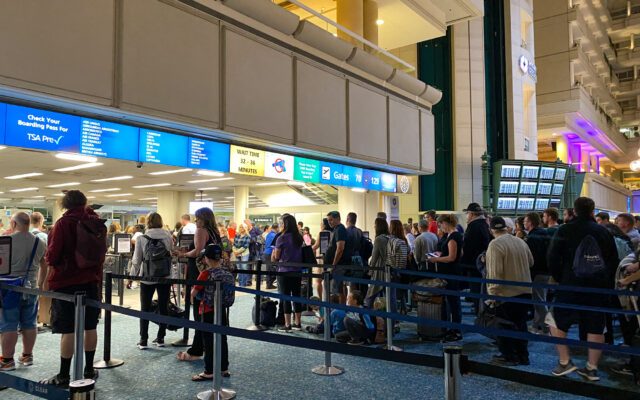
Passengers are being asked to arrive two hours before domestic departures and three hours before international flights. Access to the temporary processing areas is restricted to ticketed travelers, with buses used to move passengers between the terminals and aircraft parked on remote stands.
Airlines Begin Moving Flights Back to CCS
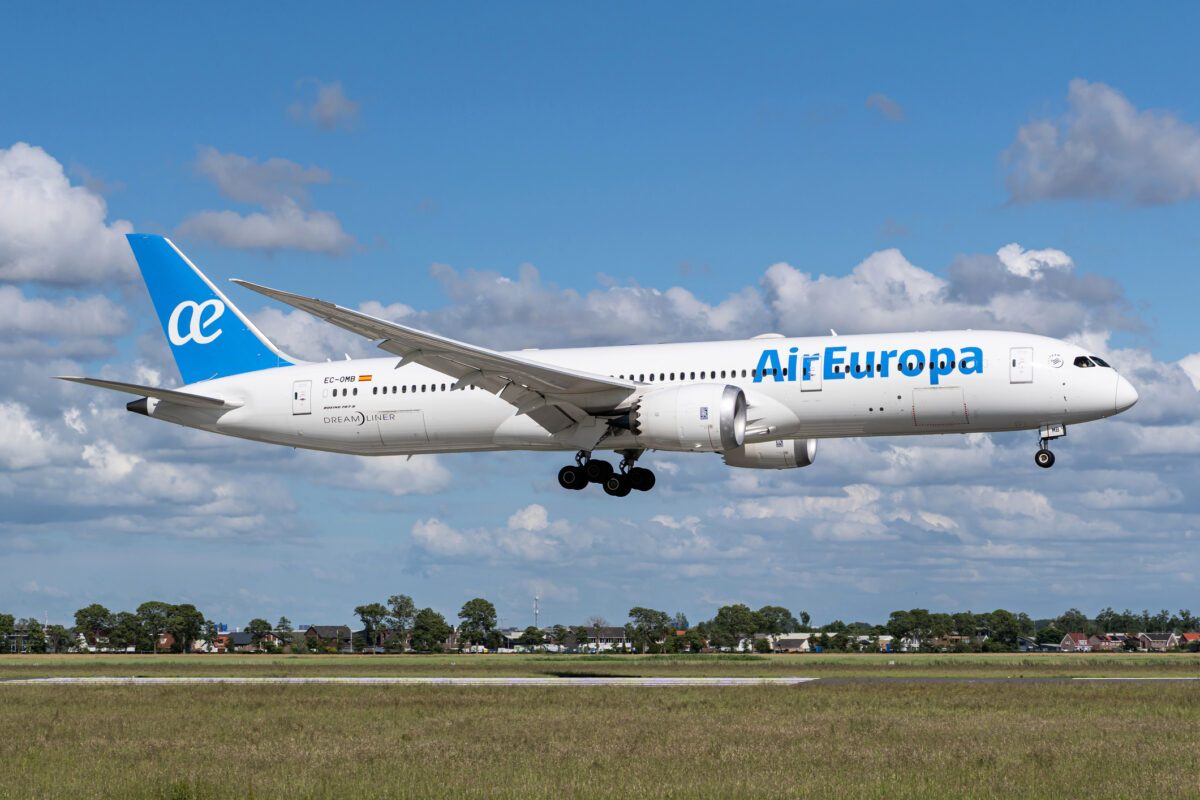
Air Europa independently confirmed the reopening through an operational notice to passengers, saying it would resume flights to and from CCS on September 1. The airline had been serving Valencia (VLN), about 75 miles west of Caracas, as its substitute gateway after the earthquakes.
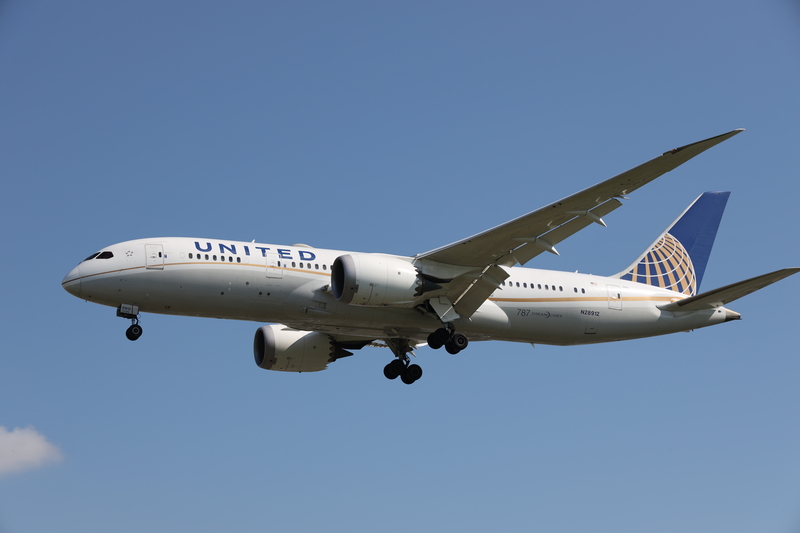
Its return restores a major portion of the nonstop capacity between Venezuela and Europe. Air Europa’s Madrid (MAD)-Caracas service feeds connections across Spain and the rest of the airline’s European network, making its reinstatement more consequential than the return of a single point-to-point route.
The carrier operates its long-haul network with the Boeing 787 Dreamliner. Air Europa lists capacity of approximately 296 passengers and a range of between 14,200 and 15,200 kilometers for the type. That gives the airline ample performance margin on the roughly 4,350-mile Madrid-Caracas sector while concentrating a substantial number of passengers into each movement — an important consideration while CCS is operating with reduced terminal capacity.
Boeing describes the 787 family as accommodating between 200 and 375 passengers in typical two-class layouts, depending on the variant, with ranges of up to 8,300 nautical miles. The manufacturer’s published specifications underline why the twinjet has become a standard platform for thinner intercontinental markets such as Venezuela, where long range is required but daily demand may not support the largest widebodies.
Venezuelan carrier Laser Airlines is also again selling travel through CCS. Its booking system shows domestic service linking Caracas with cities including Maracaibo (MAR) and Porlamar (PMV), alongside international routes. Restoring those domestic sectors is important to the operation at CCS because they rebuild connecting flows that could not be replicated efficiently while international flights were dispersed among Valencia and other regional gateways.
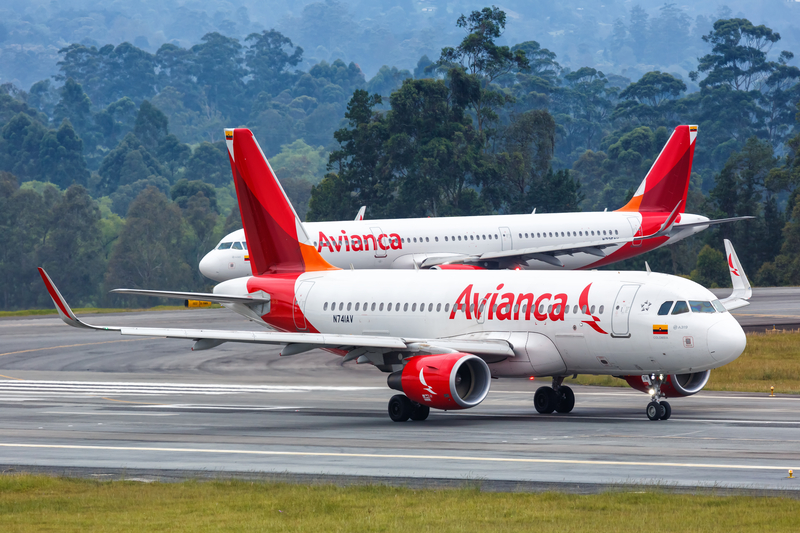
The return will be phased rather than simultaneous. Passengers may still find some flights operating from alternate airports during September as carriers reposition aircraft and crews and adjust schedules to the capacity available in the provisional buildings.
Temporary Terminals Limit the Initial Recovery
The reopened airport is not operating in its pre-earthquake form. Passenger check-in, baggage acceptance, immigration and security screening have been transferred to temporary structures, while boarding is conducted by bus rather than through contact gates.
That arrangement allows CCS to handle scheduled traffic without waiting for the principal terminal complex to be fully restored, but it also places a practical ceiling on throughput. Widebody arrivals can deliver several hundred passengers at once, making coordination among immigration, baggage handling, ground transportation and airline staff more important than the number of aircraft movements alone.
The initial schedule therefore represents a controlled restart rather than a return to normal capacity. Airlines must account for longer passenger-processing times, remote-stand operations and less resilience when flights arrive close together. Disruption recovery will also be more difficult if a late widebody overlaps with another international bank.

For travelers, the continuing use of alternative airports creates another complication. A booking originally issued for Caracas may have been changed to Valencia or another city during the shutdown, and not every carrier is reversing those changes on the same date. The airport operator has consequently told passengers to verify the operating airport directly with their airline or travel agency.
Earthquakes Severed Venezuela’s Main Air Link
The closure followed two earthquakes west of Caracas on June 24. The U.S. Geological Survey recorded the sequence at magnitudes 7.2 and 7.5 and warned that earthquake-triggered landslides were likely to be significant in number and geographic extent.
The human cost continued to rise in the weeks after the initial shocks. By August 17, Venezuelan authorities had reported more than 6,509 deaths, 16,740 injuries and almost 18,000 people who had lost their homes, according to an August 24 update from the United Nations in Venezuela.
CCS’s loss immediately disrupted both international access to the capital and Venezuela’s domestic network. Airlines moved flying to airports including VLN, requiring passengers to complete a substantially longer ground journey to and from Caracas. The dispersal kept a basic level of connectivity in place but fragmented airline operations, ground handling and onward connections.
Reopening CCS reverses that emergency arrangement. It again places scheduled passenger service close to the country’s largest population and commercial center, while allowing carriers to consolidate staff and equipment at the airport around which much of Venezuela’s airline network is designed.
Bottom Line
The immediate beneficiaries are passengers whose journeys were lengthened or complicated by the diversion of Caracas flights to Valencia and other regional airports. Airlines also regain the operational advantages of concentrating international and domestic services at one gateway, rather than maintaining contingency stations and transporting crews, equipment and passengers across several cities.
The more important test begins after the reopening ceremony. Temporary terminals can restore connectivity, but their performance under simultaneous international arrivals, irregular operations and peak baggage loads will determine how quickly airlines are willing to add capacity. Widebody operators in particular will be watching passenger-processing times, stand availability and the reliability of ground handling before rebuilding their full schedules.
CCS’s recovery will therefore be measured in stages: the number of airlines returning, the proportion of flights still using alternative airports and, eventually, the transfer of operations from temporary structures into repaired permanent facilities. September’s restart restores Venezuela’s main air link, but the pace of the next phase will depend on whether the provisional operation can absorb rising traffic without creating a new constraint.
Keep reading FlyMag
Get the Daily Brief in the morning or the Route Watch weekly recap on Fridays. Or both.