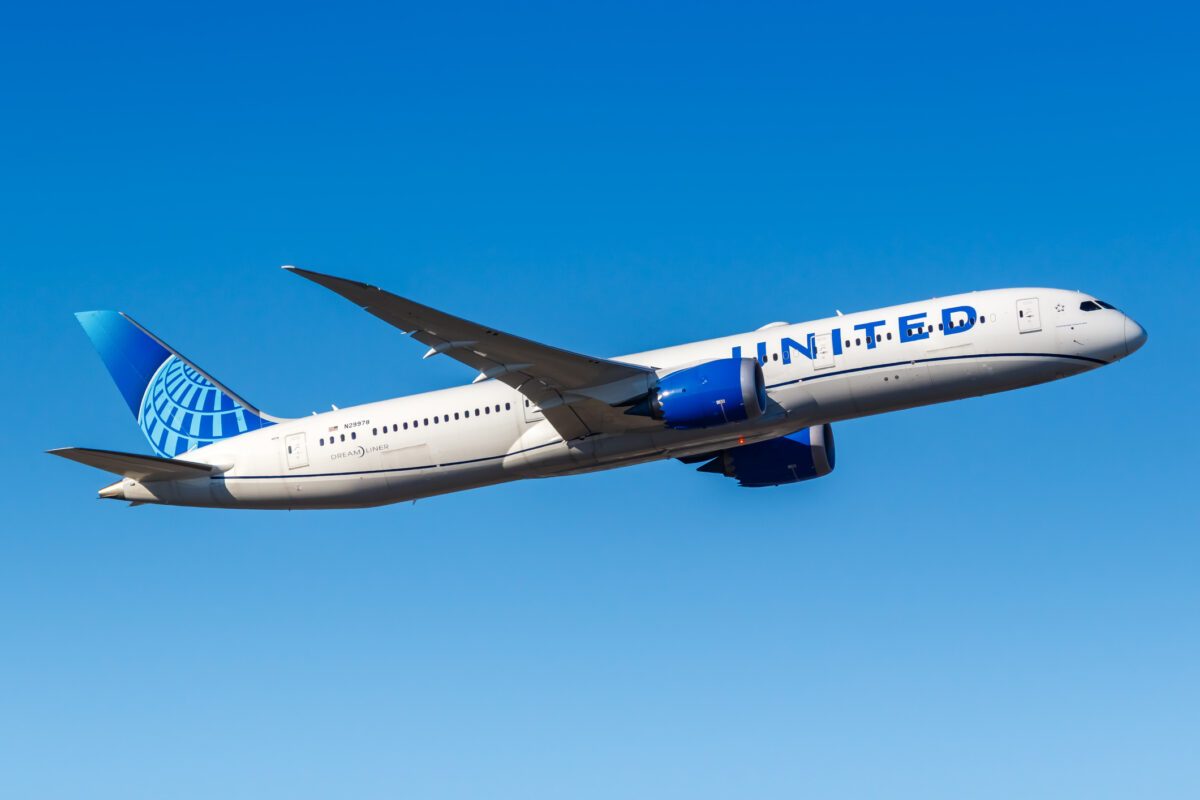
United Airlines’ summer 2027 expansion says as much about its network strategy as it does about the destinations being added. Rather than return to familiar northern European markets, the carrier is directing aircraft toward smaller cities and Mediterranean islands where it can establish a distinctive position.


The 10-city expansion announced August 25 includes nine European destinations and Okinawa, Japan. Eight of the 10 will have no other nonstop service by a U.S. airline when United enters, according to the carrier.
None of Copenhagen, Oslo, Stockholm, Manchester, Hamburg or Birmingham appears in the plan. The route mix instead reflects United’s preference for opening markets in which the nonstop itself becomes a competitive advantage.
Read our stories in your inbox
Two aviation newsletters. Zero fluff.
A portfolio built around exclusivity
Newark (EWR) receives the bulk of the European growth. United will fly daily to Luxembourg (LUX) and Marseille (MRS), four times weekly to Ljubljana (LJU), Catania (CTA) and Ibiza (IBZ), and three times weekly to Olbia (OLB), Valencia (VLC) and Terceira (TER). Washington Dulles (IAD) gains daily Toulouse (TLS) service.
The tenth destination is Okinawa (OKA), served three times weekly from San Francisco (SFO) with a Boeing 777-200ER. United is also adding routes to cities already on its network, including Washington-Milan, Denver-Paris and Los Angeles-Osaka.
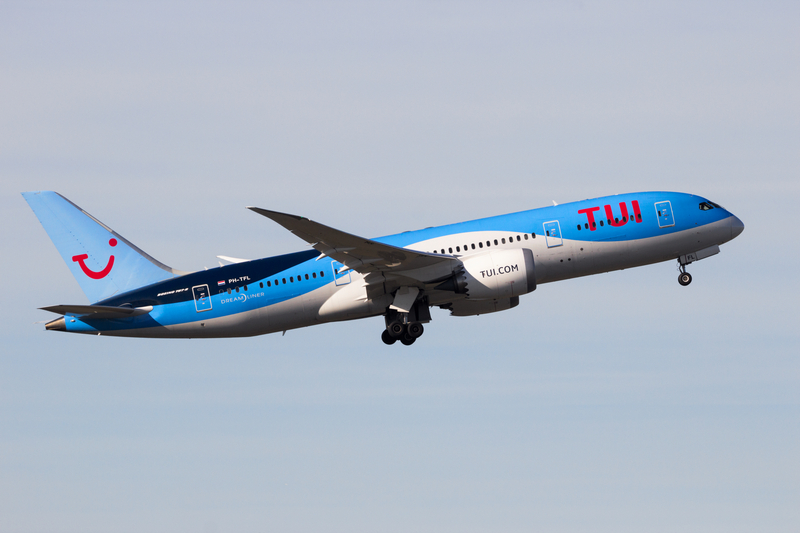
TUI 787 Diverts To Gander After Unruly Passenger Incident On Cancun-Manchester Flight
The emphasis on uncontested destinations is not new. United has repeatedly described unusual, airline-exclusive markets as a central part of its international strategy. Its summer 2026 announcement used the same approach for Split, Bari, Glasgow and Santiago de Compostela, while an earlier expansion emphasized what the airline called “hidden gem” destinations.
Three- and four-times-weekly schedules also allow United to spread a finite pool of aircraft across more dots on the map. That produces a broader network than committing the same capacity to daily service in one established business market. It also matches the highly seasonal demand profile of Ibiza, Sardinia, Sicily and the Azores.
The A321XLR lowers the entry threshold
The Airbus A321XLR is central to the plan. It will operate Luxembourg, Toulouse, Ibiza, Valencia and Marseille, placing a long-range narrowbody into markets that might not support a Boeing 767 throughout the season.
United’s aircraft will have 20 lie-flat Polaris suites and 12 Premium Plus seats, giving it 32 premium seats — twice the premium count on the Boeing 757-200 it is intended to replace. The cabin also includes seatback entertainment, Starlink connectivity and an Economy Plus row with blocked middle seats converted into shared table space.
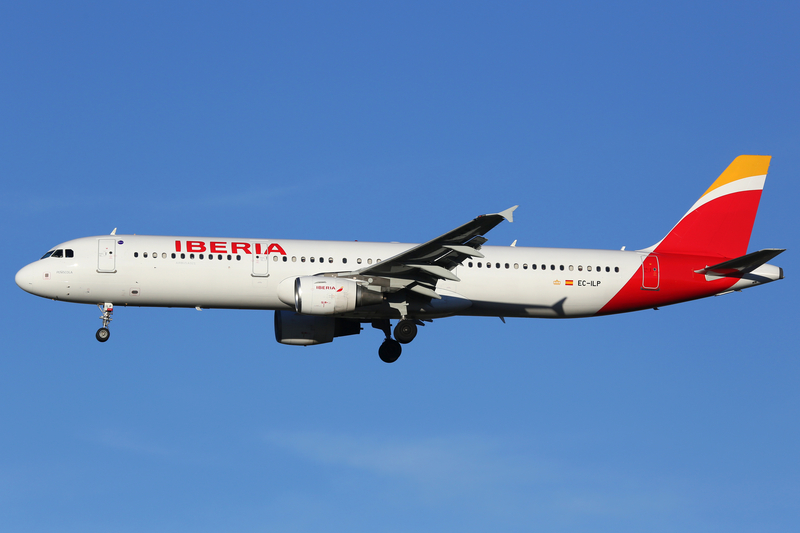
Airbus markets the A321XLR as a 4,700-nautical-mile route opener. Its significance for United is not simply range. A lower-capacity aircraft reduces the number of seats the airline must fill while retaining enough premium inventory to capture higher-yield demand from Newark and Washington.
United is reserving widebodies for routes where it sees a stronger peak-season volume case. Ljubljana receives the Boeing 767-400ER, while Olbia and Catania get the Boeing 767-300ER. Terceira, the shortest of the new Newark transatlantic sectors, will use a Boeing 737 MAX 8.
Scandinavia has already had its auditions
The absence of Scandinavia is not the result of United overlooking the region. The airline launched Newark-Bergen (BGO) in 2022 with a Boeing 757-200 and returned to Stockholm Arlanda (ARN) in 2023 after a four-year interruption. United had previously served Stockholm for 14 years. Neither market features in the 2027 expansion.
Copenhagen (CPH) presents a different challenge. It is a large, established connecting hub rather than an isolated destination. Copenhagen Airport reported that SAS controlled 38% of its passengers in 2025, with transfer traffic rising sharply as the airline concentrated more operations there. A United flight would enter an incumbent hub market without the first-mover benefit available in Ljubljana, Toulouse or Valencia.
Manchester also is not an untouched opportunity. United identified it among five cities removed from its medium-term network plan in a 2023 investor presentation. Oslo, Hamburg and Birmingham would similarly represent more conventional traffic propositions, where schedule frequency and year-round business demand matter more than novelty.
United’s 2027 choices therefore are less a judgment on the size or importance of northern European cities than a decision about where each additional aircraft can make the network harder to replicate.
Bottom Line
United is not choosing obscure destinations simply for publicity. It is combining Newark’s connecting base, limited weekly frequencies and the Airbus A321XLR’s lower trip risk to enter markets where it can own the nonstop proposition. Scandinavia may return to the map, but the airline’s 2027 capacity is going first to routes with greater exclusivity.