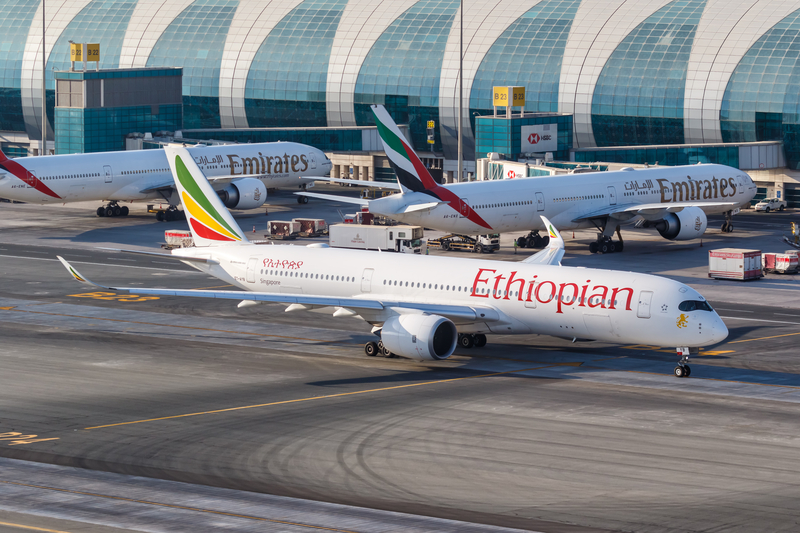
Ethiopian Airlines has suspended flights to Mekelle, Axum and Shire amid renewed military activity in northern Ethiopia, cutting scheduled air links between Addis Ababa and the three Tigray destinations.

The carrier said the suspension took effect on September 23, 2026, because of the current situation in the region. In an announcement on its official Telegram channel, Ethiopian apologized to affected customers and said it would issue another notice when operations resume.
The decision affects flights between Addis Ababa Bole (ADD) and Mekelle (MQX), Axum (AXU) and Shire (SHC). Ethiopian did not set a target date for restoring service, leaving the three stations outside its active domestic operation until security and airport access allow flights to restart.
Read our stories in your inbox
Two aviation newsletters. Zero fluff.
Tigrayan Forces Take Control of Airports
The suspension followed the takeover of the three airports by forces associated with the Tigray People’s Liberation Front. The African Union said Mekelle, Axum and Shire airports had been seized and occupied, federal personnel had been detained and civilian air services had consequently been disrupted.
A separate European Union statement also referred to the takeover of all three airports by TPLF forces. It described a rapidly deteriorating situation in northern Ethiopia, including military activity in several locations, and called for immediate de-escalation.
The African Union said the airport seizures were inconsistent with commitments under the November 2, 2022, Agreement for Lasting Peace through a Permanent Cessation of Hostilities. That agreement ended the large-scale conflict between Ethiopia’s federal government and the TPLF and provided the framework under which civilian links with Tigray were gradually restored.
Control of the airfields is an immediate operational issue for Ethiopian, irrespective of the condition of the runways or terminals. Scheduled passenger service requires secure access for airline employees, ground handling teams, passengers and aircraft, along with an accepted chain of authority covering airport operations and security.
The suspension therefore applies across the three-airport network rather than only to MQX, where the initial reports of an airport takeover emerged. The African Union’s confirmation that Axum and Shire were also occupied explains the breadth of Ethiopian’s action.
Domestic Links Restored After the 2022 Peace Agreement
Ethiopian began rebuilding scheduled connectivity with Tigray shortly after the 2022 cessation-of-hostilities agreement. The airline restored Addis Ababa-Mekelle service on December 28, 2022, initially planning a daily flight with additional frequencies to follow according to demand.
Mekelle subsequently returned to its role as the principal air gateway for Tigray. The route also reconnected the region with Ethiopian’s wider domestic and international network at ADD, making the service important beyond passengers traveling only between the two cities.
Axum required a longer restoration process following damage to its airport facilities. Ethiopian resumed daily passenger flights to Axum in June 2024 after completing maintenance work on the airfield and terminal. The airline put the investment at 290 million Ethiopian birr.
Shire, also known as Indaselassie, forms the third point in Ethiopian’s Tigray network. Ethiopian Express first opened scheduled service to the city in 2017, describing the route as part of its mandate to provide domestic connectivity and support regional trade, investment and travel.
The loss of all three stations at once removes the principal scheduled air options between Tigray and Addis Ababa. It also prevents passengers from using ADD as a connection point to Ethiopian’s African, European, Middle Eastern, Asian and North American services.
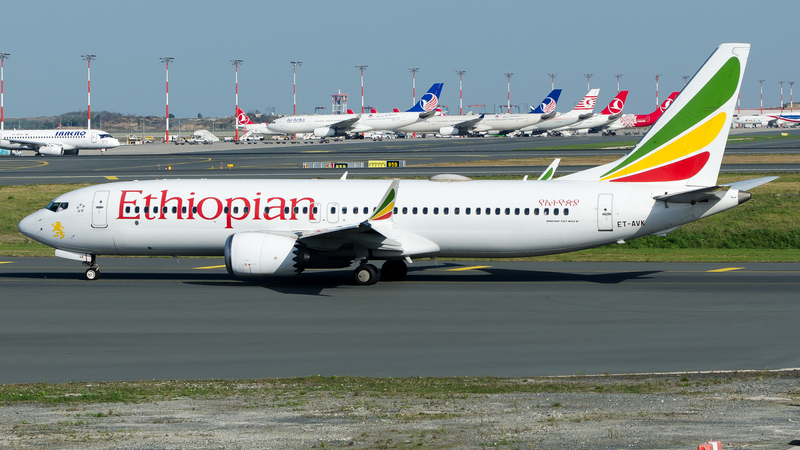
Q400 Fleet Underpins Ethiopian’s Domestic Operation
Ethiopian’s short-haul domestic system is centered on the De Havilland Q400, the high-speed turboprop previously marketed by Bombardier. The airline’s current fleet listing identifies 28 Q400s for regional and domestic passenger services.
Ethiopian lists two principal cabin layouts for the aircraft: a 71-seat configuration with seven Cloud Nine business-class seats and 64 economy seats, and a 78-seat all-economy arrangement. The type’s combination of capacity, field performance and lower trip cost than a mainline jet makes it suited to linking ADD with Ethiopia’s regional airports while still supporting multiple daily rotations where demand warrants them.
The carrier has used the Q400 as the core aircraft of Ethiopian Express for more than a decade. Its two-class examples were developed with a larger baggage area, reclining economy seats, a hot galley and a separate forward lavatory, features intended to provide a consistent connecting product for passengers arriving from Ethiopian’s long-haul network.
Suspending three destinations should leave Ethiopian with some flexibility to redeploy aircraft and crews elsewhere in its domestic schedule. The more difficult issue is preserving connectivity for communities that had regained reliable air service only after the 2022 peace agreement and subsequent airport repairs.
Resumption Depends on Airport Access
Ethiopian has not announced a revised timetable or a limited-service alternative. Its statement makes the restart conditional on a later operational decision, rather than assigning an initial suspension period.
That approach reflects the nature of the disruption. Reopening the routes will require more than a routine schedule adjustment: Ethiopian will need confidence that airport authority, ground access, communications and security arrangements are stable at MQX, AXU and SHC.
The African Union has asked the parties to resume direct talks under the Pretoria agreement and has tasked former Nigerian President Olusegun Obasanjo, its high representative for the Horn of Africa, with renewed diplomatic engagement. Until that process produces an operational change on the ground, Tigray’s three scheduled airports are likely to remain outside Ethiopian’s network.
Bottom Line
The immediate effect falls on travelers whose journeys depend on Addis Ababa for onward domestic or international connections. Unlike the closure of a single regional station, the simultaneous loss of Mekelle, Axum and Shire removes the practical redundancy within Tigray’s air network. Passengers cannot simply be redirected through another nearby Ethiopian destination while all three airports remain unavailable.
For Ethiopian Airlines, the suspension is manageable as a fleet-planning event but significant as a network development. The carrier invested aircraft, airport resources and schedule capacity in rebuilding northern domestic links after 2022. Another extended interruption would reverse part of that recovery and weaken one of the central functions of Ethiopian Express: maintaining dependable access between the capital and regional communities.
The key indicator will be whether Ethiopian can regain normal, uncontested access to all three airports or initially restores one route, most likely the higher-volume Mekelle service, ahead of the others. Any restart announcement will signal more than a timetable change; it will be an early measure of whether the latest military escalation is being contained or becoming a prolonged constraint on civilian aviation in northern Ethiopia.
Keep reading FlyMag
Get the Daily Brief in the morning or the Route Watch weekly recap on Fridays. Or both.