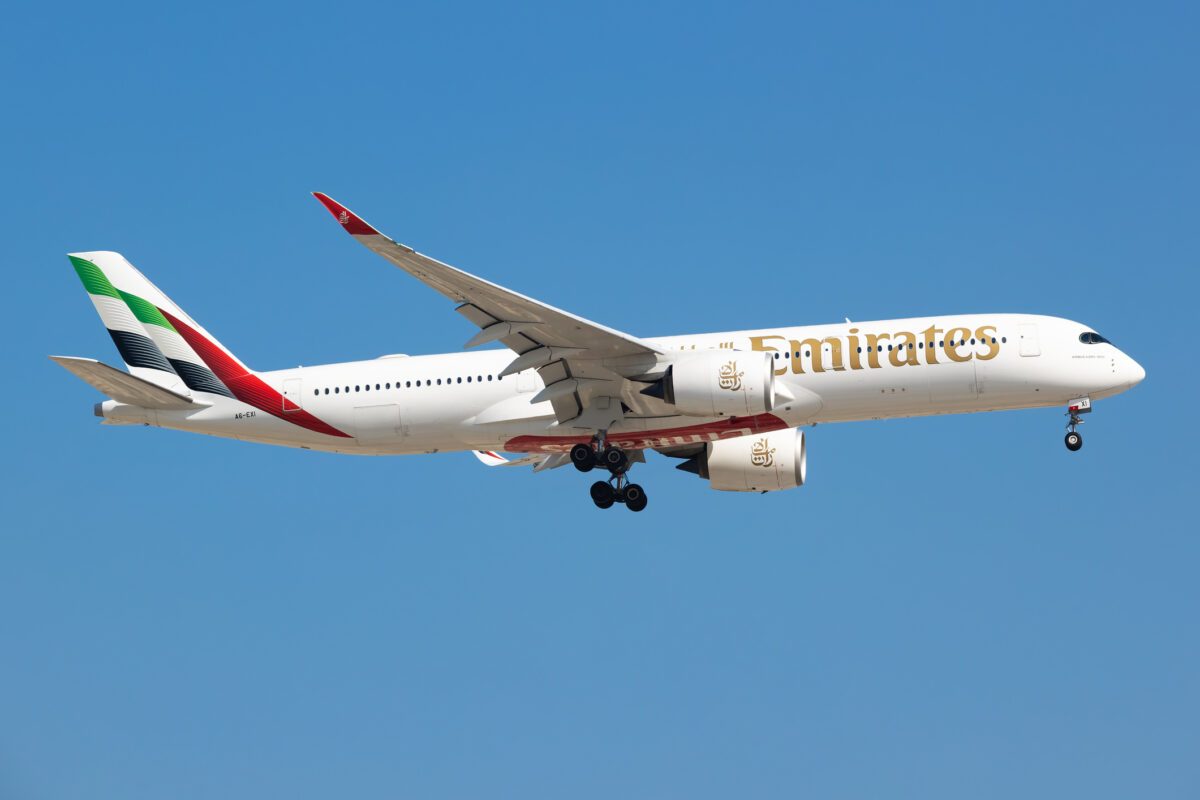
Emirates has begun flying the Airbus A350-900 between Dubai International (DXB) and Orlando International (MCO), putting its newest aircraft type on a scheduled United States route for the first time.

The aircraft entered service on the route on November 1, replacing the Boeing 777 previously assigned to Orlando. Emirates is operating the route daily as EK219 from Dubai and EK220 from Orlando, according to the airline’s deployment announcement.
Orlando is the second North American destination in Emirates’ A350 network. The airline introduced the type between Dubai and Montréal (YUL) in February 2026, making the Canadian city the first point in its wider Americas network to receive the aircraft.
Read our stories in your inbox
Two aviation newsletters. Zero fluff.
A 16-Hour Westbound Schedule
EK219 is scheduled to leave DXB at 3:05 a.m. and arrive at MCO at 10:20 a.m. local time. With Orlando on Eastern Standard Time during the winter season, the published schedule gives the westbound flight a block time of 16 hours and 15 minutes.
EK220 departs Orlando at 8:20 p.m. and reaches Dubai at 7:10 p.m. the following day, producing a scheduled eastbound block time of 13 hours and 50 minutes. The substantial difference reflects the prevailing winds encountered on the westbound crossing.
The timing preserves Emirates’ established early-morning departure bank from Dubai while placing the return into DXB in the evening. That arrival provides onward connections across parts of the airline’s Asian, African and Middle Eastern network, although the precise options vary by day and destination.
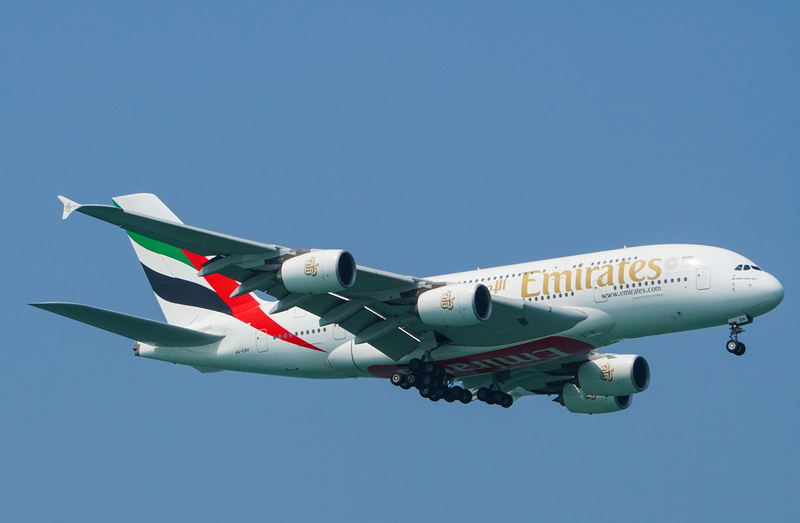
The change is an aircraft substitution rather than a new city pair. Emirates has served Orlando since September 2015, when it launched the Florida gateway as its 10th destination in the United States. The inaugural Orlando service was normally assigned a Boeing 777, although the airline sent an Airbus A380 for the first flight.
Emirates Uses Its 298-Seat Long-Haul A350
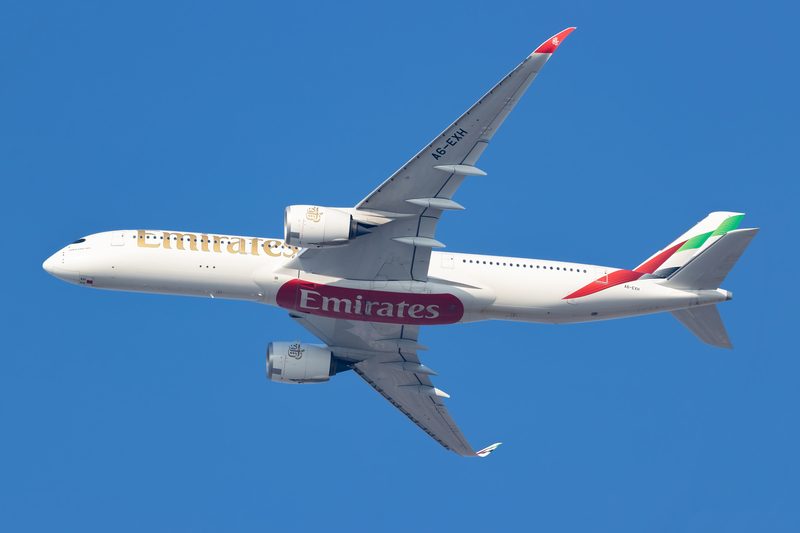
The Orlando aircraft has 298 seats across three cabins: 32 in Business Class, 28 in Premium Economy and 238 in Economy. It is Emirates’ lower-density, long-haul A350 configuration rather than the 312-seat layout used on some shorter missions.
Business Class is arranged 1-2-1, giving every passenger direct aisle access. Emirates’ A350 specifications list a 44-inch seat pitch, a seat width of 21 inches and a 20-inch 4K entertainment screen. The seats convert into fully flat beds.
Premium Economy uses a 2-3-2 layout with 39 inches of pitch and 19.5-inch-wide seats. Economy is configured 3-3-3, with a published pitch of 31 to 32 inches and a width of 18.4 inches. Both cabins have 13.3-inch 4K screens.
Compared with Emirates’ initial 312-seat A350 layout, the long-haul version retains the same 32-seat Business Class cabin but increases Premium Economy from 21 to 28 seats. Economy falls from 259 to 238 seats. That redistribution gives Emirates a larger intermediate cabin for a sector on which the distinction between Economy and Business Class is especially pronounced.
The move also changes the product mix at Orlando. The A350 has no First Class cabin, concentrating the premium offering on Business Class and Premium Economy. In return, MCO gains Emirates’ latest cabin platform, including direct aisle access throughout Business Class, Bluetooth connectivity, high-output USB-C charging and the carrier’s latest generation of its ice entertainment system.

The A350 Takes Over From the Boeing 777
The A350-900 is designed for missions comfortably beyond the distance between Dubai and Central Florida. Airbus lists the A350-900 with a maximum range of about 8,600 nautical miles, depending on configuration and operating assumptions.
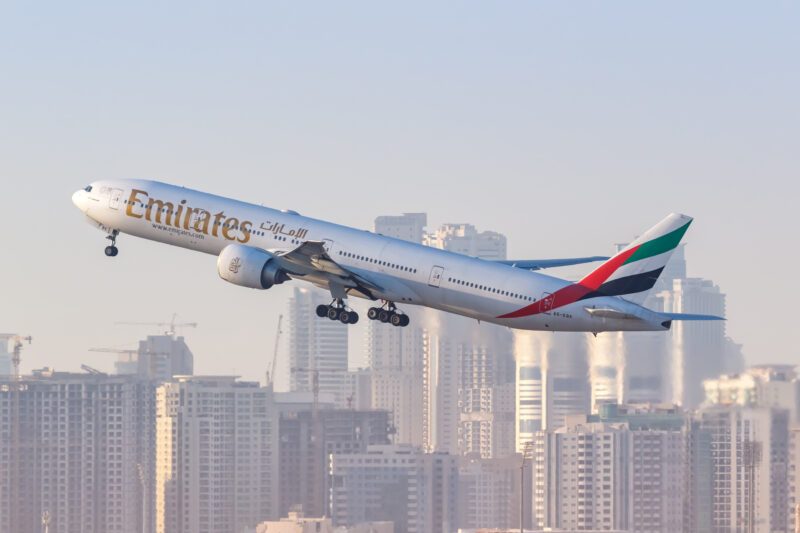
Its composite-intensive airframe, Rolls-Royce Trent XWB engines and long-range payload capability make it suited to a route where the westbound schedule exceeds 16 hours. The aircraft also gives Emirates an alternative to the Boeing 777-300ER on long sectors that do not require the capacity of an Airbus A380.
For passengers, the more consequential distinction is cabin generation. Emirates is simultaneously adding new A350s and refurbishing existing A380s and 777s, but the factory-delivered A350 provides the latest product without waiting for an older aircraft to pass through the retrofit program.
Orlando follows Montréal, where Emirates introduced the A350 in February 2026. Montréal remains a daily A350 operation, meaning Emirates now has two North American routes on the type while the remainder of its passenger network in the region continues to rely principally on the 777 and A380.
Orlando Has Become an Established Emirates Market
The aircraft change comes after Emirates passed a decade of operations at MCO. The airline said in its 10th-anniversary review that it had carried more than 1.1 million passengers on the route across over 4,700 flights by September 2025.
Emirates also reported moving more than 14,000 metric tons of cargo during that period. The route connects Central Florida with Dubai while also drawing connecting traffic from markets in South Asia, the Middle East and Africa.
The Orlando assignment forms part of a broader acceleration in Emirates’ A350 deployment. In September, the airline said the type was serving 30 destinations from Dubai and that the total would reach 36 by the end of 2026. The carrier also expected six additional A350 deliveries during the final months of the year.
Bottom Line
For Orlando, the A350’s arrival is primarily a product upgrade rather than a capacity announcement. Emirates is placing its newest long-haul cabin on a mature route with more than a decade of operating history, while introducing Premium Economy as a permanent and clearly defined part of the market. The trade-off is the disappearance of First Class, leaving Business Class as the highest cabin available on the nonstop service.
The deployment also clarifies how Emirates intends to use the A350 alongside its larger Boeing 777 and Airbus A380 fleets. The 298-seat configuration gives the airline a purpose-built aircraft for very long missions where range, fuel performance and a substantial premium cabin matter more than maximum gauge. Orlando’s 16-hour westbound schedule is a more revealing test of that role than the shorter regional routes on which Emirates first introduced the type.
The next point to watch is how quickly the A350 spreads across Emirates’ remaining US gateways as deliveries increase. Orlando and Montréal show that the airline is willing to move established 777 routes to the twinjet, but fleet availability will determine whether the type remains concentrated on selected markets or becomes a broader fixture across the carrier’s North American schedule.