Turkish Airlines is preparing to move its long-haul business class toward fully enclosed suites, beginning with new-generation widebody deliveries before extending the product to older aircraft through cabin refurbishments.
The airline’s Crystal Business Class Suite represents more than another seat update. It is intended to reduce the large product gap between Turkish Airlines’ newest Airbus A350-900 and Boeing 787-9 cabins and the open layouts still installed on much of its Airbus A330 and Boeing 777-300ER fleet.
Turkish Airlines unveiled Crystal in 2024 after developing it with TCI Aircraft Interiors, an airline affiliate. In outlining the rollout, then-chairman Ahmet Bolat said the suites would first appear on factory-new A350 and 787 aircraft entering the fleet from 2026, followed by refurbished A330s and 777s.
Read our stories in your inbox
Two aviation newsletters. Zero fluff.
Crystal Adds Doors and More Personal Space
The most visible change is the sliding suite door. Turkish Airlines’ present A350-900 and 787-9 business-class products provide direct aisle access but remain open to the aisle, while its older widebody cabins offer substantially less separation between passengers.
According to TCI’s current specifications, Crystal has a 44-inch seat pitch, a 22-inch-wide seat and a fully flat bed measuring 76 inches. The suite includes a padded headboard, a wide footwell and preset upright, relaxation and bed positions.
The seat’s privacy package combines the sliding door with a touch-controlled divider between the center suites. That allows passengers traveling together to retain some connection while giving solo travelers a more enclosed space. Direct aisle access is standard throughout the cabin.
Each suite also has a 22-inch inflight entertainment display, two USB-C ports, wireless charging and an enlarged work and dining surface with a personal-device holder. Enclosed storage and ambient lighting are integrated into the shell rather than added as separate fittings.
The design follows Turkish Airlines’ broader “Flow” cabin language, using rounded forms, marble-effect surfaces and rose-gold accents. Materials including leather and fabric are sourced in Türkiye, giving the airline greater control over the appearance of a product intended to become its long-term business-class standard.
A Widebody Fleet With Several Different Products
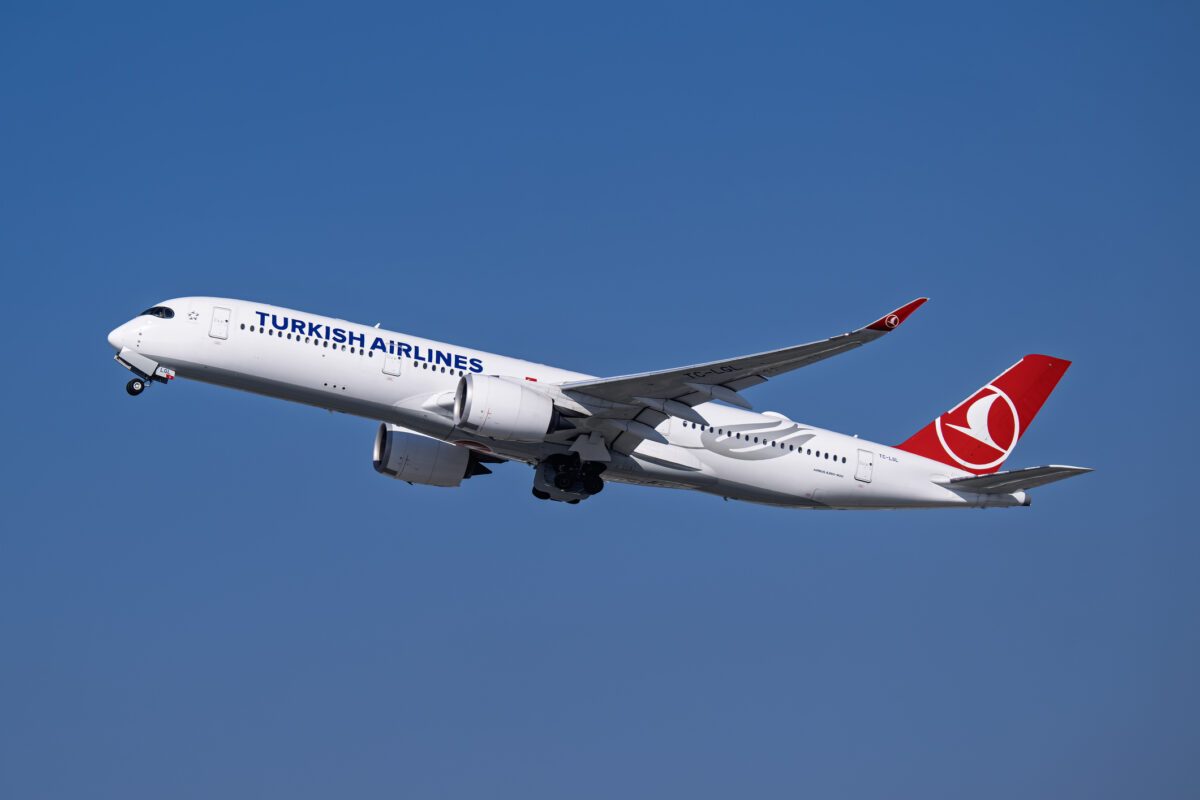
Turkish Airlines already made a significant step forward when it introduced the Boeing 787-9 in 2019 and subsequently added the Airbus A350-900. Its 787 business cabin uses a 1-2-1 layout, gives every passenger direct aisle access and provides an 18-inch entertainment screen.
That arrangement is considerably more private than the cabins on many of the airline’s older aircraft, but it does not have doors. The staggered seat also places some passengers relatively close to the aisle, making the experience dependent on seat selection even within the same aircraft.
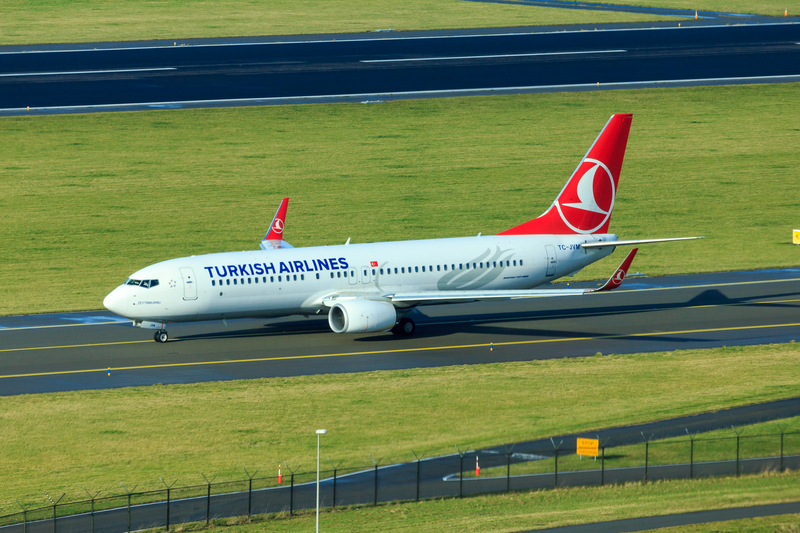
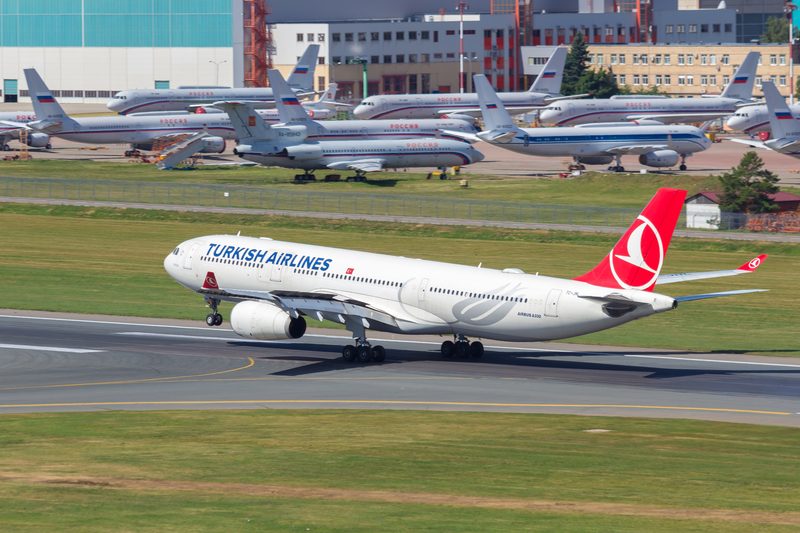
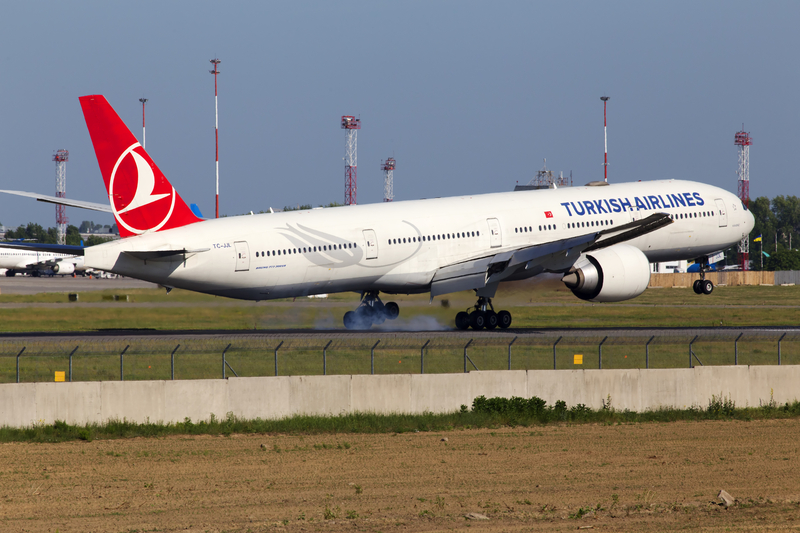
The largest contrast is with the Boeing 777-300ER. Turkish Airlines’ current 777 business seat converts into a flat bed and has a published pitch of 198 centimeters, but the cabin’s open arrangement does not provide direct aisle access from every position. Its high-density layout has allowed the 777 to carry a large premium cabin, although the physical product no longer matches what travelers encounter on the airline’s newer twinjets.
The A330 fleet adds another layer of variation. Turkish Airlines operates multiple A330 configurations, meaning that the experience can differ by aircraft even before an operational equipment substitution is considered.
This is a significant issue at Turkish Airlines’ scale. Its year-end 2025 fleet disclosure listed 34 Boeing 777-300ERs and 49 passenger A330s, compared with 33 A350-900s and 26 787-9s. The carrier therefore cannot create a consistent long-haul product solely by assigning newer aircraft to selected routes.

New Aircraft Create the Opening for Standardization
Turkish Airlines can introduce Crystal more efficiently through production-line installations before tackling the more disruptive work of refurbishing aircraft already in service. New deliveries also give the airline a growing base of aircraft built around the same cabin architecture.
Its Airbus order includes 50 additional A350-900s and 15 A350-1000s, alongside five A350 freighters. Airbus described the order as an efficiency and expansion program built around the A350 and A321 families when it announced the agreement for 220 aircraft in December 2023.
The A350 is particularly important to the cabin strategy because it can support both high-volume intercontinental services and the airline’s longest planned sectors. Turkish Airlines publishes a maximum range of 15,372 kilometers for the A350-900, whose composite structure and Rolls-Royce Trent XWB engines give it a lower fuel requirement than the older widebodies it will increasingly supplement.
The longer A350-1000 will add more cabin floor area and payload capability. That gives Turkish Airlines room to balance suite count, economy capacity and service areas on missions where premium demand must justify the operating cost of an exceptionally long sector.
Consistency will also become more valuable as the Istanbul Airport (IST) network expands. The carrier is adding capacity in markets including China, where Turkish Airlines has secured a larger summer 2026 schedule. A connecting carrier selling itineraries across several continents benefits when passengers can book the same core premium product without having to study the assigned aircraft.
Turkish Airlines Is Bringing Seat Development Closer to Home
Crystal also changes how Turkish Airlines manages its cabin supply chain. TCI developed the suite specifically for the carrier rather than Turkish Airlines selecting an off-the-shelf seat and adapting it with new finishes.
That relationship does not eliminate the certification and production challenges associated with a new business-class seat. Suite doors, electrical systems, inflight entertainment equipment and monument clearances all have to be integrated into each aircraft type. A seat certified for a factory-new A350 installation cannot simply be transferred to a 777 refurbishment without a separate engineering program.
It does, however, align the airline’s product planning with a domestic cabin-interiors business in which it has a direct interest. Turkish Airlines can influence the seat’s development, branding and future revisions while TCI gains a large launch platform across several widebody types.
The airline has continued to promote the product while development proceeds, including through an official Crystal suite presentation and subsequent appearances at major aviation and travel exhibitions.
The rollout will be gradual. New-delivery installations come first, while the A330 and 777 programs will require aircraft to be removed from revenue service and modified in phases. For passengers, the transition period will therefore include both Crystal-equipped jets and aircraft retaining the airline’s existing cabins.
Bottom Line
Crystal gives Turkish Airlines a way to bring its premium hard product closer to the strength of its catering, lounges and Istanbul connecting proposition. The immediate beneficiaries will be passengers assigned to the first newly delivered aircraft, particularly solo travelers who value direct aisle access and separation from the cabin. Couples can still use the adjustable center divider, making the layout more flexible than a uniformly enclosed arrangement.
The more consequential test will be the retrofit program. Installing suites on new A350s and 787s improves the top end of the fleet, but the airline will not achieve genuine consistency until a meaningful share of its 777s and A330s has been converted. Cabin density, certification progress and the time required for each modification will determine how quickly Turkish Airlines can close that gap without removing too much long-haul capacity at once.
The first confirmed aircraft, cabin seat count and route assignment will show how Turkish Airlines intends to use Crystal commercially. A large suite cabin on the A350-1000 would point toward premium-heavy ultra-long-haul flying, while an accelerated 777 refurbishment program would signal a broader effort to standardize the product across established high-capacity routes.
Keep reading FlyMag
Get the Daily Brief in the morning or the Route Watch weekly recap on Fridays. Or both.