Riyadh Air has moved a limited set of passenger services from Riyadh King Khalid (RUH) to Buraidah’s Al Qassim Airport (ELQ), creating a temporary operating base more than four hours by road from the Saudi capital.
The arrangement began October 25 and covers flights serving Cairo (CAI), Jeddah (JED), Dhaka (DAC), London Heathrow (LHR), Lahore (LHE) and Islamabad (ISB). Riyadh Air’s current operating notice says those are the only destinations it is serving until further notice.
Passengers can begin their journeys at a city check-in facility in Riyadh and take a complimentary coach to ELQ, or travel independently to the airport. New bookings must be made using ELQ as the departure or arrival point rather than RUH.
Read our stories in your inbox
Two aviation newsletters. Zero fluff.
A Four-and-a-Half-Hour Airport Transfer
Riyadh Air has established off-airport check-in at the InterContinental Durrat Al Riyadh, where passengers can complete document checks and hand over checked baggage before boarding the airline’s coach.
Under the temporary travel plan, city check-in opens eight hours and 15 minutes before departure and closes six hours and 30 minutes before departure. The coach leaves 15 minutes later, with Riyadh Air allowing four hours and 30 minutes for the road journey.
The planned arrival at ELQ is approximately one hour and 45 minutes before departure. Checked baggage is transferred directly to the aircraft, leaving passengers to proceed through security and, for international services, passport control.
Travelers making their own way to ELQ are asked to arrive at least three hours before departure. Airport check-in closes one hour and 15 minutes before the flight.
The additional ground sector is substantial even on the airline’s long-haul services. On the Jeddah route, the road transfer from Riyadh is considerably longer than the flight itself, although retaining the domestic service provides some connectivity between ELQ and Saudi Arabia’s principal western gateway.
Temporary Network Centers on Six Destinations
The revised operation keeps a mixture of domestic, regional and long-haul flying in place. London is Riyadh Air’s principal European route and was the carrier’s first international market, initially operated during its pre-launch phase before new-production Boeing 787-9 operations began.
Cairo and Jeddah provide shorter sectors that can help maintain aircraft utilization, while Dhaka, Lahore and Islamabad serve large travel markets between Saudi Arabia and South Asia. The selection gives Riyadh Air a more balanced temporary schedule than one built entirely around long-haul flying.
Flights outside the six-city plan are not included in the airline’s temporary ELQ operation. Riyadh Air has also published extensive cancellations and is allowing affected passengers to change eligible bookings as it works through the disruption.
The carrier has not set a date for returning the operation to RUH. Its wording describes the Al Qassim arrangement as continuing until further notice, making it more than a short series of diversions while still stopping short of a permanent change to its hub strategy.
Operations Follow Attacks at Riyadh Airport
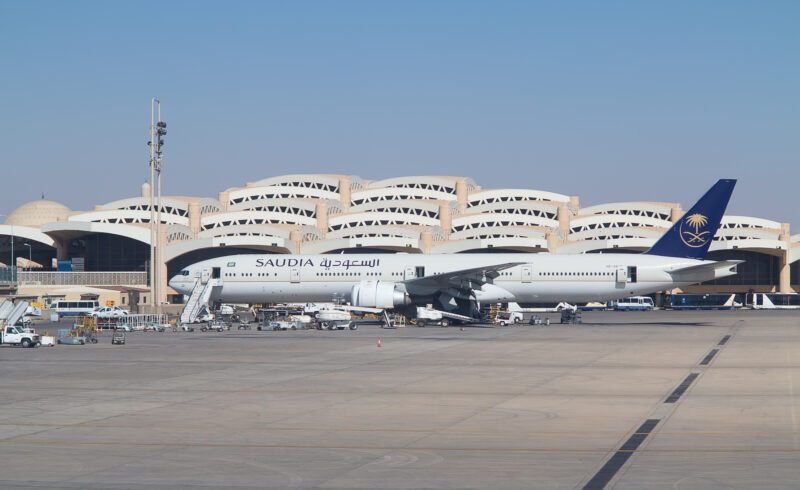
Riyadh Air’s travel advisory attributes the disruption to the closure of RUH. The airport has been targeted repeatedly during October.
Saudi Arabia’s General Authority of Civil Aviation said two attacks occurred on October 8. One struck airport facilities and another targeted a Saudia aircraft. Three Saudi citizens were killed, other people were injured and material damage was reported. GACA initially said operations had resumed after emergency teams responded.
A further GACA statement reported another attack on October 11, with injuries and an assessment of airport facilities underway. Saudi authorities separately said air defenses had intercepted a cruise missile near the airport that day.
The closure has direct consequences for Riyadh Air because the new carrier built its schedule around connections at a single home base. Moving selected flights to ELQ preserves a portion of the network, but the road transfer prevents the substitute airport from reproducing the tight connecting structure planned at RUH.
Widebody Flying From a Regional Airport
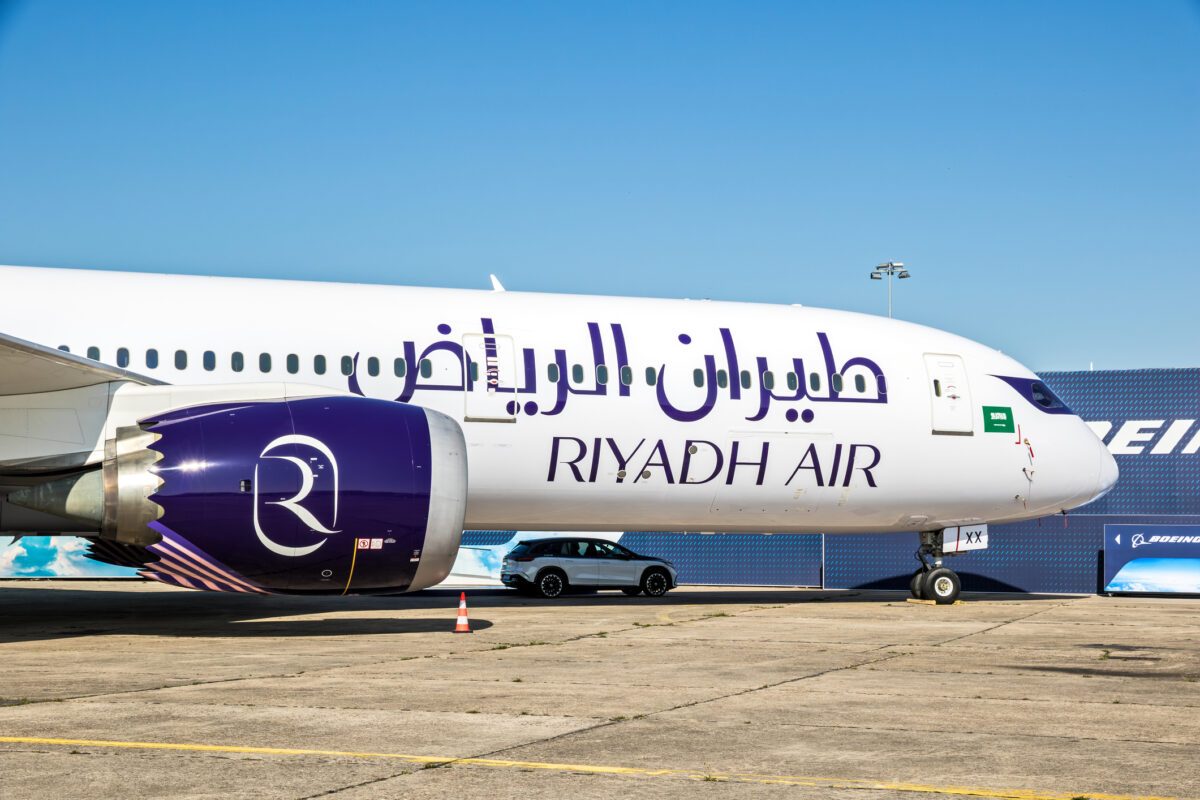
Riyadh Air is operating its commercial network with the Boeing 787-9. Its aircraft carry 290 passengers in four cabins: four Business Elite seats, 24 Business seats, 39 Premium Economy seats and 223 Economy seats.
The airline’s published cabin configuration uses direct aisle access and fully flat seats in both business sections, a 2-3-2 Premium Economy cabin and a 3-3-3 Economy layout. The 787-9’s range makes the same fleet suitable for the short Jeddah sector and longer services to London and South Asia, avoiding the need to introduce another aircraft type during the relocation.
Operating the 787 from ELQ nevertheless shifts widebody passenger processing, baggage handling, catering and ground support away from the purpose-built hub operation in Riyadh. Riyadh Air’s city check-in and baggage-transfer system reduces pressure on the terminal while preserving a Riyadh point of sale for the flights.
Bottom Line
The Al Qassim plan gives Riyadh Air a workable form of operational continuity, but not a replacement hub. Passengers still originating in Riyadh face an unusually long surface journey, while connecting traffic loses the central advantage on which the carrier’s network was designed. The arrangement is most useful for travelers already in Al Qassim and for passengers who value keeping their original flight over changing airlines or travel dates.
For Riyadh Air, the decision shows the value of having a domestic airport capable of accepting its 787 operation at short notice. It also exposes the concentration risk facing a young airline with one aircraft family, one hub and a rapidly expanding bank of international services. Maintaining six routes protects crew currency, aircraft utilization and a measure of commercial presence while RUH remains unavailable.
The next development to watch is whether Riyadh Air can restore part of its Riyadh operation before rebuilding the full connecting schedule. A prolonged stay at ELQ would require the airline to keep balancing operational resilience against the passenger burden of an eight-hour-plus preflight process from the capital.