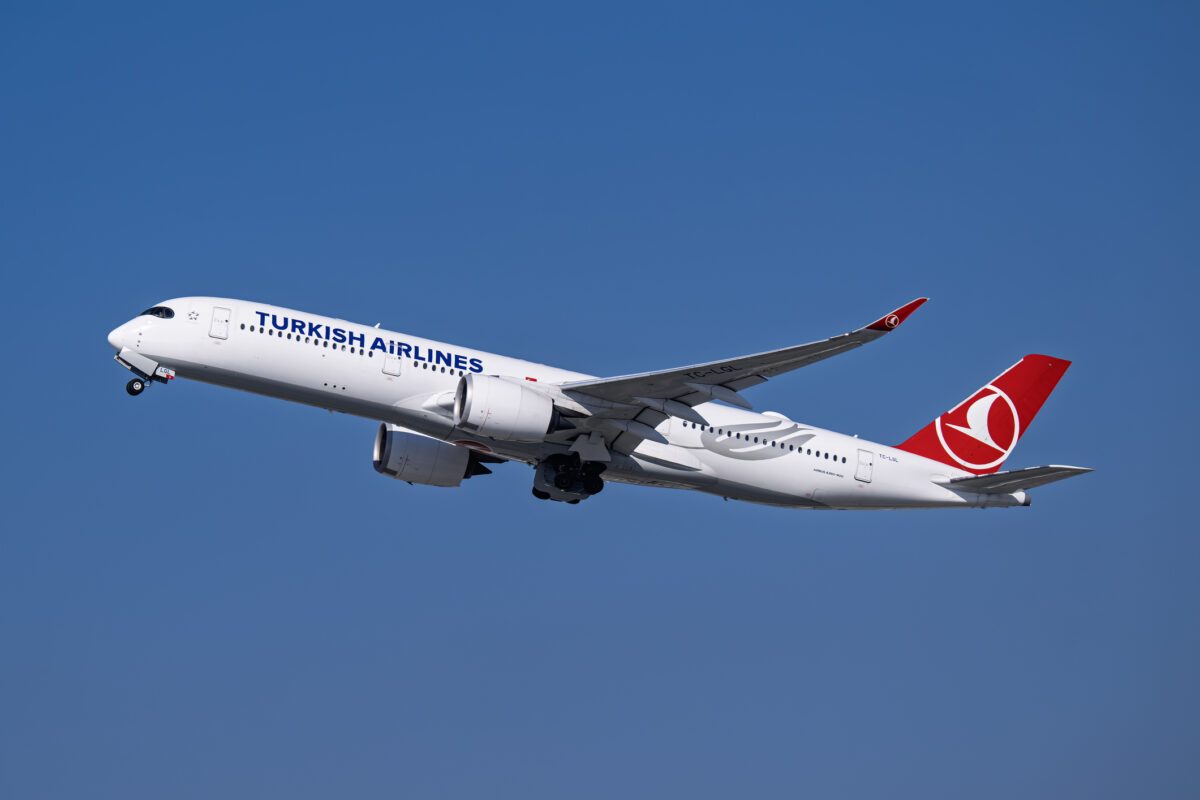
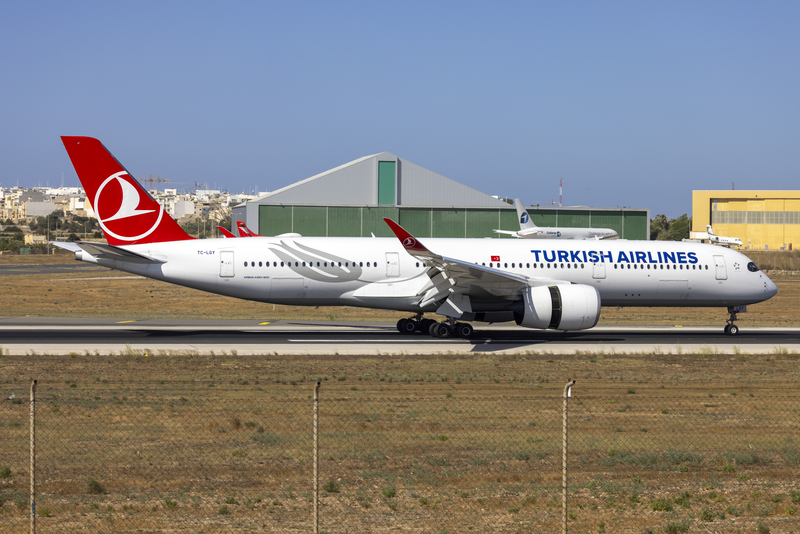
A Turkish Airlines Airbus A350-900 returned to its gate at Newark (EWR) after the crew reported that two passengers were fighting and a passenger required medical attention.
The incident occurred during the departure of flight TK30 to Istanbul (IST) on October 13, 2026. The aircraft, TC-LGZ, ultimately took off at 2:17 a.m. EDT, 1 hour and 40 minutes after its scheduled runway departure time, according to operational data for the flight and its Thai Airways codeshare.
TK30 reached its destination without further incident. It arrived at the gate in Istanbul at 6:19 p.m. local time, 1 hour and 14 minutes behind schedule.
Read our stories in your inbox
Two aviation newsletters. Zero fluff.
Cabin Report Prompted Return to Gate B63
The aircraft had left Gate B63 and was taxiing when the flight crew contacted Newark ramp control about a passenger problem. In a recording of the radio exchange published by You Can See ATC, the pilots initially sought a way to reconnect with ground personnel while they obtained more information from the cabin.
The crew then advised ramp control that two passengers were fighting. After consulting the cabin chief, the pilots requested a return to the gate, reporting both the confrontation and a passenger with a medical issue.
Ramp control directed the A350 back to Gate B63, where Turkish Airlines operates from Terminal B. The crew changed to the tower frequency and requested police officers, security staff and medical personnel.
The pilots told the tower that two passengers would be removed from the aircraft. The radio exchange did not establish whether the passenger requiring medical assistance was one of the two involved in the confrontation.
The tower advised the crew that the Port Authority and Port Authority Police would be notified. Because the aircraft was already away from the stand, controllers and the crew then had to arrange a route that would bring the widebody back into the Terminal B ramp system.
A350 Had to Taxi Around for the Return
The crew asked ramp control whether a tug could reposition the aircraft while its engines were shut down. Ramp control said no pushback vehicle was available for the maneuver and instructed the pilots to taxi out onto Taxiway Alpha before re-entering the ramp through Delta Mike.
After confirming that the surrounding area was clear, the tower gave the pilots discretion to use an available taxi route back toward parking. Controllers held nearby traffic as the A350 maneuvered toward the gate.
The exchange illustrates the division of responsibility around a congested terminal. Newark tower controlled the aircraft’s movement on the airport taxiway system, while ramp personnel handled access to the parking area. The crew moved between the two frequencies as it worked its way back to B63.
Returning before takeoff allowed the airline and airport authorities to deal with the disturbance without an airborne diversion, fuel jettison or overweight landing. It also meant the aircraft could continue to Istanbul once the cabin had been secured and the operational response was complete.
Flight Departed About 90 Minutes Late
TK30 had been scheduled to leave its gate at 12:25 a.m. and take off at about 12:37 a.m. The recorded operational timeline shows the final gate departure at 1:57 a.m., followed by takeoff 20 minutes later.
The 92-minute gate delay is consistent with the time needed to return the aircraft to its stand, arrange the police and medical response, address the passengers involved and prepare the cabin for another departure.
The aircraft was Turkish Airlines A350-900 TC-LGZ. The carrier describes the A350-900 as a long-range widebody powered by Rolls-Royce Trent XWB engines, with a published maximum range of 15,372 kilometers.
Airbus currently lists a maximum range of 15,750 kilometers, or 8,500 nautical miles, for the high-gross-weight A350-900. That capability gives the type ample margin for the approximately 4,350-nautical-mile Newark-Istanbul sector and makes it a natural fit for Turkish Airlines’ overnight transatlantic schedule.
The type’s capacity also raises the operational cost of a gate return. Cabin, ramp, dispatch and security teams must coordinate a response involving a large passenger load while preserving crew-duty time and the aircraft’s onward availability. In this case, the delay was partly recovered during the eastbound crossing, reducing the arrival impact to 74 minutes.
Passenger Violence Can Trigger Federal Action
The Federal Aviation Administration’s definition of unruly conduct includes physically assaulting or threatening another person aboard an aircraft. Airlines may report incidents to the FAA for civil enforcement, while police and federal prosecutors separately determine whether criminal action is appropriate.
For the operating crew, however, the immediate decision was operational rather than investigative. A physical confrontation had been reported in the cabin while the aircraft remained on the ground, and the pilots had a direct means of placing the passengers in the hands of airport authorities.
The return to B63 delayed the flight but avoided carrying an unresolved security and medical problem onto an overnight transatlantic sector. Once the response at Newark was completed, TK30 departed with the same aircraft and continued to Istanbul.
Bottom Line
The decisive factor was timing. Because the disturbance developed before takeoff, the crew could return to the terminal and transfer responsibility to police, security and medical personnel. Had the same confrontation occurred after departure, Turkish Airlines would have faced a diversion decision involving landing performance, fuel, passenger reaccommodation and a substantially longer disruption.
The event also shows why a gate return can consume more time than the basic security response suggests. A twin-aisle aircraft cannot simply reverse course on a terminal ramp. The A350 had to move between ramp and tower control, follow a taxi route back into Terminal B and wait for the stand response before it could be prepared for a second departure.
For Turkish Airlines, the important operational outcome was that the aircraft and remaining passengers continued to Istanbul with an arrival delay of a little over an hour. What follows for the passengers involved is a matter for the airline, airport police and, if a formal report is filed, federal authorities.