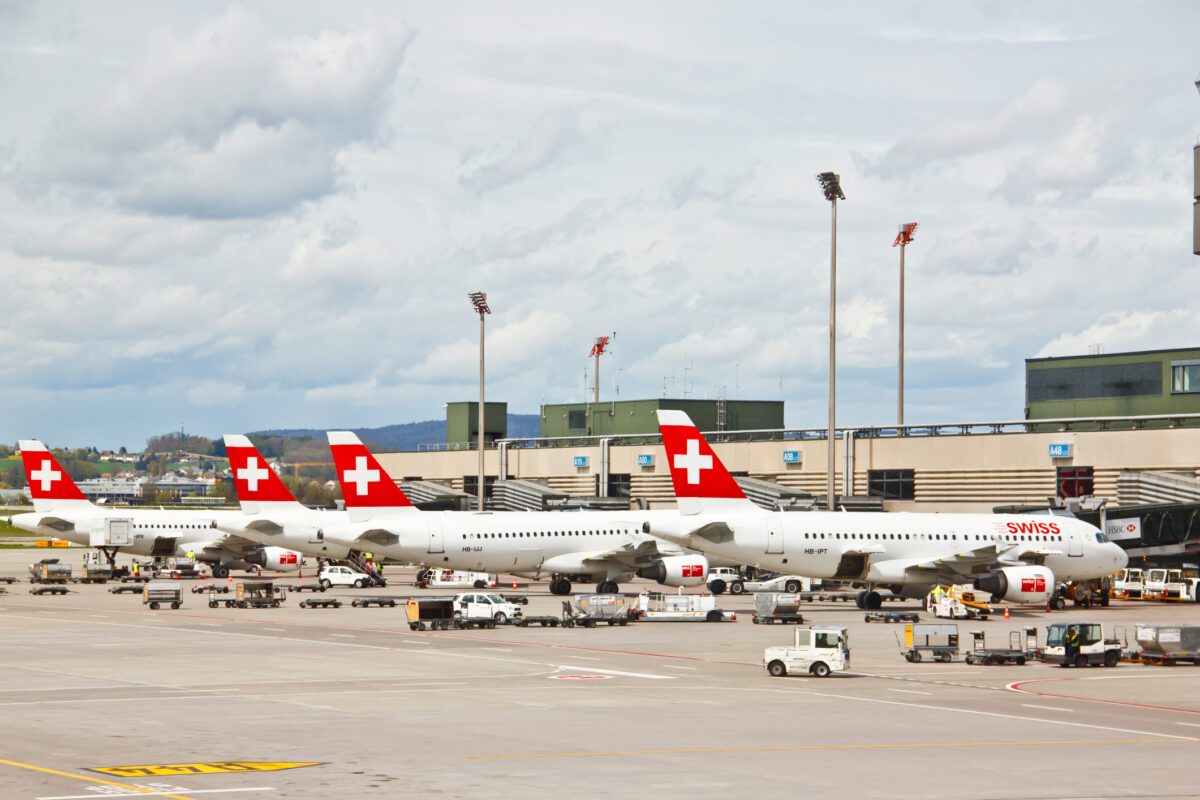
SWISS canceled 85 flights to and from Zurich (ZRH) on Friday, August 28, after repeated thunderstorms and lightning strikes brought parts of the airport’s ground operation to a standstill.

About 11,200 passengers were affected by the cancellations. Numerous flights that continued to operate were delayed by as much as three hours, with some running later still, according to an operational update issued by the airline.
The scale of the disruption increased sharply during the day. SWISS initially reported 27 cancellations and about 3,100 affected passengers around lunchtime. By late afternoon, the cancellation count had more than tripled, and the airline warned that further cuts during the evening remained possible.
Read our stories in your inbox
Two aviation newsletters. Zero fluff.
Lightning Repeatedly Closed the Ramp
The principal constraint was not simply rain over the airfield. Lightning detected near ZRH prompted several handling stops, requiring employees to leave the apron and move away from aircraft and other metal equipment.
Those safety closures suspend much of the work needed to turn an aircraft. Baggage and cargo cannot be loaded or unloaded, refueling stops, and teams cannot complete the servicing and dispatch work required before the next departure.
An aircraft may therefore be technically ready and its crew available, but still remain unable to depart because the ground process has not been completed. When multiple closures occur during the same operating day, unfinished work accumulates across stands, gates and baggage systems.
Zurich Airport has itself identified thunderstorms and lightning as a material operational risk. In its 2026 climate program, the airport said such conditions can require handling and refueling stops, produce temporary capacity restrictions and lead to delays, diversions and cancellations.
Friday’s storms also reduced the number of takeoffs and landings that could be accommodated. SWISS reported longer taxi times at ZRH and weather-related restrictions in Swiss airspace and neighboring sectors in Germany and France.
Delays Spread Through the Zurich Schedule
The disruption intensified toward the evening because aircraft scheduled to operate several sectors during the day carried delays into each subsequent flight. A late inbound arrival produces a late outbound departure even after the weather improves, particularly when the aircraft still requires unloading, cleaning, catering, refueling and a new baggage load.
That effect is especially significant in a banked hub operation. European arrivals feed long-haul departures and return to the network on later short-haul rotations, while inbound intercontinental flights connect passengers into successive European banks. A disruption affecting both the ramp and available airspace capacity can therefore break connections well beyond the flights directly exposed to a thunderstorm cell.
The cancellations affected an operation built around several aircraft sizes and mission profiles. SWISS’s company fleet listing showed 92 owned aircraft as of March 1, 2026, supplemented by wet-leased capacity.
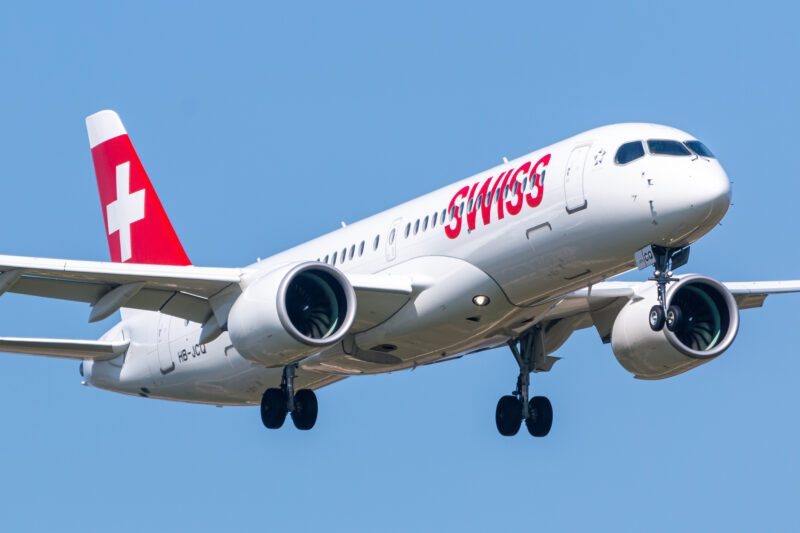
The Airbus A220-300 is the airline’s largest single owned fleet group, with 21 aircraft. SWISS configures the type with 145 seats and uses it extensively on European services. Its combination of capacity and range makes it well suited to feeding Zurich without placing the larger seat volume of an Airbus A320 or A321 into every market. It is also a high-cycle aircraft in the hub schedule, meaning a delayed turnaround can affect several sectors before the end of the day.
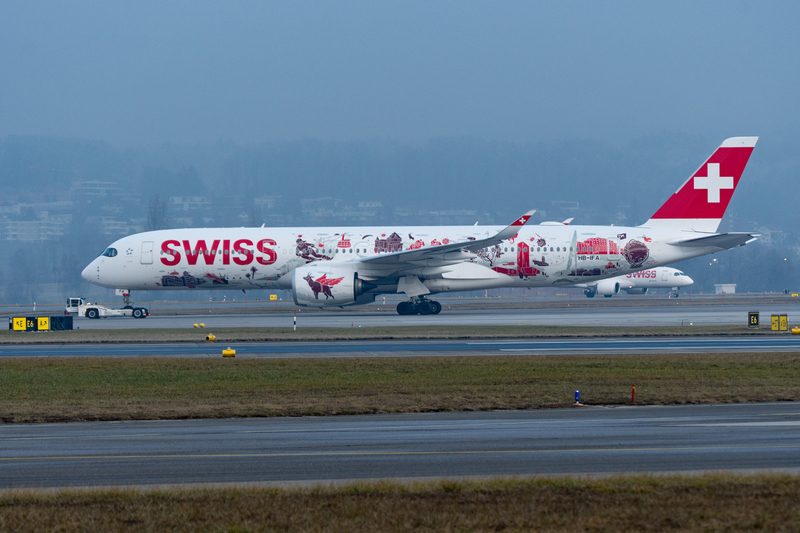
Friday’s ground stoppages also had implications for long-haul aircraft occupying contact stands for more complex turns. The airline’s Zurich operation includes Airbus A330, Airbus A340, Airbus A350 and Boeing 777 flights, which require larger baggage, cargo, catering and fueling processes. Interrupting those activities can consume stand time and ground resources even when the corresponding flight ultimately operates.
SWISS Commits to Passenger Expenses
SWISS said it would cover necessary expenses arising from the disruption, including hotel accommodation until the next available flight, meals, required taxi journeys and telephone costs. The airline instructed passengers to retain receipts and submit them to customer service for reimbursement.
The immediate recovery task extended beyond rebooking the 11,200 affected travelers. Operations teams also had to reposition aircraft and crews, restore baggage flows and prevent Friday’s delays from carrying into the following day’s first departure bank.
Storms Add to a Difficult Operational Summer
The event came three days after SWISS and Zurich Airport published their assessment of the peak summer season. In that joint operational review, the partners said unusual weather, airspace restrictions and geopolitical events had placed continued pressure on the Zurich system.
Between late June and mid-August, SWISS carried just under three million passengers on 22,160 flights. Its operating stability for the period was 97.1%, while overall punctuality was 58.7%. Zurich’s airport-wide departure punctuality stood at 56% in July.
The airport handled 3.33 million passengers in July, including 1.75 million carried by SWISS. On the summer’s busiest day, August 2, nearly 122,000 passengers used ZRH, with almost 62,000 traveling on SWISS.
Zurich and its airline partners use an Airport Operations Plan that distributes real-time information, including weather and gate changes, to about 7,400 users. That common operating picture can support faster decisions, but it cannot eliminate the physical constraints created when lightning removes employees from the ramp or thunderstorms reduce usable airspace.
Bottom Line
Friday’s disruption demonstrates how quickly repeated ramp closures can overwhelm an otherwise functioning hub. Each handling stop may be temporary, but the lost turnaround time cannot always be recovered between tightly scheduled flight banks. Once aircraft, crews, stands and connecting passengers fall out of sequence, selective cancellations become one of the few tools available to protect the remainder of the schedule.
The next operational test is the recovery rather than the weather event itself. SWISS must absorb displaced passengers while returning aircraft and crews to their planned rotations, particularly before the first morning wave from Zurich. Short-haul cancellations can create the space needed to stabilize the network, but they also remove feeder capacity for later long-haul departures.
The episode also gives added weight to the punctuality concerns SWISS and Zurich Airport raised earlier in the week. Shared operational data and improved coordination can shorten reaction times, but lightning-related handling stops are a hard safety limit. The measure of resilience is how much of the remaining schedule can be protected once that limit is imposed repeatedly during a peak operating day.
Keep reading FlyMag
Get the Daily Brief in the morning or the Route Watch weekly recap on Fridays. Or both.