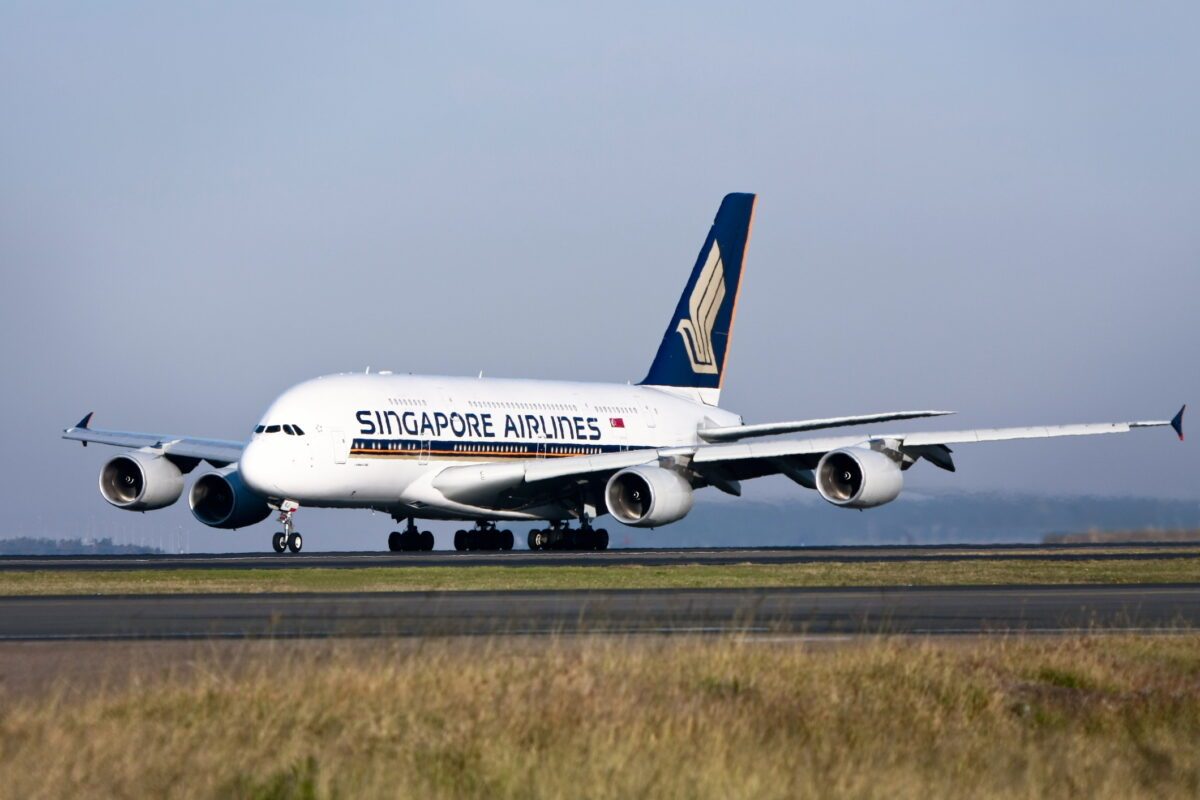
Singapore Airlines has been named the world’s best airline in the 2026 Skytrax World Airline Awards, ending Qatar Airways’ two-year run at the top of the passenger-voted ranking.


The 2026 results placed Qatar Airways second and Cathay Pacific third. ANA All Nippon Airways and Turkish Airlines completed the top five.
It is Singapore Airlines’ sixth victory in the awards’ top category. The carrier previously won in 2004, 2007, 2008, 2018 and 2023, according to Skytrax’s winner history. Qatar Airways, which took the title in 2024 and 2025, remains the record holder with nine wins.
Read our stories in your inbox
Two aviation newsletters. Zero fluff.
The awards were presented in London on September 18. Skytrax said more than 24.8 million travelers rated over 300 airlines during the survey period, which ran from September 2025 through August 2026.
Singapore Airlines Wins Across the Economy Product
Singapore Airlines also received awards for Best Airline in Asia, World’s Best Economy Class and World’s Best Economy Class Onboard Catering. The result gives the carrier recognition across the broader journey rather than concentrating its success solely in its premium cabins.
“This award is a testament to the dedication and professionalism of our people, who continually strive to uphold SIA’s renowned standards for service and operational excellence,” Singapore Airlines CEO Goh Choon Phong said in the carrier’s announcement of the award.
Scoot, the group’s low-cost airline, was named the World’s Best Long Haul Low-Cost Airline for a sixth consecutive year. The two results give the Singapore Airlines Group top-level recognition at both ends of its brand portfolio: a full-service network carrier competing heavily on product and service, and a lower-cost operator built for regional and long-haul leisure markets.
Singapore Airlines’ win comes as it prepares to reveal its next generation of long-haul cabins later in 2026. The airline’s June 2026 fleet update listed 150 passenger aircraft: 65 Airbus A350s, 28 Boeing 787-10s, 23 Boeing 737-8s, 22 Boeing 777-300ERs and 12 Airbus A380s.
The Airbus A350-900 is the core of that fleet and covers missions ranging from high-density regional flying to nonstop ultra-long-haul services. Singapore Airlines has committed S$1.1 billion to a 41-aircraft A350 retrofit program, spanning 34 long-haul aircraft and seven Airbus A350-900ULRs.
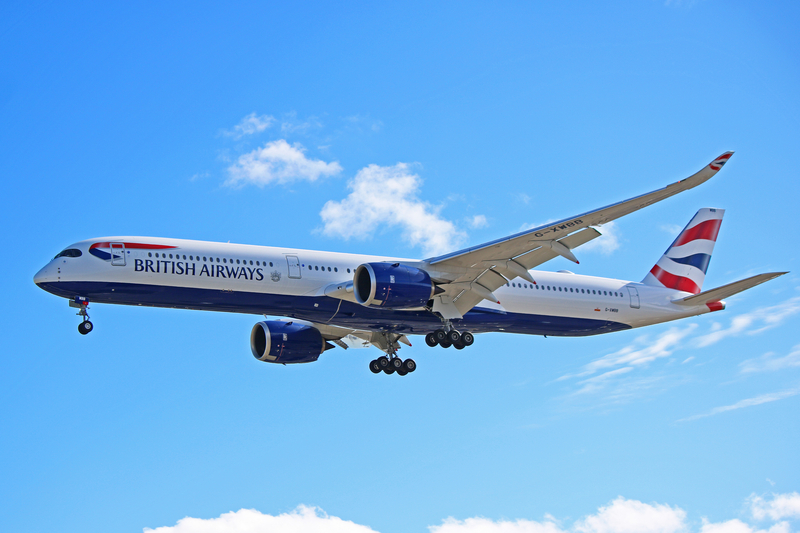
Under the announced plan, the standard long-haul aircraft will have 42 Business Class seats, 24 Premium Economy seats and 192 Economy seats after modification. The ULR fleet is set to receive four First Class seats, 70 Business Class seats and 58 Premium Economy seats. That premium-heavy layout is designed for the exceptionally long sectors on which payload, passenger comfort and high-yield demand matter more than maximum seat count.
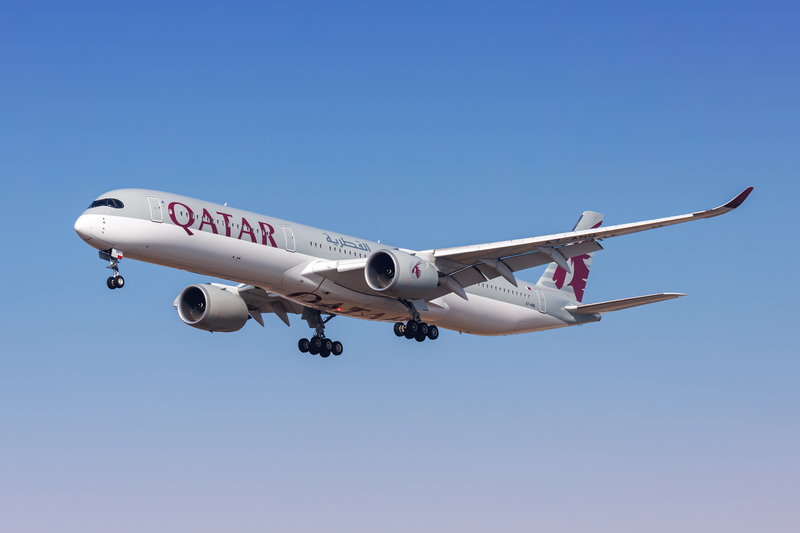
Qatar Airways Retains Its Premium-Class Lead
Second place did not leave Qatar Airways empty-handed. The Doha-based carrier collected four awards: World’s Best Business Class, Best Airline in the Middle East, World’s Best Business Class Lounge and the inaugural World’s Best Onboard Wi-Fi title.
The Business Class award was Qatar Airways’ 13th, while its Al Mourjan Business Lounge — The Garden took the lounge category for the eighth time. Qatar Airways also secured its 14th Best Airline in the Middle East award.
Those results preserve the airline’s authority in the parts of the product most closely associated with its brand. Qsuite combines closing doors with center seats that can be arranged into a four-person space, allowing families or colleagues to share a larger area while retaining the option of individual privacy.
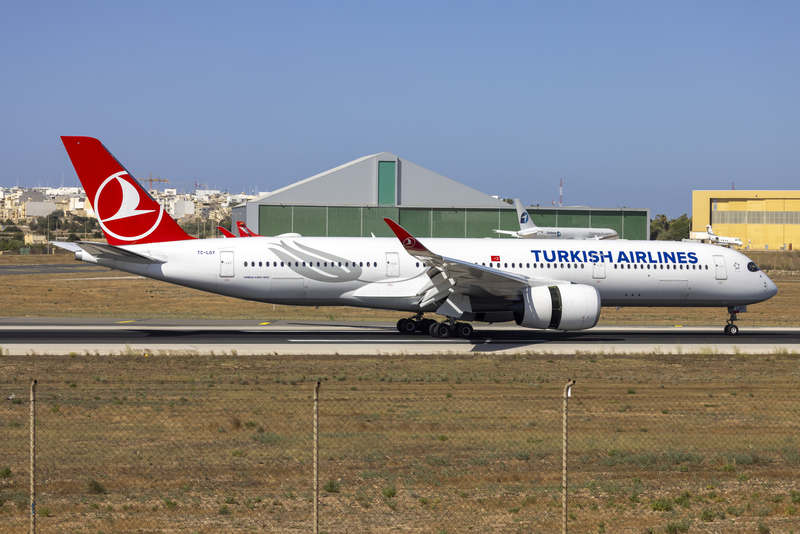
Connectivity has become another point of distinction. In its 2026 awards statement, Qatar Airways said it had installed Starlink on more than 150 widebody aircraft. The airline reported that more than 25 million passengers had used the service across over 96,000 flights, with as many as 340 Starlink-equipped departures operating each day.
That deployment helps explain why Skytrax introduced a dedicated Wi-Fi award. Connectivity is increasingly part of the core cabin proposition rather than an ancillary feature, particularly on long-haul aircraft where passengers expect enough bandwidth to work, stream content and remain connected throughout the flight.
Singapore Airlines plans to begin introducing Starlink in 2027 on selected Airbus A350-900 long-haul, A350-900ULR and Airbus A380 aircraft. Qatar Airways therefore enters the next survey cycle with a meaningful head start in one of the fastest-changing components of the onboard experience.
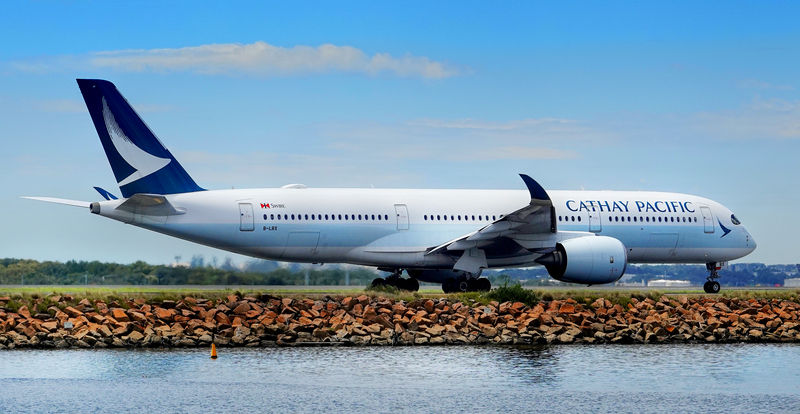
Cathay Pacific Holds Third Place
Cathay Pacific remained third overall while taking World’s Best Cabin Crew and World’s Best First Class Airline Lounge. Its redesigned The Wing, First lounge in Hong Kong underpinned the latter result.
The Hong Kong carrier said the awards sit alongside approximately HK$150 billion committed to fleet growth, new cabins, lounge development and digital systems. Cathay Pacific’s 2026 statement described the investment as part of its effort to strengthen both the airline and Hong Kong’s hub position.
The cabin crew result is particularly significant for an airline rebuilding capacity and staffing after the pandemic. It indicates that passengers continue to rate Cathay’s onboard delivery alongside the strongest Asian and Middle Eastern full-service carriers, even as its fleet and network restoration continues.
What the Ranking Measures
Skytrax’s ranking is a passenger satisfaction measure, not an assessment of balance-sheet strength, safety performance or schedule reliability. Its published methodology covers airport and onboard factors including check-in, boarding, staff service, seat comfort, cleanliness, meals, entertainment, Wi-Fi and value for money.
Customers score elements of the journey on a one-to-five scale, with weighting applied to account for differences in airline size. Skytrax says survey entries are screened for duplicate or ineligible submissions, respondents are not paid and airlines are not charged to participate or use the award branding.
The result therefore reflects how passengers judged the complete proposition over a 12-month period. Singapore Airlines’ combination of service, economy-class delivery and network-wide product consistency was enough to move it back ahead of Qatar Airways, even though the latter retained the strongest showing in Business Class and onboard connectivity.
Bottom Line
Singapore Airlines gains the most immediate commercial value from the result because the award arrives before the planned unveiling of its next long-haul product generation. It gives the carrier a strong platform from which to introduce new Airbus A350 cabins, refreshed KrisWorld entertainment and later Starlink connectivity. The harder task will be maintaining consistency while those products are phased into a large and varied fleet.
Qatar Airways’ second-place finish is less a broad reversal than a division of honors. Singapore Airlines won the overall passenger vote and economy categories, while Qatar Airways remained dominant in Business Class, lounges and high-speed Wi-Fi. That split shows where the premium-airline contest is moving: the leading carriers must now deliver both traditional service and a dependable digital product across increasingly diverse fleets.
The next survey cycle will capture more of that transition. Singapore Airlines’ new cabins and Cathay Pacific’s investment program will begin reaching more passengers, while Qatar Airways will have had another year to expand and normalize Starlink across its network. The overall title may continue to rotate, but the competitive field is becoming clearer: product renewal, consistent frontline service and usable connectivity now carry comparable weight.
Keep reading FlyMag
Get the Daily Brief in the morning or the Route Watch weekly recap on Fridays. Or both.