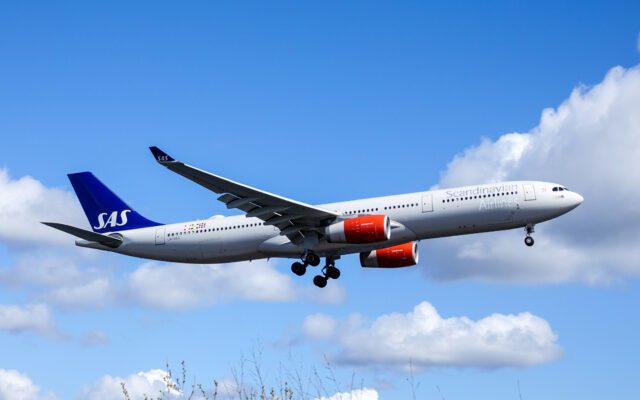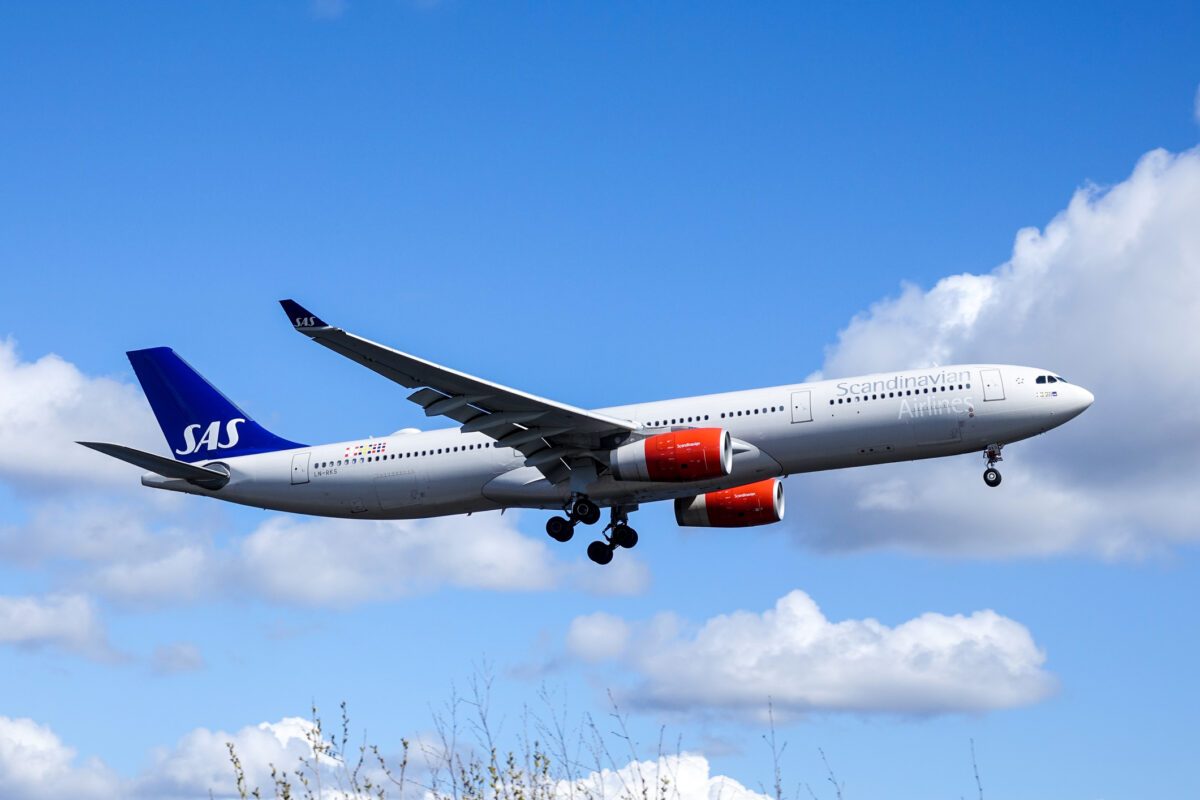
An SAS Airbus A330-300 operating from New York Kennedy (JFK) to Copenhagen (CPH) turned back during its Atlantic crossing and diverted to Newark (EWR) after the crew encountered a possible technical fault.

Flight SK916 departed JFK at 7:24 p.m. on Friday, October 23, 29 minutes behind schedule. The aircraft initially followed its planned northeastbound track but reversed course before beginning the oceanic portion of the flight. It landed safely at EWR at about 10:58 p.m., after approximately three hours and 34 minutes in the air.
SAS said the aircraft required a technical inspection and that affected passengers would be rebooked on the next available services to Copenhagen. The diversion ended the flight at an airport different from its point of departure, complicating the airline’s recovery effort and passengers’ access to their checked baggage.
Read our stories in your inbox
Two aviation newsletters. Zero fluff.
Flight Returned to a Different New York Airport
The decision to use EWR rather than return to JFK placed the aircraft at an airport from which SAS already operates long-haul flights. That gave the airline access to established ground handling and operational support, although transferring passengers, baggage and replacement crews between the two New York airports would still require additional coordination.
JFK and EWR are separated by the New York metropolitan area, making a surface transfer particularly difficult late in the evening. Passengers arriving at Newark after expecting an overnight flight to Denmark also needed accommodation or alternative transportation while SAS assembled onward itineraries.
Under SAS’s U.S. customer service plan, the airline says it will provide updated information about known diversions and generally attempt to arrange replacement travel. Its policy allows rebooking on another carrier when necessary, depending on availability and the circumstances of the disruption.
The plan also states that SAS may provide meals and accommodation during extended disruptions. Where those arrangements cannot be made directly, passengers may have to make reasonable purchases themselves and retain receipts for reimbursement.
A330 Remains Central to SAS Long-Haul Flying
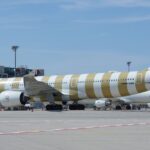
The aircraft operating SK916 was an Airbus A330-300 registered LN-RKR. SAS uses the twinjet as one of the principal types in its intercontinental fleet, particularly on routes linking Copenhagen with North America.

SAS configures its A330-300s with 266 seats and Rolls-Royce Trent 700 engines. The airline lists a range of 10,100 kilometers, comfortably covering the approximately 6,200-kilometer great-circle distance between New York and Copenhagen while retaining the payload capability required for a major transatlantic market.
The A330-300’s combination of capacity and lower-deck cargo space makes it well suited to dense overnight services into Copenhagen. The type carries substantially more passengers than SAS’s single-aisle Airbus A321LR but fewer than its 300-seat Airbus A350-900, giving network planners a useful middle option for established long-haul routes.
SAS operates eight A330-300s. The carrier confirmed that fleet size when it introduced an anniversary-liveried aircraft in March 2026, describing the A330 as part of a long-haul operation complemented by the A350 and A321LR. Each of the eight aircraft has 266 seats.
Airbus gives the standard A330-300 a maximum range of about 6,350 nautical miles and typical three-class capacity of 250 to 290 passengers. The manufacturer describes the type as suitable for both regional and long-haul operations, with its capacity and range placing the JFK–CPH sector well inside its normal operating envelope. The A330-300 has a 60.3-meter wingspan and a maximum takeoff weight of up to 242 metric tons.
Passenger Recovery Extends Beyond the Diversion
Because SK916 was operated by an EU carrier to an EU destination, passengers fall within the scope of European Regulation 261/2004 even though the flight originated in the United States. The regulation provides a choice between reimbursement and rerouting when a flight is canceled, along with meals, accommodation and transportation when an overnight stay becomes necessary.
SAS’s passenger-rights notice says travelers should be rerouted to their destination at the earliest opportunity under comparable conditions. It also provides for hotel accommodation and transportation between the airport and hotel when required.
Those care obligations are separate from fixed financial compensation. Whether compensation is payable depends on the cause of the disruption and the passengers’ eventual arrival time. A routine technical defect is not automatically an extraordinary circumstance under European case law, although the precise circumstances surrounding the fault would determine any claim.
The diversion also illustrates the difference between resolving an airborne technical concern and recovering the passenger operation. Landing the aircraft ends the immediate flight, but the airline must then source seats, hotel rooms and baggage handling while protecting onward connections at Copenhagen. With a widebody service, that recovery can involve several hundred disrupted itineraries even when the landing itself is uneventful.
Bottom Line
The crew’s decision to reverse course before committing to the Atlantic crossing kept the aircraft within reach of major airports and SAS support in the New York area. Newark also offered a practical recovery point because SAS already maintains a long-haul presence there, but using an airport different from the departure station shifted much of the disruption onto passengers and ground teams.
For SAS, the episode highlights the operational importance of its relatively small A330 fleet. Eight aircraft provide a significant share of the airline’s North American capacity, and the loss of one frame can quickly affect subsequent rotations. The key measure of the recovery is therefore not only how quickly the aircraft returned to service, but how effectively SAS moved the interrupted passengers and restored the planned widebody schedule.
The incident also puts SAS’s disruption procedures under scrutiny. Its published policies promise timely information, rerouting and overnight care, standards that become most consequential when a long-haul diversion reaches an alternate airport late at night. How consistently those commitments are delivered can shape the passenger impact long after the technical decision in the cockpit has been made.