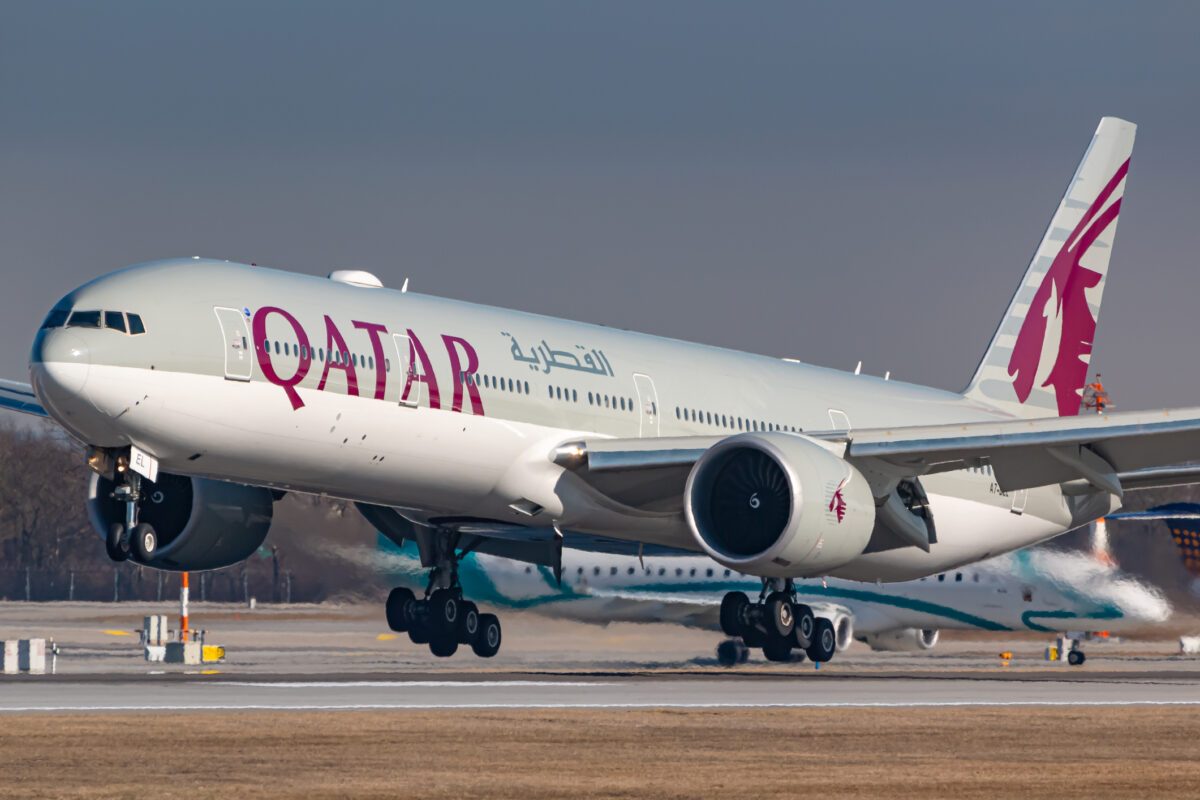
Qatar Airways will add Western Sydney (WSI) to its Australian network on Dec. 15, 2027, launching three weekly nonstop flights from Doha (DOH) with Boeing 777-300ER aircraft.


Tickets are scheduled to go on sale Dec. 19, 2026. According to the airline’s route announcement, Western Sydney will become its seventh Australian gateway and its second serving the Sydney metropolitan area.
The service will complement Qatar Airways’ operation at Sydney (SYD), rather than replace it. The carrier’s other Australian gateways are Melbourne (MEL), Brisbane (BNE), Perth (PER), Adelaide (ADL) and Canberra (CBR).
Read our stories in your inbox
Two aviation newsletters. Zero fluff.
Three Weekly Flights With a Late-Night Arrival
Flight QR906 will leave Doha at 1:40 a.m. every Monday, Wednesday and Friday, arriving at WSI at 11:45 p.m. local time. The first flight will operate on Wednesday, Dec. 15, 2027.
The return flight, QR907, will depart Western Sydney at 4:10 p.m. every Tuesday, Thursday and Saturday and arrive in Doha at 11 p.m. local time. The published timings therefore place the outbound and return services on different local calendar days, with the aircraft scheduled to arrive shortly before midnight and depart the following afternoon.
The 11:45 p.m. arrival demonstrates the scheduling flexibility Qatar Airways gains at WSI. Western Sydney operates around the clock, while Sydney’s existing airport is subject to a curfew between 11 p.m. and 6 a.m., apart from specified exceptions and limited shoulder-period operations.
That distinction gives Qatar Airways scope to time the new flight around connecting banks at DOH without fitting both ends of the operation inside Sydney’s established operating window. It also provides recovery margin for an ultra-long-haul service whose arrival would otherwise sit close to the curfew boundary.
Boeing 777-300ER Brings 354 Seats and Cargo Capacity
Qatar Airways will configure the Western Sydney aircraft with 354 seats: 42 Qsuite business-class seats and 312 economy seats. Free Starlink internet access will also be available.
At three weekly rotations, the route will introduce approximately 55,200 seats a year in each direction, or just over 110,000 directional seats across the round trip. The airport said in its announcement of the agreement that Qatar Airways intends to increase the route to daily service by the end of 2028. At the same aircraft gauge, daily operation would raise annual capacity to about 257,700 seats across both directions.
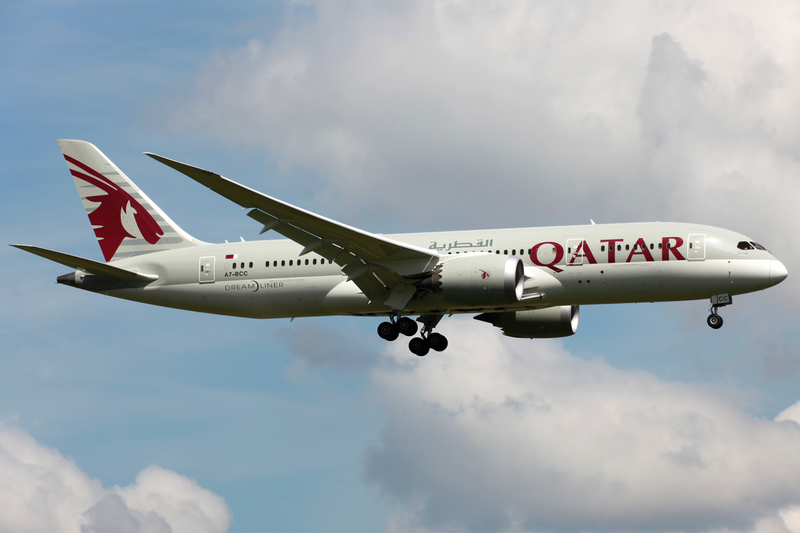
The 777-300ER is a logical initial choice for a long sector that must combine passenger volume with belly freight. Boeing lists the type with a range of up to 7,500 nautical miles and a typical two-class capacity of 350 to 425 passengers. Qatar Airways’ 354-seat layout sits near the lower end of that range because of the space allocated to its 42-seat Qsuite cabin.
The aircraft’s lower-deck capacity also matters to the route’s economics. Qatar Airways has emphasized the potential for a direct cargo link between New South Wales and markets reached through Doha, adding freight revenue to a passenger operation that will begin with a relatively modest three weekly frequencies.
A Seventh Australian Gateway
The new route extends a period of growth for Qatar Airways in Australia. The carrier has been rebuilding and expanding its own schedule while developing its partnership with Virgin Australia, in which Qatar Airways Group holds a 25% minority interest.
Qatar Airways said the WSI service will complement the wider development of that partnership. Virgin Australia returned to long-haul flying through the arrangement, operating Australia-Doha services with Qatar Airways aircraft and crews while feeding passengers into the carrier’s network at DOH.
Western Sydney gives the group another point of sale and departure within Australia’s largest metropolitan aviation market. It also allows Qatar Airways to establish itself at the new airport before demand and airline competition mature, rather than waiting for WSI’s international network to become established.
WSI Gains Another Long-Haul Hub Carrier
The Qatar Airways announcement came as WSI began passenger operations on Oct. 25, 2026. The airport is Australia’s first major greenfield international airport in more than 50 years and has opened with capacity for up to 10 million passengers annually.
Its single 3.7-kilometer runway, integrated domestic and international terminal and dedicated cargo precinct were designed for both narrowbody and widebody operations. The airport’s long-term planning framework allows for expansion well beyond the initial terminal and runway footprint as Sydney’s aviation demand grows.
Qatar Airways is receiving support from the Western Sydney International Take-Off Fund, a A$16 million joint initiative between the New South Wales government and the airport intended to accelerate airline recruitment and international passenger growth. WSI forecasts that routes supported by the fund will collectively deliver more than 162,000 international visitors to the state and generate about A$530 million in visitor spending.
Bottom Line
For Qatar Airways, Western Sydney is a measured entry rather than a full-scale capacity commitment. Three weekly flights limit the initial exposure while preserving the connectivity and cargo advantages of the 777-300ER. The stated move to daily service by the end of 2028 gives the airline a defined growth path if local demand, connecting traffic and freight develop as expected.
WSI gains an important endorsement from a long-haul network carrier whose business model depends on reliable connectivity across multiple continents. Qatar Airways will give Western Sydney passengers one-stop access through Doha to markets across Europe, the Middle East and Africa, broadening an international network that is initially weighted toward regional services.
The late-night arrival may prove as significant as the destination itself. WSI’s curfew-free operation creates schedule options that are not readily available at SYD, and Qatar Airways is among the first carriers to build a long-haul timetable around that advantage. The next test will be whether other intercontinental airlines follow with services that use Western Sydney as additional capacity for the metropolitan area rather than simply shifting flights from the established airport.